
Direct Answer
The in-neck pattern is a two-candle formation that appears within an existing downtrend. The name refers to where the second bar's close lands: just barely above the first bar's close, in the "neck" of the prior candle, a very shallow intrusion into the first bar's real body.
Key Takeaways
- The in-neck pattern is a two-bar bearish continuation pattern that appears in a downtrend, not a reversal signal.
- The first bar is a long bearish candle; the second bar gaps down at the open but rallies to close only barely above the first bar's close, inside its "neck."
- The penetration into the first candle's body is very shallow, which is what makes this a weak continuation signal rather than a strong reversal one.
- It's easily confused with Piercing Pattern, which looks similar in shape but requires the second bar to close much deeper into the first bar's body.
- Because the second bar's rally can look bullish at a glance, traders who don't check where it actually closed can misread the pattern's direction.
In-Neck Pattern Candlestick Pattern: Formation, Meaning, and Signals
The in-neck pattern is a two-bar bearish continuation candlestick pattern that forms in a downtrend, where a long bearish candle is followed by a bar that gaps down but rallies to close only barely above the first candle's close. Despite the second bar's rally, the shallow close is read as a weak effort that favors the downtrend continuing.
What Is an In-Neck Pattern?
The in-neck pattern is a two-candle formation that appears within an existing downtrend. The name refers to where the second bar's close lands: just barely above the first bar's close, in the "neck" of the prior candle, a very shallow intrusion into the first bar's real body.
Although the second bar gaps down and then rallies through the session, which can look like buyers are stepping in, the close tells a different story. Because it closes only slightly above the first candle's close rather than pushing meaningfully into its body, the pattern is read as bearish: sellers regained control by the end of the session, and the shallow rally wasn't enough to shift the balance of the downtrend.
How an In-Neck Pattern Forms
The pattern requires two bars in sequence, within a downtrend. The first bar is a long bearish candle, showing sellers firmly in control over that session. The second bar opens with a gap down from the first bar's close, then rallies during the session, but the rally only carries the close to a point barely above the first bar's close, not meaningfully into its body.

That shallow close is the defining feature of the pattern. The second bar's open, and the fact that it gaps down before rallying, sets up the shape; the depth of the eventual close, barely into the neck of the prior candle rather than deep into its body, is what separates the in-neck pattern from deeper-penetrating two-bar patterns.
In-Neck Pattern Example
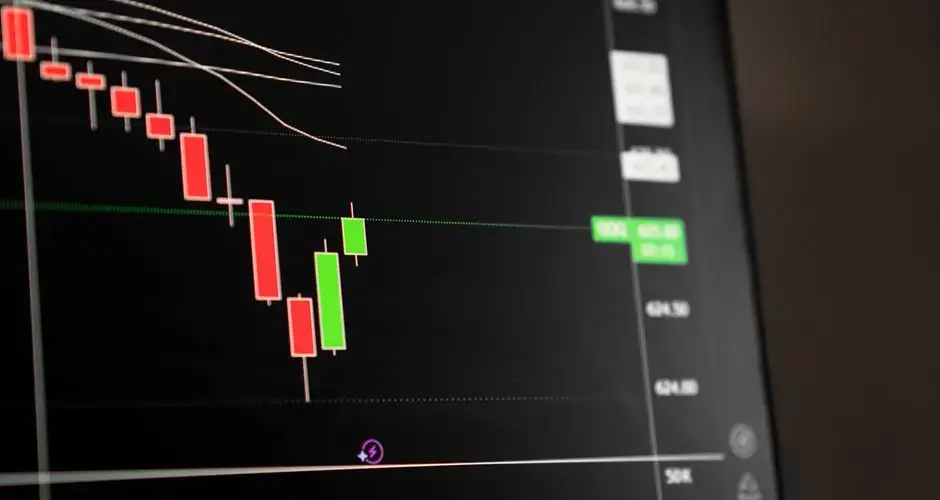
The chart below shows a deterministic, illustrative example: a downtrend leading in, the two-bar in-neck pattern forming, then two possible continuations, a confirmation (the downtrend resumes) and a failure/look-alike (price instead breaks higher). Toggle between them to see why the shallow close alone doesn't guarantee continuation.
How to Trade an In-Neck Pattern
Read the shallow close as weakness, not strength
Because the penetration into the first candle's body is so shallow, the in-neck pattern is generally read as a weak signal that the downtrend is likely to continue, the opposite implication of a deeper-penetrating pattern like Piercing Pattern. Traders looking to trade with the trend treat this as supporting evidence for continuation, not a reason to look for a bottom.
Don't be misled by the second bar's shape
The second bar's intraday rally can visually resemble the start of a reversal. Checking exactly where it closed relative to the first bar's close, barely above it, rather than deep into the body, is what confirms this is an in-neck pattern rather than a stronger reversal signal.
Confirm before acting
As with most two-bar patterns, waiting for a following bar to close lower adds confirmation that the downtrend is in fact continuing, rather than trading directly off the two-bar shape alone.
Common In-Neck Pattern Mistakes
- Mistaking the bullish-looking second bar for a genuine reversal signal, the shallow close, barely above the prior bar's close, is specifically what marks this as a weak continuation signal, not a strong reversal one.
- Confusing it with Piercing Pattern, Piercing Pattern requires much deeper penetration into the first bar's body and carries the opposite (bullish reversal) implication.
- Ignoring the surrounding downtrend, the pattern's bearish reading only applies when it forms within an existing downtrend, not in isolation.
- Acting on the two bars alone, skipping confirmation from a following lower close removes the check that separates a real continuation signal from noise.
In-Neck Pattern vs. Similar Patterns
| Pattern | Second bar's close | Signal strength |
|---|---|---|
| In-Neck Pattern | Barely above the first bar's close | Shallow, weak continuation signal |
| On-Neck Pattern | At or near the first bar's low | Even shallower than the in-neck pattern |
| Piercing Pattern | Over 50% into the first bar's body | Deep, strong bullish reversal signal |
Limitations of the In-Neck Pattern
The in-neck pattern describes the relationship between two bars' opens and closes, not the reasons behind them. It carries no information about volume, order flow, or what drove the second bar's gap and rally, those details aren't part of the pattern's definition. It also doesn't guarantee continuation on its own: like any short pattern, it works best read alongside the broader trend and confirmed by what the next bar does, not treated as a standalone signal.
One of Three Patterns Graded by Depth
The in-neck pattern only makes sense alongside its two relatives, because all three describe the same event and differ only in how far the bounce got. On-neck closes at the prior bar low. In-neck closes barely above it. Thrusting closes further into the body but still short of the midpoint. Past the midpoint it stops being a continuation pattern and becomes piercing, which is bullish. The family is a scale, and the boundaries are prices you can calculate.

Reading it that way removes the memorisation problem. Mark the prior bar low and midpoint, see where the second bar closed, and the label follows from the measurement.
The shared structure is a gap-down open followed by a rally that fails to reclaim much ground. In-neck sits near the weak end of that scale, which is why it is read as the decline remaining intact rather than as a recovery beginning.
All of them require a genuine gap down and an established downtrend, which makes the whole family scarce in continuously traded markets and meaningless without a trend to continue.
In-Neck Pattern FAQs
Is the in-neck pattern a bullish or bearish signal?
It's read as bearish. Even though the second bar rallies off its open, it only manages to close barely above the first bar's close, inside a downtrend, a weak effort that's generally read as continuation, not reversal.
Does the in-neck pattern's second candle look bullish on the chart?
Visually, yes, it gaps down and then rallies through the session. But the shallow close, barely above the prior candle's close, is what marks it as a weak effort rather than a genuine reversal attempt.
What's the difference between an in-neck pattern and a piercing pattern?
A piercing pattern's second bar closes over 50% into the first bar's body, a deep penetration read as a strong bullish reversal signal. An in-neck pattern's second bar closes only barely above the first bar's close, a shallow penetration read as bearish continuation.
What's the difference between an in-neck pattern and an on-neck pattern?
Both are shallow, weak two-bar patterns in a downtrend. An on-neck pattern's second bar closes at or near the first bar's low, even shallower than an in-neck pattern, whose second bar closes barely above the first bar's close.
Does the in-neck pattern need confirmation?
As with most two-bar patterns, traders generally wait for a following bar to close lower before treating the in-neck pattern as confirming that the downtrend is continuing, rather than acting on the two bars alone.
What does neck refer to in these pattern names?
The neckline is the reference price the second candle closes at or near: the previous candle low in the on-neck version and marginally into the previous body in the in-neck version. The names describe how far up the previous candle the close reaches, so the family is organised by penetration depth rather than by any anatomical analogy beyond the term itself.
How close to the previous close must the second bar finish?
Just inside the previous body, which is what separates the in-neck from the on-neck and the thrusting pattern. A tolerance is required because just inside is not a number. Implementations typically allow the close to sit within a small band above the previous close, and moving that band shifts instances between the three patterns in the family.
Do the neck patterns have bullish-trend equivalents?
They are defined as bearish continuation patterns appearing within declines, and the mirror structures within advances exist without receiving the same names. That asymmetry is common in the catalogue: some patterns were named in one direction and their inversions were either given unrelated names or never named. It means a symmetric scan has to construct the mirror conditions rather than look them up.
Why are the neck patterns grouped with the piercing pattern?
Because all four describe the same two-bar structure at different depths of penetration. On-neck closes at the previous low, in-neck closes marginally into the body, thrusting closes further in but below the midpoint, and piercing closes above the midpoint. The family is a continuum, and where a given instance falls determines which name applies and how bullish the reading is.
References
- CMT Association: Technical Analysis Body of Knowledge and Research
- CFA Institute Research and Policy Center: Investment Research
- Steve Nison, Japanese Candlestick Charting Techniques (1991), the book credited with popularizing Japanese candlestick analysis in Western markets.
- SEC Investor.gov: Introduction to Investing