
Direct Answer
Direct answer: Before you trust an investment claim, identify exactly what is being claimed, find the closest primary source, check the date and jurisdiction, separate facts from calculations and opinions, inspect the assumptions behind any model, and look for incentives that could influence how the information is presented. If the claim could materially affect a financial decision, do not stop at a confident summary when the underlying filing, rule, methodology or official data is available.

The Core Problem: Evidence Quality Is Uneven
Investment research has a strange problem: information is abundant, but evidence quality is uneven. A polished article can be wrong. A viral chart can use accurate numbers and still create a misleading impression. A calculator can be mathematically correct but useless because its assumptions do not fit the question. An AI answer can summarize a rule that changed last month. A company can describe its own performance accurately while emphasizing the metric that makes it look strongest.
The practical skill is not memorizing which websites are "good." It is learning to ask: what would I need to see to verify this specific claim? That question changes the research process. Instead of ranking every source from trustworthy to untrustworthy, you match the type of evidence to the type of claim.
Swoopr Investment's research philosophy is built around a simple idea: a useful answer should make it easier to inspect the evidence underneath it. Swoopr's Citation & Sources Policy prioritizes regulators, government agencies, exchanges, official filings, standards bodies, official protocol documentation, recognized data providers and academic research when those sources govern the claim. The site's Evidence & Validation page describes formula testing, source-coverage checks, correction logging and review cadence.
Step 1: Rewrite the Claim So It Can Be Checked
Many weak investment claims survive because they are vague. "This company has strong growth" is hard to check. A checkable version: "The company's reported revenue increased 18% year over year in its most recent fiscal quarter." Now you can ask: which filing, reported or adjusted, continuing operations, acquisition-driven, currency effects?
Turn fuzzy language into a proposition with a subject, a metric or rule, a time period, a scope, and a jurisdiction or market when relevant.
Example: retirement
Vague: "You can put $X into an IRA." Better: "For tax year 2026, the annual contribution limit for this IRA category is $X for an eligible individual under the stated conditions." The second version makes it obvious that the claim is time-sensitive, tax-related, jurisdiction-specific and conditional. That tells you to look for the current IRS rule rather than a five-year-old finance article.
Step 2: Identify What Kind of Evidence Could Prove or Disprove It
Different claims require different evidence.
Company facts
Revenue, net income, share count, debt, cash, segment results, risk factors, executive compensation and material events. Useful primary evidence: SEC filings, audited financial statements, earnings releases. The SEC provides EDGAR access to public filings at SEC: Search Filings (EDGAR).
Laws, regulations and tax rules
Contribution limits, filing obligations, settlement rules, margin requirements, tax treatment, disclosure requirements. A secondary article can explain the rule. It should not replace the controlling authority for a material claim when the authority is reasonably available.
Market data
Price, volume, yield, index level, market capitalization, historical return. Always check: timestamp, adjusted vs unadjusted data, currency, timezone, corporate-action treatment, delayed vs real-time status.
Crypto protocol mechanics
Supply schedule, staking mechanics, smart-contract behavior, governance, validator rules. Useful evidence: official protocol documentation, code repositories, governance proposals, block explorer data, third-party audits (as evidence of the audit, not a guarantee of safety).
Choose evidence based on who has authority over the fact.
Step 3: Prefer the Source Closest to the Fact
A source chain often looks like this: original filing or rule, news report, finance article, social post, AI summary. Each layer can add useful interpretation. Each layer can also introduce a transcription error, lost condition, stale number or exaggerated headline. When the original is accessible, move down the chain.
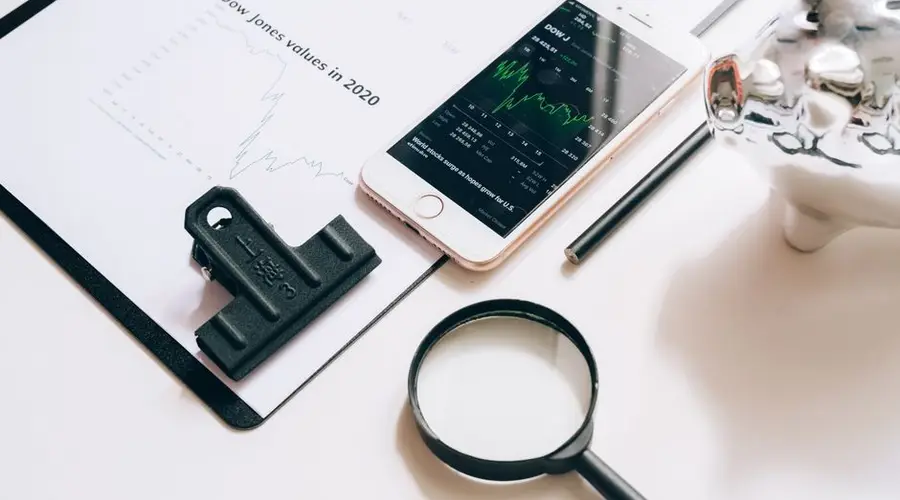
Use secondary explanation for understanding and primary material for verification. This is especially useful when an article says "according to the SEC," "the IRS limit is," "the company reported," or "the fund holds." Follow the chain.
A useful two-source habit
For a consequential claim, try to have the primary source and an independent explanatory source or your own calculation. If a company's filing says revenue was $5.9 billion versus $5.0 billion, you can independently calculate (5.9 minus 5.0) / 5.0 = 18%. The filing verifies the numbers and the arithmetic verifies the growth statement. This is stronger than finding five articles that repeat "18% growth."
Step 4: Check the Date Before Checking the Conclusion
A source can be authoritative and still be stale. This is one of the biggest traps in financial education because many pages look evergreen. Annual retirement limits, tax brackets, settlement cycles, exchange hours, regulatory thresholds, fund expense ratios, index constituents, protocol rules, and company guidance can all change.
Before trusting a claim, ask: when was the source published or updated, what period does the claim describe, has a newer controlling source appeared, does the page's updated date reflect a real content revision, and is there an effective-as-of date?
If a rule can change annually, search the authority's site for the current year, "effective", "limits", "notice", "rule", "updated" or "frequently asked questions". Then confirm you are reading the authority's current page rather than an archived snippet.
Steps 5 through 8: Scope, Facts vs Calculations, Facts vs Opinions, Incentives
Step 5: Check the jurisdiction and product scope
A claim can be correct in the wrong context. U.S. tax treatment applied to a non-U.S. investor; stock-market rules applied to options; one exchange's procedure generalized to all venues; retirement-account rules applied to a different account type. Write down country, regulator, account type, security type, investor classification, tax year, exchange, and protocol or network. If a page does not make those boundaries clear, confidence should go down.
Step 6: Separate facts from calculations
A calculator can combine verified facts with assumptions. Suppose a retirement calculator uses current contribution limits, your annual contribution, expected return, inflation and retirement age. The contribution limit may be an externally verifiable rule. The expected return is an assumption. The compound-growth formula is mathematics. The future account value is a modeled output. Those four things should not be treated as one kind of "fact." A good tool explains inputs, formula, external rule inputs, assumptions, output meaning and limitations.
Step 7: Separate facts from opinions
Some financial statements cannot be verified the way a filing number can. "The stock is cheap." "Management is excellent." "This moat is durable." These are evaluative statements. The right question becomes: what facts, assumptions and criteria produce that judgment? For "cheap": what valuation method, what earnings assumptions, what discount rate, what peer group? For "conservative": volatility, drawdown, equity/bond mix, concentration, leverage, time horizon?
Step 8: Inspect incentives and conflicts
Evidence can be technically accurate and commercially motivated. Ask: who benefits if I believe this, is the content sponsored, is there an affiliate relationship, does the publisher hold the asset, is an advertisement styled like editorial content? The FTC's endorsement guidance emphasizes clear disclosure of material connections. Swoopr's commercial relationships are governed by its Conflicts of Interest & Sponsored Content Disclosure. The important habit is not cynicism. It is incentive awareness.
Steps 9 through 13: Reading Sources, Recalculating, Context, Alternatives, Uncertainty
Step 9: Read the source, not just the headline
A common research failure happens when a source is technically cited but does not support the sentence next to it. Check the exact passage. Does the source support the same number, use the same time period, describe the same product, contain the stated condition, distinguish proposed from final rules, distinguish adjusted from GAAP data, report correlation rather than causation? When checking a sentence, focus on the verb. "The SEC requires X" is a stronger claim than "The SEC discussed X." Does the source actually require it, or merely discuss it?
Step 10: Recalculate important numbers
You do not need to redo every spreadsheet. Recalculate the number that drives the conclusion: percentage growth, margin, per-share value, debt-to-equity, yield, break-even, fee drag, weighted average, CAGR, portfolio weight, drawdown. If your answer differs, investigate denominator, period, unit, rounding, adjusted figures, split adjustment and currency conversion. This is especially important for charts: a visual can hide denominator choices that are obvious in the math.
Step 11: Look for missing base rates and comparisons
"Company A grew revenue 30%." What did peers grow? Was the prior period unusually weak? Did an acquisition cause the growth? Did margins improve? Did share count rise? "A strategy won 65% of trades." Average win vs loss? Sample size? Transaction costs? Maximum drawdown? Out-of-sample test? Verification is not only checking whether a number exists. It is checking whether the number supports the conclusion being drawn from it.
Step 12: Stress-test the alternative explanation
A strong research process asks what else could produce the same observation. Stock price rose after earnings: was it better earnings, guidance, a macro move, short covering, sector rotation, or positioning? Backtest improved after adding a filter: was it a genuine signal, overfitting, reduced sample, favorable regime, data leakage, or parameter mining?
Step 13: Know when you cannot verify something
Good research has an "unknown" state. You may be unable to verify a claim because the source is private, a data vendor does not disclose methodology, the company has not filed the relevant detail, the event is too recent, or reliable sources disagree. Do not solve that uncertainty by choosing the most confident article. Record what is known, what is inferred, what is disputed and what would resolve the uncertainty.
How to Verify an AI-Generated Investment Answer
AI can be useful for organizing questions, explaining terminology, finding possible source categories, comparing frameworks and drafting a checklist. It should not become the final authority for a material financial fact.
When an AI answer gives you a number or rule: ask what primary source controls the claim, open the source yourself, check date and jurisdiction, compare the quoted condition, verify calculations independently, and treat unsupported citations as a red flag. Swoopr's AI-Assisted Content Policy states that AI is not treated as the final source authority for material claims.
A 90-Second Verification Workflow
For a quick check:
- State the claim: Write one sentence.
- Classify it: Rule? Filing fact? Market data? Formula? Opinion? Forecast?
- Find the primary source: Regulator, filing, issuer, exchange, protocol, methodology.
- Check date and scope: Current year? Correct jurisdiction? Correct product?
- Recalculate if numerical: Use the source numbers.
- Check incentive: Sponsored? Affiliate? Issuer marketing? Asset holding?
- Mark confidence: Verified, partially verified, interpretation, or unresolved.
For higher-stakes decisions, use a research record that separates: claim, why it matters, claim type, primary source, source date, effective date, jurisdiction, calculation, assumptions, conflicts and incentives, independent cross-check, alternative explanation, what could make this stale, and confidence level.
Red Flags That Deserve a Second Look
None of these prove a claim is false. They are reasons to investigate further.
- No date on a time-sensitive rule
- Source links only to another explainer, not a primary document
- Citation does not support the sentence next to it
- "Research shows" with no research identified
- Unusually precise forecast with no model
- Backtest with no transaction costs or out-of-sample discussion
- Guaranteed, risk-free or certain-return language
- Sponsored content styled exactly like independent research
- AI answer with citations that do not exist or do not match the linked document
- Chart with no source, axis label or time period
- Company metric with no definition of adjusted or non-GAAP treatment
- Crypto yield with no explanation of token incentives or smart-contract risk
- "Expert reviewed" with no identifiable reviewer
- "Updated" date that changes while content and sources stay unchanged
Frequently Asked Questions
How do I verify an investment claim?
Start by making the claim specific: rewrite it with a subject, metric, time period, scope and jurisdiction. Then identify the closest primary source (filing, regulator, exchange, protocol documentation). Check the date and whether the source is current. Separate facts from calculations from opinions. Inspect incentives that could influence how the information is presented. Recalculate the number that drives the conclusion.
What is the best source for a company's revenue or earnings?
The closest primary source for public company financials is the SEC filing available through EDGAR at SEC: Search Filings (EDGAR). The filing contains reported revenue, net income, share count, debt, cash and segment results. Audited financial statements and earnings releases are also primary sources, though earnings releases often include non-GAAP measures that require careful interpretation.
How do I check a tax rule or contribution limit?
The controlling authority for U.S. retirement contribution limits is the IRS. Go directly to IRS.gov and search for the current year's limits rather than relying on a finance article. Confirm you are reading the page for the correct tax year, including any age-based catch-up provisions and income-related conditions where relevant.
How do I separate facts from opinions in investment research?
Some investment statements cannot be verified the way a filing number can. 'This stock is cheap' is an evaluative statement. The right question becomes: what facts, assumptions and criteria produce that judgment? For 'cheap', ask relative to what valuation method, what earnings assumptions, what discount rate. For 'conservative portfolio', ask about volatility, drawdown, equity/bond mix, concentration and liquidity. The more subjective the conclusion, the more important it is to expose the framework.
What red flags should make me look more carefully at an investment source?
Red flags include: no date on a time-sensitive rule, source links only to another explainer not a primary document, citation does not support the sentence, "research shows" with no research identified, backtest with no transaction costs or out-of-sample discussion, guaranteed or risk-free return language, sponsored content styled exactly like independent research, AI answers with citations that do not exist, charts with no source or time period, and "expert reviewed" with no identifiable reviewer.
References
- U.S. Securities and Exchange Commission, Search Filings
SEC: Search Filings (EDGAR) - Investor.gov, Using EDGAR to Research Investments
Investor.gov: Using EDGAR to Research Investments - FINRA, About BrokerCheck
FINRA: About BrokerCheck - Internal Revenue Service, Retirement Topics and Contributions
IRS: Retirement Topics, Contributions - Federal Trade Commission, The FTC's Endorsement Guides: What People Are Asking
FTC: Endorsement Guides, What People Are Asking - Swoopr Investment, Citation & Sources Policy
https://www.getswoopr.com/legal/citation-policy/ - Swoopr Investment, Evidence & Validation
https://www.getswoopr.com/about/evidence/ - Google Search Central, AI features and your website
Google Search Central: AI Features and Your Website