

What Position Sizing Does
Position sizing is the step in a trading plan that converts a stop-loss level and a risk tolerance into a specific number of shares, contracts, or coins to buy. It sits between strategy, deciding what to trade and where to exit, and execution, placing the order, and it is the single lever that determines how much a wrong guess actually costs. Two traders can use the identical entry and exit on the same asset and end up with completely different outcomes purely because they sized the trade differently.
Key Takeaways
- Position size is derived from dollar risk and stop distance, not from conviction or account balance alone.
- A fixed percentage-of-account risk rule (commonly 1% or 2%) keeps any single loss from meaningfully damaging the account.
- Volatility should shrink or grow the position, not the risk amount, a wider stop on a volatile asset means fewer units, not a bigger dollar risk.
- Leverage changes margin required, not the dollar amount actually at risk if the stop is honored.
- Round position size down, not up, when the formula produces a fractional number of units.
- No position-sizing formula protects against gaps, slippage, or a stop that fails to fill at the intended price.
Position-Size Calculator
Enter your account balance, risk percentage, entry and stop to see a risk-based share count, position value and account allocation.
The Core Formula
Position size equals maximum dollar risk divided by risk per unit.
The formula has three inputs: the maximum dollar amount the trader is willing to lose on the trade, the price distance between the entry and the stop (risk per unit), and the resulting position size, which is the dollar risk divided by that price distance. Dollar risk is typically expressed as a fixed percentage of total account value, commonly 1% as an internal convention for conservative sizing or up to 2% as a more aggressive internal limit, so that a string of losses shrinks position size along with the account rather than staying fixed. Risk per unit must reflect where the stop actually sits, not a rounded or approximate figure, because a small error in the risk-per-unit input produces a proportional error in position size.
Some traders use small fixed percentages such as 0.5%, 1%, or 2% as internal risk limits. Those numbers are conventions, not regulatory standards and not universally appropriate. The useful principle is consistency: define the maximum planned loss before entry, size the position from the distance to invalidation, and then test whether correlated positions, slippage, gaps, leverage, or liquidity could make the portfolio-level loss materially larger than the single-trade estimate.
Practical checklist
- Confirm the exact stop price before calculating, not an approximate level.
- Express dollar risk as a percentage of current account equity, not a fixed dollar figure carried over from a larger account.
- Recalculate risk per unit any time the entry or stop assumption changes.
- Round the resulting quantity down to the nearest whole unit the market allows.
- Re-check the formula output against the account's actual buying power and margin limits.
Common mistake
The common mistake is skipping straight to "how many shares can I afford" instead of "how many shares keep my loss at the planned dollar amount." Affordability and correct risk sizing are different questions, and conflating them routinely produces positions several times larger than the risk tolerance allows. The exact formula inputs and rounding conventions are documented in the position-size formula and assumptions registry.
Define Maximum Dollar Risk
Choose an amount based on account size, drawdown tolerance, strategy behavior, and portfolio exposure.
Most traders set this as a fixed percentage of total account equity, often 1% as an internal convention for a conservative limit or up to 2% as a more aggressive internal ceiling, recalculated against the current account balance before every trade, not the balance from when the strategy was first funded. A trader with a $40,000 account risking 1% is risking $400 per trade regardless of how large or small any individual position looks; the dollar figure, not the percentage, is what actually gets fed into the position-size formula. Traders running multiple concurrent positions also need to consider combined risk across open trades, since five simultaneous 1% risks add up to 5% of the account being at risk at once even though each trade individually looks conservative.

Practical checklist
- Recalculate the dollar risk figure from current account equity before every new trade, not from a stale balance.
- Pick a percentage (commonly 1%, 2%) and apply it consistently rather than varying it by how confident the trade feels.
- Add up dollar risk across all open positions to see total account exposure, not just per-trade exposure.
- Lower the percentage after a losing streak rather than increasing it to "make back" losses faster.
- Treat the dollar risk figure as a hard ceiling, not a starting point to negotiate upward.
Common mistake
The common mistake is holding the dollar risk amount constant after a losing streak instead of recalculating it against the smaller account balance, which causes each subsequent loss to consume a larger percentage of what remains.
Calculate Risk Per Unit
For a long position, subtract invalidation from entry and add expected friction.
Risk per unit is the price distance between the entry and the stop, adjusted for costs that widen the effective loss. For a long position, risk per unit equals entry price minus stop price plus estimated friction such as the bid-ask spread, commissions, or exchange fees; for a short position it equals stop price minus entry price plus friction. The stop should be set at a price level that invalidates the trade thesis, a support break, a moving-average cross, a volatility band, rather than picked to produce a round position size, because working backward from a preferred share count instead of forward from a real invalidation level defeats the purpose of the calculation.
Practical checklist
- Base the stop on a technical or thesis-based invalidation level, never on the position size it happens to produce.
- Add estimated spread, commission, or slippage to the raw price distance for a more realistic risk-per-unit figure.
- Use the same price convention (last, mid, or execution price) for both entry and stop.
- Recompute risk per unit if the entry fills at a different price than planned.
- Flag trades where risk per unit is unusually small relative to the asset's typical daily range, the stop may be too tight to survive normal noise.
Common mistake
The common mistake is measuring risk per unit against the entry price the trader hoped for rather than the price the order actually filled at, which understates real risk any time slippage moves the fill away from the limit price.
Stock Example
A $50,000 account risking $250 with $2 of risk per share supports 125 shares before extra constraints.
This example uses whole shares, which is the standard unit for most stock brokers, so the 125-share result requires no further adjustment beyond checking it against available buying power and any round-lot or fractional-share rules the broker applies. Stock position sizing is comparatively simple because most retail accounts trade without leverage by default, so the dollar amount invested and the dollar amount at risk are two different numbers: the $250 at risk assumes the stop is honored, while the capital actually committed to the position (125 shares times the $50 entry price, or $6,250) is far larger than the risk figure.
Practical checklist
- Confirm the broker's minimum lot size and whether fractional shares are supported before finalizing the share count.
- Distinguish capital committed to the position from the dollar amount actually at risk if the stop is hit.
- Check that the position's total dollar value fits within available buying power, including margin requirements if applicable.
- Account for commissions or per-share fees that widen the effective risk-per-unit figure.
- Reduce the share count if the stock's daily volatility implies the stop is likely to be hit by normal noise rather than a genuine trend change.
Common mistake
The common mistake is confusing the dollar amount invested with the dollar amount at risk, buying $6,250 worth of stock (125 shares at $50) is not the same as risking $6,250; the actual risk is capped at $250 as long as the stop is honored.
Spot Crypto Example
Use entry, invalidation, fees, spread, and exchange or network costs where relevant.
Spot crypto sizing follows the identical formula, but friction is typically a larger share of risk per unit than in stocks: maker/taker trading fees, wider spreads on less liquid pairs, and on-chain network fees for any transfer all reduce the effective amount available to risk. A trader risking $200 with a $40 stop distance and $2 of combined estimated friction is sizing against $42 of risk per unit, not $40, which produces a meaningfully smaller position than ignoring friction would. Because many spot crypto assets trade with much larger day-to-day price swings than large-cap stocks, the same dollar risk typically supports fewer units and a wider stop than an equivalent stock trade.
Practical checklist
- Include exchange trading fees and any withdrawal or network fee in the friction estimate, not just the bid-ask spread.
- Check the pair's typical daily volatility before setting a stop distance, a stop sized for a stock's volatility is often too tight for crypto.
- Verify the exchange's minimum order size doesn't force a position larger than the risk calculation allows.
- Re-check risk per unit after the trade fills, since crypto spreads can widen sharply during fast moves.
- Treat exchange or custody risk as separate from price risk, position sizing controls the latter, not the former.
Common mistake
The common mistake is sizing a spot crypto trade using the same friction assumptions as a stock trade, which understates real risk once trading fees, spread, and any transfer costs are added to the raw entry-to-stop distance.
Leveraged Example
Leverage changes margin usage but does not reduce economic exposure or liquidation risk.
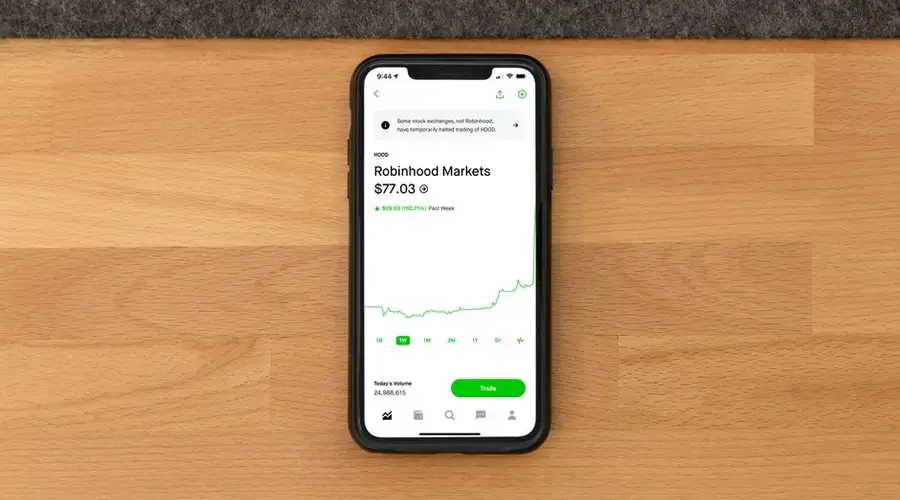
With leverage, the position-size formula still starts from the same dollar risk and risk-per-unit inputs, but the resulting notional exposure is larger than the margin posted, and a stop that fails to execute, due to a gap, an outage, or insufficient liquidity, can produce a loss beyond the planned amount up to and including the full margin balance. Liquidation price is not the same as a stop-loss order: liquidation is set by the exchange's margin engine based on maintenance margin requirements, while the stop is a trader-defined exit intended to trigger well before liquidation would. Sizing a leveraged position correctly means treating the leverage multiple as a tool for capital efficiency, not as a way to take on more economic risk than the account's dollar risk limit allows.
Practical checklist
- Calculate position size from dollar risk and stop distance first, then check what leverage multiple that requires, not the reverse.
- Confirm the stop price sits comfortably above the exchange's liquidation price, with margin for normal volatility.
- Reduce leverage rather than reduce the stop distance if the position still comes out too large for the account's margin.
- Account for funding rates or borrowing costs on positions held longer than a single funding period.
- Never treat available leverage (for example, 20x) as a target to use, treat it as a ceiling that a properly sized position will rarely approach.
Common mistake
The common mistake is using leverage to make the position larger because margin allows it, rather than using leverage only to reduce the capital tied up while keeping the dollar risk identical to an unleveraged calculation.
Gap and Slippage Adjustment
Reduce size when the market can move beyond the planned exit.
A stop-loss order is a trigger, not a guarantee of execution at the stop price. When an asset gaps past the stop, on an earnings release, a weekend crypto move, or a liquidity air pocket, the order fills at the next available price, which can be materially worse than planned, turning a calculated $250 risk into an actual loss of $400 or more. Traders can partially compensate by sizing slightly smaller than the formula's raw output for assets prone to gapping, such as stocks around earnings or crypto around major news, or by adding a buffer to the friction estimate used in the risk-per-unit calculation.
Practical checklist
- Identify known gap risk before the trade, earnings dates, macro announcements, low-liquidity weekend hours for crypto.
- Add a slippage buffer to the risk-per-unit calculation for assets or timeframes prone to gapping.
- Consider reducing position size below the formula's raw output ahead of a known volatility event rather than holding the same size.
- Understand that a stop order and a guaranteed stop, where offered and usually for a fee, behave differently during a gap.
- Review after the trade whether actual slippage matched the estimate used, and adjust future friction assumptions accordingly.
Common mistake
The common mistake is treating the calculated position size as a hard guarantee of maximum loss, when a stop order only guarantees a trigger, not a fill price, during a gap or a liquidity air pocket.
Portfolio Constraints
Cap size further when the trade increases sector, factor, exchange, or strategy concentration.
Per-trade position sizing controls risk on one position in isolation, but it does not account for correlation across open positions. Five separate 1% risk trades in five different technology stocks are not equivalent to five 1% risk trades spread across unrelated sectors and asset classes, because correlated positions tend to lose together in the same drawdown, effectively multiplying the realized loss beyond what any single trade's sizing implies. A portfolio-level constraint caps total risk across correlated positions, by sector, by asset class, or by strategy, in addition to the per-trade dollar risk limit. The portfolio heat calculator measures combined open risk across all positions and groups correlated names.
Practical checklist
- Group open positions by sector, asset class, or underlying correlation before adding a new position in the same group.
- Set a portfolio-level maximum total risk, for example 6% across all open positions, in addition to the per-trade limit.
- Reduce individual position size when adding a trade that increases concentration in an already-held theme.
- Track combined risk across spot and leveraged positions in the same asset, since they compound rather than offset.
- Reassess portfolio-level risk after any position's stop is adjusted, not only when a new trade is opened.
Common mistake
The common mistake is sizing every new trade in isolation against the per-trade risk limit without checking how much correlated risk is already open, which allows total portfolio risk to run far higher than the per-trade percentage suggests.
Calculator Specification
Report quantity, notional exposure, account percentage, friction, and scenario losses.
A position-size calculator should take entry price, stop price, account size, and risk percentage as inputs and return the resulting quantity, the notional dollar exposure, the percentage of the account that exposure represents, and the dollar loss under a slippage scenario beyond the stated stop. Surfacing notional exposure alongside the unit count matters because two positions with the same dollar risk can have very different capital and margin requirements depending on leverage, and a trader scanning only the risk figure can miss that a position uses most of the account's available buying power.

Practical checklist
- Require entry price, stop price, account size, and risk percentage as inputs; flag calculations missing any of the four.
- Display both the raw calculated quantity and the rounded-down tradable quantity.
- Show notional exposure and percentage of account used, not just the unit count.
- Include an estimated-slippage scenario alongside the base-case loss figure.
- Warn when the calculated position exceeds available buying power or margin.
Common mistake
The common mistake is a calculator that outputs only the share or coin count, leaving the trader to separately estimate notional exposure and account percentage by hand, the two figures most likely to reveal an oversized position.
Worked Decision Example
Assume a reader is evaluating a hypothetical opportunity with $25,000 of available capital and a maximum planned loss of $125.
Inputs
- Account value: $25,000
- Maximum planned loss: $125
- Entry assumption: $50
- Invalidation assumption: $48
- Estimated friction: $0.10 per unit
Formula
Risk per unit = Entry price − Invalidation price + Estimated friction
Risk per unit = $50 − $48 + $0.10 = $2.10
Maximum quantity = $125 ÷ $2.10 = 59.52
The quantity must be rounded down to 59 units. The example demonstrates how a framework converts an abstract risk preference into an operational limit. It does not guarantee the loss will remain at $125 because gaps, slippage, illiquidity, outages, or user error can increase the actual loss.
Misconceptions Versus Reality
| Misconception | Reality |
|---|---|
| Risking 1% per trade means the account can only ever lose 1% total | Multiple open positions, correlated assets, or a string of consecutive losses can put far more than 1% of the account at risk at once |
| A tight stop automatically means a small, safe position | A tight stop increases the position size the formula allows, which can produce a larger loss than a wider stop if it is hit by normal noise rather than a real trend change |
| Leverage makes a trade riskier by definition | Leverage changes margin required and liquidation distance, but the dollar amount at risk is set by the stop distance and position size, not by the leverage multiple alone |
| A bigger account should always take bigger position sizes | Position size should scale with the dollar risk and stop distance for the specific trade, not with account size alone |
| The position-size formula guarantees the maximum loss stated | Gaps, slippage, and stop orders that fail to fill at the intended price can produce losses larger than the calculated amount |
Risks, Limitations, and Exceptions
- A stop-loss order guarantees a trigger, not a fill price, gaps and fast markets can produce a loss larger than the calculated dollar risk.
- Correlated open positions can combine into total portfolio risk well above what any single trade's sizing suggests.
- Illiquid stocks or thinly traded crypto pairs can make it difficult to exit a full position at or near the stop price. Liquidity-adjusted position sizing adds an explicit volume-participation constraint to the standard formula.
- Broker or exchange minimum order sizes, lot sizes, or margin requirements can force a position different from the formula's raw output.
- Leveraged positions carry liquidation risk set by the exchange's margin engine, which is independent of where a trader's own stop is placed.
- Funding rates, overnight financing, or borrowing costs on leveraged or short positions add an ongoing cost the position-size formula does not capture.
- Volatility can change abruptly after a position is opened, making a stop distance that was reasonable at entry too tight or too wide. Volatility-adjusted sizing scales position size to the asset's recent realized volatility to keep dollar risk stable as conditions shift.
- Rounding position size down to a whole unit, or up to meet a minimum order size, changes the actual dollar risk slightly from the target figure.
Practical Implementation Checklist
- Confirm current account equity, not a stale or rounded balance.
- Choose a risk percentage (commonly 1%, 2%) and calculate the maximum dollar risk for this trade.
- Identify the stop price based on a technical or thesis-based invalidation level.
- Calculate risk per unit as the entry-to-stop price distance plus estimated friction.
- Divide maximum dollar risk by risk per unit to get the raw position size.
- Round the quantity down to the nearest unit the market or broker allows.
- Check the resulting notional exposure against available buying power or margin.
- Check combined risk across other open, correlated positions before confirming the trade.
- Place the stop order at the same price used in the calculation.
- Record the trade's inputs and resulting position size for later review.
Frequently Asked Questions
What should a beginner understand about position sizing trading?
A beginner should understand that position size is calculated from a stop-loss level and a fixed percentage of account risk, not from how much capital is available to spend on the trade. Start with a conservative risk percentage such as 1% per trade, always define the stop before calculating size, and treat the resulting dollar figure as the maximum acceptable loss if the stop is honored, not a prediction of typical trade outcomes.
What are the largest risks in position sizing trading?
The largest risks are a stop that fails to fill at the intended price during a gap or fast market, correlated positions that combine into far more total risk than any single trade's sizing suggests, and, for leveraged positions, liquidation occurring before a trader's own stop is reached. Miscalculating risk per unit, or basing the stop on a round position size instead of a real invalidation level, are common contributing errors.
Which inputs matter most for position sizing trading?
The stop price matters most, since it sets risk per unit and therefore drives the entire calculation, an imprecise or approximate stop produces a proportionally imprecise position size. Current account equity and the chosen risk percentage matter almost as much, because both should be recalculated before every trade rather than reused from a prior calculation.
How often should position sizing trading be reviewed?
Recalculate position size for every individual trade, since account equity, the stop distance, and market volatility change from trade to trade. Review the overall risk percentage and portfolio-level risk limits periodically, for example after a losing streak, a significant account gain, or a meaningful change in trading strategy or the assets being traded.
Which Swoopr Investment tool supports position sizing trading?
Swoopr Investment's position-size calculator takes entry price, stop price, account size, and risk percentage and returns the exact quantity to trade along with notional exposure and account percentage, removing the need to do the arithmetic by hand before placing an order.
How does position sizing change when several open trades are correlated?
Correlated positions behave partly like one larger position, so summing their individual risk amounts understates the real exposure. If three holdings tend to move together, a single adverse event can hit all three stops in the same session. Practical responses include setting a combined risk budget for a correlated group and treating that budget as the binding constraint, rather than sizing each position as though it were independent.
What is the difference between risking a fixed dollar amount and a fixed percentage?
A fixed dollar amount keeps risk per trade constant while the account changes size, so the same loss represents a growing share of a shrinking account. A fixed percentage of current equity scales down automatically after losses and up after gains, which reduces risk exactly when the account is weakest. The percentage approach adds arithmetic to every trade but removes the drift that makes fixed dollar risk quietly more aggressive during a drawdown.
How should position size account for the gap risk of holding over earnings?
A stop provides no protection across a gap, so a position held through a scheduled announcement should be sized as though the stop may not be available. One approach is to define the loss you could accept if the price opened at a plausible worst case rather than at the stop level, and size from that larger number. This usually produces a much smaller position, which is the point rather than a flaw in the method.
Does position sizing work the same way for a long-term investment as for a short-term trade?
The arithmetic is the same but the inputs are not. A short-term trade has an identifiable invalidation level and a stop, so risk per unit is measurable. A long-term holding often has neither, which means the equivalent constraint is portfolio weight rather than distance to a stop. Applying trade-style sizing to a position with no stop produces a false sense of precision, because the denominator in the formula does not exist.
Conclusion
Position size equals maximum dollar risk divided by risk per unit.
Use the position-size calculator above to apply this formula to your own account size, entry, and stop, or return to the risk management hub for broader portfolio-level controls.