
Research Workbench · Stocks
Research Workbench
One document from question to review.
A guided research document built on the eight-step Swoopr Research Loop: define the question, understand the business, measure and compare the numbers, value with scenarios, stress-test the thesis, document the evidence, and schedule the review. Saved privately in your browser, exported as Markdown or JSON.
Direct Answer
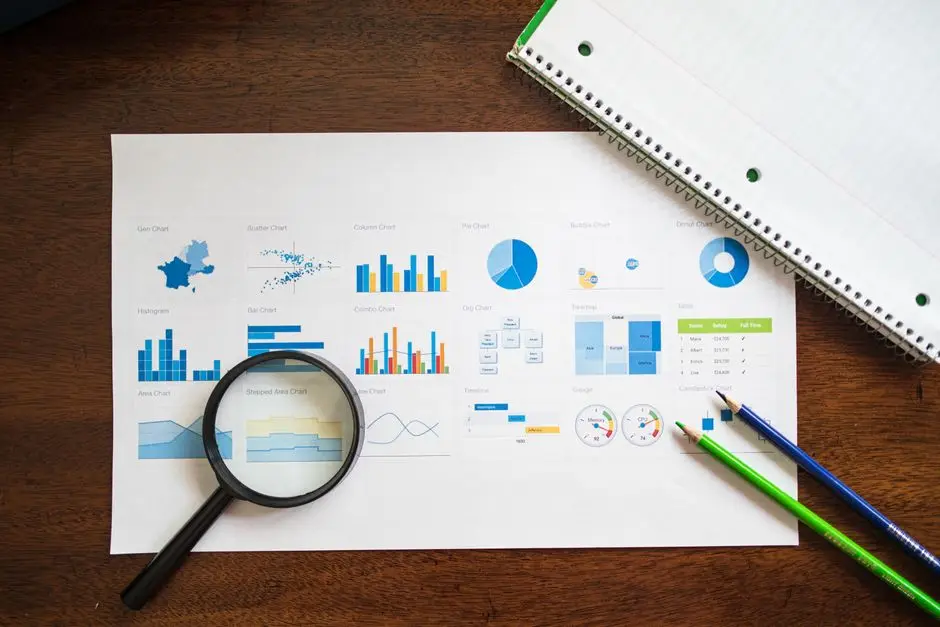
The Research Workbench is a guided research document built on the eight-step Swoopr Research Loop, running from defining the question through understanding the business, measuring and comparing the numbers, valuing with scenarios, stress-testing the thesis, documenting the evidence, and scheduling the review. The Stress-Test step asks for downside cases, contrary evidence, catalysts, and explicit thesis-break conditions before the Document step lets you write the thesis itself, so the case against a holding is recorded alongside the case for it. Documents are stored only in your browser's local storage and export as Markdown or JSON; nothing you type is sent to Swoopr Investment, to analytics, or to any external service.

What the Workbench Is
Most research notes die in scattered tabs and half-remembered reasoning. The workbench replaces that with one structured document per company, organized around the Swoopr Research Loop, so the thesis, the evidence against it, and the conditions that would break it all live in the same place as the numbers that support it.
The risk register is built in rather than bolted on: the Stress-Test step asks for downside cases, contrary evidence, catalysts, and explicit thesis-break conditions before the Document step lets you write the thesis itself. Each evidence source carries an as-of date, and sources older than 180 days are flagged for re-verification in every export.
Documents are stored only in your browser's local storage. Nothing you type is sent to Swoopr Investment, to analytics, or to any external service. Clearing browser data deletes them, so export anything you want to keep.
The Eight Steps
- Define: the research objective, the time horizon, and what evidence would change your mind.
- Understand: the business model, its real revenue drivers, and the industry context it competes in.
- Measure: growth trajectory, margins and returns, balance sheet, and dilution, from primary sources with dates.
- Compare: the same metrics against a defensible peer group and the company's own multi-year range.
- Value: scenario ranges from transparent methods, with the sensitivity of the result to each assumption.
- Stress-Test: the risk register: downside cases, contrary evidence, thesis-break conditions, and catalysts.
- Document: the thesis in plain language, its key assumptions, and the questions still open.
- Review: the triggers and the date that will bring you back to re-examine everything above.
The order is deliberate: valuation comes after measurement and comparison so a price target cannot quietly become the goal the rest of the research bends toward, and the thesis is written only after its strongest counterarguments.
Your Research Document
This is a private note-taking and structuring tool. It produces no scores, no grades, and no recommendations. Everything you enter stays in your browser.
Stored only in this browser via local storage. Private to this device and profile.
This Is Also the Investment Thesis Builder
An investment thesis is a written statement of what you expect to happen, what has to be true for it to happen, what would prove you wrong, and when you will check. Swoopr does not publish a separate thesis-builder tool, because a thesis written apart from the evidence behind it is the failure mode the format is supposed to prevent. The thesis lives inside this document instead, in two of the eight steps.
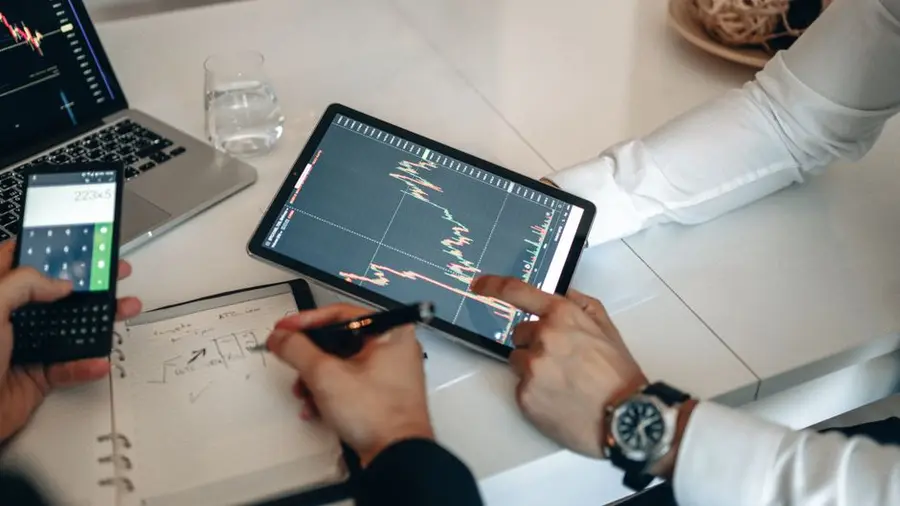
The Stress-Test step holds the risk register: downside cases, the strongest contrary evidence you found, the specific observable events that would break the thesis, and the catalysts that could resolve the question. The Document step holds the thesis itself, in two or three sentences, with each key assumption listed separately so it can be checked rather than assumed. The Review step turns "I will keep an eye on it" into a date and a list of triggers, and its change log is the decision record you will want the next time this position surprises you.
Everything the document produces is your own writing. There is no score, no grade, and no buy, sell or hold output anywhere in this tool, by design. Export the finished document as Markdown or JSON; nothing is uploaded, and drafts stay in your own browser.
Tools That Feed This Document
The Measure and Compare steps pair with the watchlist stock screener and the company fundamentals comparison tool. For funds and property trusts, the same screening engine runs over different fields in the watchlist ETF screener and the watchlist REIT screener. The Value step pairs with the DCF valuation calculator. To settle which asset class a question even belongs to before writing about it, see Compare Investments. For the discipline behind each step, start with the fundamental analysis hub and how to analyze a stock.
Research infrastructure behind the Workbench
The Workbench helps organize an individual stock or fund research process. Swoopr's supporting research infrastructure handles a different question: how should the evidence itself be sourced, documented, reproduced, and cited? Use these resources when you need to move beyond the worksheet.
- Research Methodology
- The eight-step Swoopr Research Loop, formula definitions, source hierarchy, evidence standards, and calculation methodology.
- Evidence & Validation
- Which quality checks are automated, what those checks can and cannot prove, and how corrections are recorded.
- SEC EDGAR Filing Search
- Open company filings and primary-source disclosure records directly.
- Swoopr Source Ladder
- Match a financial claim to the strongest appropriate source and record its limitations.
- Investment Data Library
- Inspect dataset provenance, versions, transformations, missing-data rules, and reusable source records.
- Citation Guide
- Use stable citation formats for Swoopr research notes, tools, charts, glossary entries, datasets, and frameworks.
The Workbench is designed to help you document a thesis, evidence, assumptions, risks, and what would change your mind. Completing the worksheet does not turn that thesis into a Swoopr recommendation. A strong research record should make disagreement easier to inspect, not make uncertainty disappear.
Frequently Asked Questions
How is a Workbench document different from a published research note?
A published note is finished work reviewed for accuracy and written for readers. A Workbench document is a private working record: it holds the objective, the evidence with dates, the thesis, the contrary evidence and the review conditions in one structure, including everything that is still unresolved. The structure is the same because the process is the same, but a working document is expected to contain gaps, and marking those gaps is part of its purpose.
What goes into the risk register?
The downside cases the thesis has to survive, the strongest contrary evidence found rather than the weakest, the specific catalysts that could move the outcome in either direction, and the explicit conditions that would mean the thesis is broken. It sits inside the Stress-Test step so that it has to be filled in before the document is treated as complete, which is what stops the risk section from becoming a list of generic warnings added at the end.
How is the Define step different from starting with a stock idea?
An idea is a conclusion looking for support. The Define step asks for a question that evidence could settle, a horizon over which it applies, and a statement of what would change the answer. Writing those three down before gathering evidence is what makes the later steps capable of producing a negative result. A document that starts from a conclusion tends to accumulate confirming evidence, because that is what was being looked for.
What counts as a primary source in the Measure step?
A document produced by the entity being researched or by the regulator it reports to: an annual or quarterly filing, a proxy statement, a fund's own prospectus and annual report, an issuer's investor materials. A figure quoted in a news article or aggregated by a data provider is a secondary reference to one of those, and it can be stale, adjusted or mislabeled. Each source recorded carries its own as-of date so the age of the evidence stays visible.
Why does the Compare step require the same metrics across peers?
Because a comparison is only meaningful when both sides are measured the same way. Different companies report adjusted figures on different bases, use different fiscal periods and define non-standard measures for themselves. Recomputing each metric from the same underlying line items, for every company in the peer group, is what makes a difference between them attributable to the businesses rather than to their reporting choices.
What does the Document step capture that the earlier steps do not?
The reasoning that connects them. The earlier steps produce figures, comparisons and scenarios; the Document step states what the researcher concludes from those, which evidence carries the most weight, and where the conclusion is weakest. It also fixes the record in a form that can be read later by someone who was not present, including the researcher, who will not remember which of several considerations was decisive.
When is a document due for review?
When the conditions the note itself recorded are met, or when the sources it rests on have aged past the point where they describe the current situation. Sources carry as-of dates for exactly this reason, and exports flag entries older than a stated age. A review that happens because a source went stale, rather than because something happened, is the more common and easier one to miss.
Can the Workbench be used for a fund or a property trust rather than a company?
The eight-step structure applies to any asset that can be researched, and the fields are generic enough to hold the relevant evidence. What changes is which metrics belong in the Measure step and which peers belong in the Compare step, since a fund is assessed on cost, tracking and structure rather than on margins and returns on capital. The corresponding watchlist screener for each asset type feeds those steps with the right fields.
What does a completed document not tell you?
Whether to act. It produces no score, no grade and no recommendation, and it makes no judgment about how a holding would fit a particular portfolio, which depends on existing exposures, time horizon, tax situation and risk capacity that the document never sees. What it produces is a stated thesis, the evidence behind it, the evidence against it and the conditions that would change it. The decision sits outside that entirely.