

Direct Answer
A Tri-Star is a three-bar candlestick pattern built entirely out of dojis, candles where the open and close are nearly equal. In the bullish version, the pattern forms after a downtrend: the first bar is a doji, the second (middle) bar is a doji that gaps below the first, and the third bar is a doji that gaps back above the second, landing near the first doji's level.
Key Takeaways
- A bullish Tri-Star is a rare three-bar reversal pattern appearing after a downtrend, in which all three candles are dojis.
- The middle doji gaps below both the first and third dojis, forming an isolated "star" position between two other indecision bars.
- It is essentially a Morning Star or Morning Doji Star pattern where every bar, not just the middle one, qualifies as a doji.
- Because all three bars must independently satisfy the doji condition, with the middle one also gapped away, the bullish Tri-Star is considered one of the rarest and most extreme reversal patterns in candlestick charting.
- It's easy to mislabel a lesser pattern as a Tri-Star, a Morning Doji Star only needs the middle bar to be a doji, not all three.
Tri-Star (Bullish) Candlestick Pattern: Formation, Meaning, and Signals
A bullish Tri-Star is a rare three-bar reversal pattern that appears after a downtrend, in which all three candles are dojis and the middle doji gaps below both the first and third. It is the mirror image of the bearish Tri-Star, and one of the rarest patterns in candlestick charting.
What Is a Tri-Star (Bullish)?
A Tri-Star is a three-bar candlestick pattern built entirely out of dojis, candles where the open and close are nearly equal. In the bullish version, the pattern forms after a downtrend: the first bar is a doji, the second (middle) bar is a doji that gaps below the first, and the third bar is a doji that gaps back above the second, landing near the first doji's level.
The middle doji's isolated position, gapped below the bars on either side of it, is what gives the pattern its "star" label, the same term used in Morning Star and Evening Star patterns. What sets the Tri-Star apart is that every bar in the sequence, not just the middle one, must independently qualify as a doji.
How a Tri-Star (Bullish) Forms
The pattern requires a downtrend leading in, followed by three consecutive doji bars. The first doji reflects the ongoing indecision at the tail end of the downtrend. The second doji gaps below both the first and third, sitting in the star position beneath them, this gap is what visually separates a Tri-Star from three dojis simply sitting in a row. The third doji then gaps back up, closing the sequence.
Structurally, a bullish Tri-Star is essentially a Morning Star or Morning Doji Star where every bar, not just the middle one, is a doji. A Morning Star only requires the middle bar to be a small body of some kind, and a Morning Doji Star only requires the middle bar specifically to be a doji; the Tri-Star tightens that requirement to all three bars at once.
Tri-Star (Bullish) Example
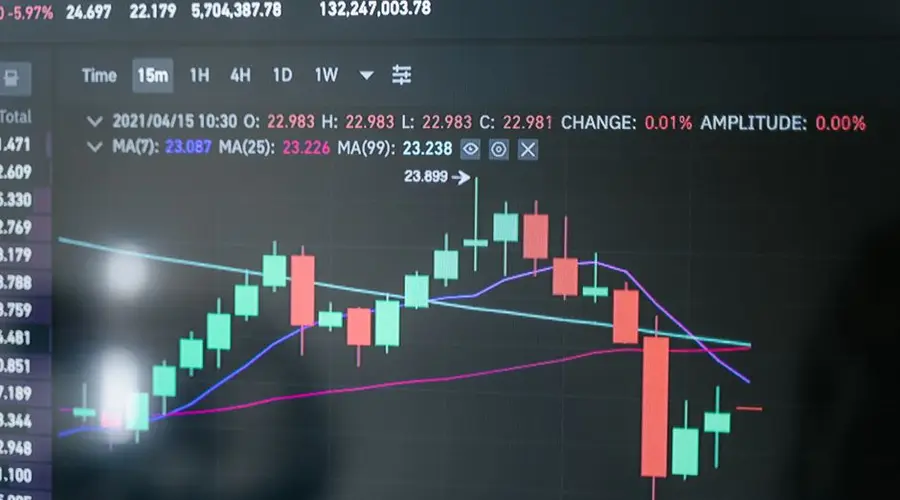
The chart below shows a deterministic, illustrative example: a downtrend leading in, a bullish Tri-Star forming across three bars, then two possible continuations, a confirmation (price follows through higher) and a failure/look-alike (price breaks back down instead). Toggle between them to see why the three-doji sequence alone doesn't decide the outcome.
How to Trade a Tri-Star (Bullish)
Recognize how rare, and strict, the setup is
Because all three bars must independently qualify as dojis, with the middle one gapped away from the other two, the bullish Tri-Star is considered one of the rarest and most extreme reversal patterns in candlestick charting. Seeing one at all is uncommon; seeing one that also aligns with a meaningful downtrend and support level is rarer still.
Verify every bar, not just the middle one
Before treating a three-bar sequence as a Tri-Star, check each candle independently against the doji definition, near-equal open and close. A sequence where only the middle bar is a genuine doji is a Morning Doji Star, a different (and more common) pattern, not a Tri-Star.
Wait for confirmation
Like other multi-bar reversal patterns, a Tri-Star describes what already happened over three bars, not what happens next. Traders typically look to the bars that follow the pattern for confirmation that the reversal is holding before treating it as an actionable signal.
Common Tri-Star (Bullish) Mistakes
- Calling a pattern a Tri-Star when only the middle bar is genuinely a doji, all three bars must independently have near-equal opens and closes for the label to apply.
- Confusing it with a standard Morning Doji Star, which only requires the middle bar to be a doji, not all three.
- Skipping the gap check, the middle doji needs to gap below the first and third dojis; three dojis in a row without that gap isn't a Tri-Star.
- Treating rarity as reliability, an uncommon pattern isn't automatically a stronger signal; it still needs the same trend and confirmation context as any other reversal pattern.
Tri-Star (Bullish) vs. Similar Patterns
| Pattern | Bar count | Key difference from a Tri-Star |
|---|---|---|
| Tri-Star (Bullish) | 3 | Baseline, all three bars are dojis, with the middle one gapped below the other two |
| Morning Doji Star | 3 | Only the middle bar is a doji; the first and third are full-bodied candles |
| Morning Star | 3 | The middle bar is any small body, not necessarily a doji |
Limitations of the Tri-Star (Bullish) Pattern
A Tri-Star describes the shape and gap structure of three bars, not the cause behind them or what comes next. It carries no information about volume, order flow, or why three consecutive bars each closed near their open, that context has to come from elsewhere on the chart. Its rarity also means there's less real-world sample size to draw on than for more common single- or two-bar patterns, so treating it as a reliable standalone forecast rather than one input among several trend, level, and confirmation factors overstates what the pattern alone can tell you.
So Rare That Most Sightings Are Not It
Three consecutive dojis, with the middle one gapped below both neighbours, after a downtrend. Each requirement is uncommon and the combination is genuinely rare, which creates a specific hazard: the pattern is memorable, people look for it, and the natural response to a near-miss is to loosen a requirement until it fits. A sequence with one small-bodied candle among two dojis is not this pattern, and calling it one imports a rarity premium it has not earned.

The rarity also means there is very little to learn from. Whatever confidence anyone attaches to the pattern rests on a small number of historical instances, and a small sample supports weak conclusions regardless of how striking the shape is.
It is worth understanding structurally as the extreme version of the morning star family, where every bar rather than just the middle one shows indecision. That is a coherent idea, and it is also three consecutive sessions of nothing being resolved, which in a thin market can simply mean nobody was trading.
If you do find one, everything the family requires still applies: a genuine downtrend before it, and something after it to confirm that the indecision resolved upward rather than continuing.
Tri-Star (Bullish) FAQs
What makes a Tri-Star different from a Morning Doji Star?
A Morning Doji Star only requires the middle bar to be a doji, with full-bodied candles on either side. A Tri-Star requires all three bars, first, middle, and third, to independently qualify as dojis, which is a much stricter and rarer condition.
Why is the bullish Tri-Star considered so rare?
Because every one of its three bars must independently have a near-equal open and close, and the middle doji must also gap below the first and third, three separate conditions stacking on top of each other in a single trend. That combination doesn't come together often on real charts.
Where does the middle doji gap relative to the other two bars?
In the bullish Tri-Star, the middle doji gaps below both the first and third dojis, sitting isolated in a "star" position beneath them.
Is a Tri-Star the same as a Morning Star with three dojis?
Conceptually yes, a Tri-Star is essentially a Morning Star or Morning Doji Star where every bar, not just the middle one, is a doji. It shares the same three-bar downtrend-reversal structure but with a stricter requirement on every candle.
Does spotting a Tri-Star still require confirmation?
Yes. Like other multi-bar reversal patterns, a Tri-Star describes what already happened over three bars, not what happens next. Traders typically look for the bars that follow to confirm the reversal before treating it as an actionable signal.
Why do platforms disagree about what counts as a bullish tri-star?
Because the pattern stacks three doji tests and two gap tests, and every one of them carries a tolerance. Loosening any single tolerance increases the count; loosening all five increases it dramatically. Two implementations rarely agree, and a pattern reported by one platform is frequently absent from another looking at identical data.
Does the pattern require a decline of a particular size before it?
A preceding downtrend is required and no size is specified, which leaves the trend criterion doing unmeasured work. Three dojis after a shallow two-day dip and three dojis after a sustained decline satisfy the same definition. Since the pattern is meant to mark exhaustion, the scale of what is being exhausted matters and the definition does not capture it.
What if only two of the three bars are dojis?
It is not a tri-star. Depending on which bar has the larger body, the sequence may be a morning doji star or simply three small bars. The distinction matters because the tri-star reading rests on three consecutive sessions of complete balance, and two out of three is a materially weaker observation that has its own names.
Is a bullish tri-star ever found in liquid daily data?
Under the strict definition, very seldom. Three consecutive dojis with gaps on both sides of the middle one is an extreme coincidence in an actively traded instrument. Reported instances almost always come from a relaxed definition. That rarity also means there is essentially no examined evidence about how the strict version behaves.
References
- CMT Association: Technical Analysis Body of Knowledge and Research
- CFA Institute Research and Policy Center: Investment Research
- Steve Nison, Japanese Candlestick Charting Techniques (1991), the book credited with popularizing Japanese candlestick analysis in Western markets.
- SEC Investor.gov: Introduction to Investing