

Direct Answer
The bullish three-line strike is a four-bar pattern appearing in an uptrend, and it's the mirror image of the bearish three-line strike. The first three bars are consecutive long bullish candles, each closing higher than the last, on their own, this three-bar sequence looks similar to Three White Soldiers.
Key Takeaways
- A bullish three-line strike is a four-bar pattern that appears in an uptrend, the mirror image of the bearish three-line strike.
- The first three bars are consecutive long bullish candles, each closing higher, similar to Three White Soldiers on its own.
- The fourth bar gaps up further but then reverses into a long bearish candle that engulfs all three prior bars, closing below the first bar's open.
- Despite the dramatic-looking reversal candle, classical teaching treats this as a continuation pattern, the uptrend is expected to resume, not end.
- It's a rare, specific four-bar sequence, and shouldn't be confused with an ordinary bearish engulfing bar that happens to follow a few up days.
Three-Line Strike (Bullish) Candlestick Pattern: Formation, Meaning, and Signals
A bullish three-line strike is a four-bar candlestick pattern where three consecutive rising candles are followed by a fourth bar that gaps up and then reverses into a long bearish candle engulfing all three prior bars. Despite the sharp-looking reversal, classical technical analysis reads this as a continuation signal for the existing uptrend.
What Is a Three-Line Strike (Bullish)?
The bullish three-line strike is a four-bar pattern appearing in an uptrend, and it's the mirror image of the bearish three-line strike. The first three bars are consecutive long bullish candles, each closing higher than the last, on their own, this three-bar sequence looks similar to Three White Soldiers.
The fourth bar is what makes the pattern distinct: it gaps up further in the direction of the trend, but then reverses to close as a long bearish candle that engulfs all three prior bars, closing below the first bar's open. Visually, the fourth bar looks like it erases the entire three-bar rally in a single move. Classical teaching, however, holds that this is typically a continuation pattern, the uptrend is expected to resume rather than end.
How a Three-Line Strike (Bullish) Forms
Formation happens in two stages. First, three consecutive bullish bars build a short uptrend, each bar closing higher than the one before it, the same three-bar structure that defines Three White Soldiers. Second, the fourth bar opens with a gap up, continuing the trend's momentum, but then sellers take control and the bar closes as a long bearish candle whose range fully engulfs the bodies of all three prior bars, with the close landing below the first bar's open.
That full-engulfing fourth bar is what separates this pattern from a simple three-bar rally or an ordinary two-bar bearish engulfing setup, the engulfing bar here has to swallow three bars' worth of price action, not just one.
Three-Line Strike (Bullish) Example
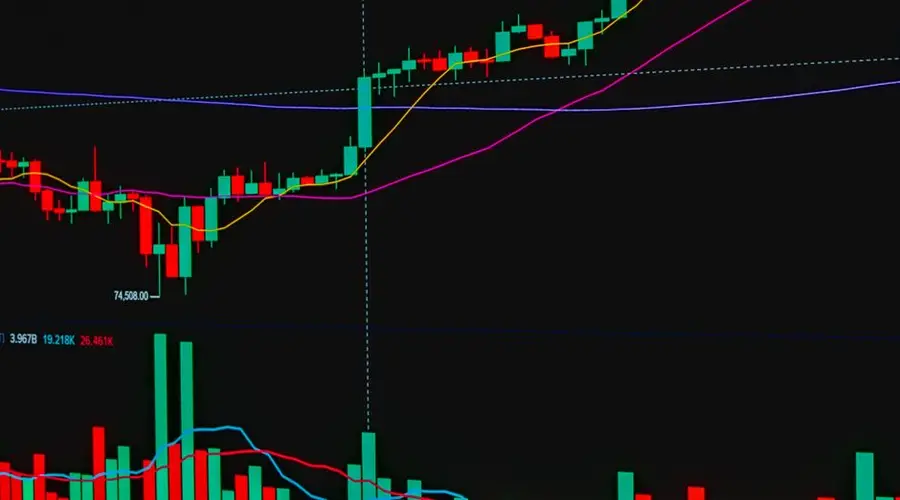
The chart below shows a deterministic, illustrative example: an uptrend leading in, the three rising bars, the engulfing fourth bar, then two possible continuations, a confirmation (price resumes higher, per the classical continuation reading) and a failure/look-alike (price keeps falling instead). Toggle between them to see why the engulfing bar alone doesn't decide the outcome.
How to Trade a Three-Line Strike (Bullish)
Know the classical reading before reacting to the fourth bar
The fourth bar looks like a strong bearish reversal, and reacting to it in isolation, treating it as a fresh downtrend signal, misses the pattern's classical interpretation. As with its bearish counterpart, the classical read treats this as a continuation signal for the existing uptrend, despite how dramatic the reversal candle appears.
Treat the classical read as a hypothesis, not a guarantee
The continuation interpretation is a starting hypothesis to test against real price data and the specific market and timeframe being traded, not a rule that holds unconditionally. Confirming whether price actually resumes higher after the pattern, rather than assuming it will, is part of trading it responsibly.
Weigh it against the surrounding trend
Because the pattern only makes sense in the context of a prior uptrend, its reliability depends on the strength and quality of that trend leading into the four bars. A three-line strike forming after a weak, choppy advance carries a different risk profile than one forming after a clean, sustained uptrend.
Common Three-Line Strike (Bullish) Mistakes
- Assuming the engulfing fourth bar automatically means a reversal, without knowing the pattern's classical continuation interpretation, the size and shape of that bar can be read backward from how it's traditionally taught.
- Confusing it with an ordinary bearish engulfing bar, a two-bar bearish engulfing setup that happens to follow three up days is not the same as this specific, rarer four-bar pattern.
- Skipping the requirement that all three prior bars be fully engulfed, if the fourth bar's range doesn't swallow all three prior bodies, the pattern isn't a three-line strike.
- Ignoring the strength of the underlying uptrend, the pattern's classical meaning is tied to the three-bar rally that precedes it, not to the fourth bar in isolation.
Three-Line Strike (Bullish) vs. Similar Patterns
| Pattern | Bar count | Key difference |
|---|---|---|
| Three-Line Strike (Bullish) | Four bars | Baseline, three rising bars then a full engulfing bearish bar, classically read as continuation |
| Three White Soldiers | Three bars | Three rising bars only, with no engulfing fourth bar |
| Bearish Engulfing | Two bars | A single two-bar engulfing shape, unrelated to a prior three-bar rally |
Limitations of the Three-Line Strike (Bullish) Pattern
The bullish three-line strike describes a specific four-bar price sequence, not a forecast. It carries no information about volume, order flow, or why the fourth bar's sharp reversal occurred, a gap-up-then-reverse bar driven by a scheduled news event behaves differently from one that formed on ordinary trading. It's also a relatively rare pattern, so any historical continuation rate is drawn from a smaller sample than more common patterns like a single engulfing bar. Like any candlestick pattern, it works best combined with trend context and a defined plan for confirming or invalidating the classical continuation read, not used alone.
A Reversal Bar Inside a Continuation Pattern
The fourth bar of this pattern undoes the previous three, gapping higher and then reversing to engulf all of them, and the pattern is still read as bullish continuation. That is genuinely counterintuitive and it is the thing worth understanding. The claim is that a single session giving back three sessions of gains, without breaking the trend structure around it, is a shakeout rather than a turn.

It is also a claim that deserves scepticism proportionate to how strange it is. A bar that reverses three sessions is a large event, and treating it as confirmation of the trend it just erased asks a lot. Whatever follows carries more weight here than the pattern itself.
The identification requirements are strict: three consecutive long advance candles each closing higher, then a fourth that gaps up before reversing and closing below the first bar open. Loosening any of them produces a common sequence rather than this pattern.
The size of that fourth bar also has a practical consequence. Any level taken from it sits far from an entry, so a position based on this pattern carries a wide defined risk by construction.
Three-Line Strike (Bullish) FAQs
Is a bullish three-line strike a reversal signal?
Not classically. Even though the fourth bar is a dramatic bearish candle that engulfs the prior three, the traditional interpretation treats the pattern as a continuation signal, the existing uptrend is expected to resume, not reverse.
How is a bullish three-line strike different from Three White Soldiers?
Three White Soldiers is only the first three rising bars. A bullish three-line strike requires a fourth bar that gaps up and then reverses into a long bearish candle engulfing all three prior bars, without that fourth bar, it's just Three White Soldiers.
How is a bullish three-line strike different from a bearish engulfing bar?
A bearish engulfing bar is a two-bar shape and can appear anywhere. A bullish three-line strike specifically requires three consecutive rising bars first, followed by a fourth bar that engulfs all three, the prior rally is part of the pattern's definition.
Should the fourth bar's engulfing size change how the pattern is read?
Classical teaching says no, the size of the reversal-looking fourth bar doesn't override the pattern's continuation reading. That said, the classical read is a hypothesis to test against real data, not a rule to apply blindly.
Why does a pattern that looks bearish get read as bullish continuation?
The classical logic is that the fourth bar's sharp reversal represents a shakeout of late sellers rather than a genuine change in control, after which the underlying uptrend that produced the first three bars is expected to continue.
How does the fourth candle compare in size to the first three?
It spans all of them, opening above the third candle close and closing below the first candle open. That makes it larger than any of the three individually and larger than their combined net movement. The size is a consequence of the definition rather than a separate requirement, and it is why the pattern is visually distinctive when it does appear.
Does the fourth candle have to close below the first candle open?
In the standard definition yes, which is the condition that makes the reversal complete rather than partial. Relaxing it to closing below the third candle open produces a far more common pattern where only part of the advance was retraced. The two versions describe different events and share a name in most published material.
Do the three rising candles need progressively higher closes?
Yes. The three-line part of the name refers to a sustained advance, so each candle should close above the last, which is the same requirement three white soldiers imposes. Sequences where one candle closes flat or lower are not the pattern, though implementations that test only for three bullish bodies will admit them.
What does a scanner return if the engulfing test is loosened?
A great many instances, most of which are an ordinary three-bar advance followed by a down day. The full engulfing requirement is doing nearly all the selectivity in this pattern, so relaxing it changes the frequency by orders of magnitude. Any figure quoted about how often the pattern occurs is really a figure about which version was tested.
References
- CMT Association: Technical Analysis Body of Knowledge and Research
- CFA Institute Research and Policy Center: Investment Research
- Steve Nison, Japanese Candlestick Charting Techniques (1991), the book credited with popularizing Japanese candlestick analysis in Western markets.
- SEC Investor.gov: Introduction to Investing