
Direct Answer
The Three-Line Strike (Bearish) is a four-bar pattern that appears in a downtrend. The first three bars are consecutive long bearish candles, each closing lower than the one before, the same setup that defines Three Black Crows on its own.
Key Takeaways
- The Three-Line Strike (Bearish) is a four-bar pattern that appears in a downtrend, starting with three consecutive long bearish candles that each close lower, similar to Three Black Crows.
- The fourth bar gaps down further, then reverses to close as a long bullish candle that engulfs all three prior bars, closing above the first bar's open.
- Despite the strong-looking bullish fourth bar, classical candlestick teaching treats this as a continuation pattern, the downtrend is expected to resume, not reverse.
- Some modern traders dispute the classical reading and treat the engulfing fourth bar as a genuine reversal signal instead, the continuation interpretation is a hypothesis to test, not a certainty.
- It's a relatively rare pattern, easy to confuse with an ordinary bullish engulfing bar that simply happens to follow three down days.
Three-Line Strike (Bearish) Candlestick Pattern: Formation, Meaning, and Signals
A Three-Line Strike (Bearish) is a four-bar candlestick pattern in which three consecutive bearish candles close progressively lower, and a fourth bar gaps down but reverses to close as a long bullish candle that engulfs all three prior bars. Despite that strong-looking fourth bar, classical teaching reads it as a continuation signal, the prior downtrend is expected to resume.
What Is a Three-Line Strike (Bearish)?
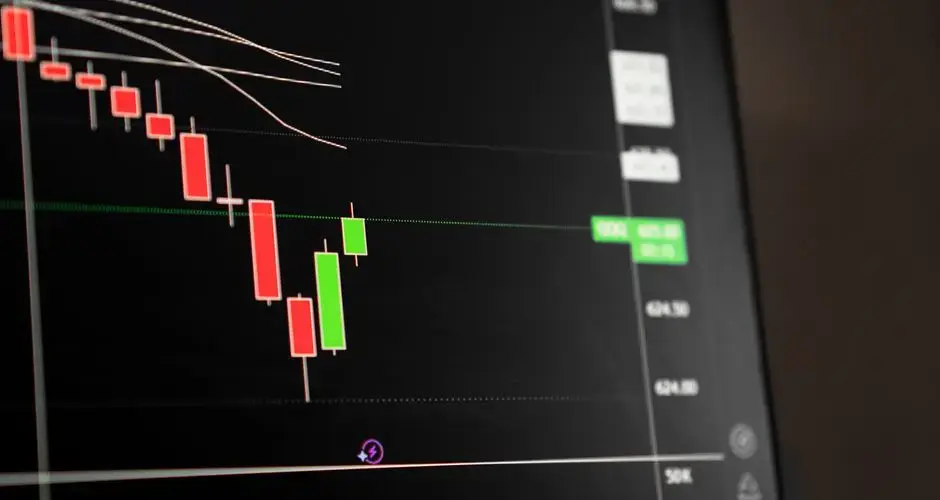
The Three-Line Strike (Bearish) is a four-bar pattern that appears in a downtrend. The first three bars are consecutive long bearish candles, each closing lower than the one before, the same setup that defines Three Black Crows on its own. A fourth bar then follows: it gaps down further, extending the decline, but reverses over the course of the bar to close as a long bullish candle that engulfs all three prior candles, closing above the first bar's open.
What makes the pattern counterintuitive is that this fourth bar looks like a decisive bullish reversal on its own. Classical candlestick teaching holds otherwise: it treats the Three-Line Strike as typically a continuation pattern, with the original downtrend expected to resume rather than reverse.
How a Three-Line Strike (Bearish) Forms
The pattern forms across exactly four bars, in a downtrend. Bars one through three are consecutive long bearish candles, each closing lower than the previous close, building the same visual impression of sustained selling pressure as Three Black Crows. Bar four departs from that rhythm: it gaps down at the open, extending the decline even further, but then reverses through the session to close as a long bullish candle. That fourth bar's real body fully engulfs the real bodies of all three prior bars, with its close landing above the first bar's open.
The engulfing fourth bar is what separates the Three-Line Strike from a plain three-bar decline, but per classical interpretation, that strength is read as an aggressive final flush of selling that the downtrend absorbs before resuming, not as a change in the underlying trend.
Three-Line Strike (Bearish) Example
The chart below shows a deterministic, illustrative example: a downtrend leading in, three declining bars, an engulfing fourth bar, then two possible continuations, a confirmation (the downtrend resumes, matching the classical continuation reading) and a failure/look-alike (price keeps rising instead). Toggle between them to see why the fourth bar alone doesn't decide the outcome.
How to Trade a Three-Line Strike (Bearish)
Know the counterintuitive reading
This is one of the more counterintuitive candlestick patterns: even though the fourth candle looks like a decisive bullish reversal, the traditional interpretation treats the Three-Line Strike as signaling continuation of the original downtrend rather than a genuine reversal. Trading it without knowing this classical reading risks entering long right as the downtrend is expected to resume.

Treat the continuation reading as a hypothesis
Some modern traders dispute the classical continuation reading and treat the engulfing fourth bar as a real reversal signal instead. Neither view should be taken on faith, treat the continuation interpretation as a hypothesis to test against the surrounding trend, volume, and nearby support/resistance, not as a guaranteed outcome.
Wait for the bars that follow
Because the pattern's classical and modern readings point in opposite directions, what happens on the bars immediately after the fourth candle matters more than the pattern itself. A resumption of the downtrend supports the classical continuation reading; a sustained move higher supports the reversal reading instead.
Common Mistakes
- Assuming the engulfing fourth bar automatically means a reversal, without being aware of the pattern's classical continuation interpretation, the strong-looking bullish bar can be misread as a clean trend change.
- Not distinguishing this pattern from an ordinary bullish engulfing bar, a bullish engulfing candle that simply happens to follow three down days is not the same as a true Three-Line Strike, which requires the specific gap-down-then-full-engulf structure.
- Ignoring that this is a rare, four-bar pattern, treating every three-bar decline followed by any strong up bar as a Three-Line Strike overstates how often the exact structure actually appears.
- Trading the classical reading as certain, some traders dispute the continuation interpretation entirely, so treating it as guaranteed rather than a hypothesis to confirm is a common error.
Three-Line Strike (Bearish) vs. Similar Patterns
| Pattern | Bar count | Key difference |
|---|---|---|
| Three-Line Strike (Bearish) | 4 | Baseline, three declining bars then a fourth bar that fully engulfs all three, classically read as continuation |
| Three Black Crows | 3 | Three declining bars only, with no engulfing fourth bar |
| Bullish Engulfing | 2 | A single two-bar engulfing shape, unrelated to a prior three-bar decline |
Limitations of the Three-Line Strike (Bearish) Pattern
The Three-Line Strike (Bearish) describes a specific four-bar open-close-high-low structure, not a forecast. It carries no information about volume, order flow, or the reasons behind the fourth bar's reversal, and it says nothing about how far a continuation or reversal move might travel. Its classical continuation reading is a traditional interpretation, not a rule verified the same way for every market or timeframe, and it is directly disputed by some modern traders who read the same shape as bullish. Like any candlestick pattern, it works best combined with trend context and a defined plan for what happens next, not used as a standalone signal.
One Bar That Undoes Three
The fourth candle here engulfs three prior sessions, closing above the first bar open. Whatever you conclude about the pattern, that bar is enormous relative to everything around it, and the practical consequence follows immediately: every level derived from the pattern sits a long way from every other level. A stop beyond the bar extreme is wide, and a position sized without accounting for that will be larger than intended.

The interpretive puzzle is the same as its bullish mirror. A single session reversing three is read as a shakeout within a continuing downtrend rather than as a bottom, which is a strong claim about a very visible move.
Given that, the sessions afterwards matter more than the pattern. If the decline resumes, the shakeout reading is supported; if the reversal extends, four bars of shape will not have told you much.
The requirements are exact: three consecutive long decline candles each closing lower, then a fourth that gaps down and reverses to engulf all three. Approximate matches are common and are a different sequence.
Three-Line Strike (Bearish) FAQs
Is the Three-Line Strike (Bearish) a reversal or continuation pattern?
Despite the strong-looking bullish fourth bar, classical candlestick teaching treats the Three-Line Strike (Bearish) as a continuation pattern, the original downtrend is expected to resume, not reverse.
Why does the fourth bar look bullish if the pattern is bearish?
The fourth bar gaps down further and then reverses to close as a long bullish candle that engulfs all three prior bars, closing above the first bar's open. That strong shape is what makes the pattern counterintuitive, it looks like a reversal even though the classical reading says continuation.
How is the Three-Line Strike (Bearish) different from Three Black Crows?
Three Black Crows is three consecutive long bearish candles, each closing lower, with no fourth bar. The Three-Line Strike (Bearish) starts with that same three-bar decline but adds a fourth bar that gaps down and then engulfs all three prior candles.
Do all traders agree the Three-Line Strike is a continuation pattern?
No. The classical interpretation reads it as continuation, but some modern traders dispute this and treat the engulfing fourth bar as a genuine reversal signal instead. Treat the continuation reading as a hypothesis to test against current price action, not a certainty.
How rare is the Three-Line Strike (Bearish) pattern?
It's a relatively rare four-bar pattern, since it requires three consecutive declining candles followed by a specific gap-down-then-full-engulf fourth bar. It's also easy to confuse with an ordinary bullish engulfing bar that simply happens to follow three down days.
Does the fourth candle have to engulf all three?
Under the standard definition it opens below the third candle close and closes above the first candle open, which means it covers the entire three-bar decline. That is a demanding condition and it is what makes the pattern uncommon. Implementations that require only engulfing the third candle find a much more frequent and structurally different pattern.
How is this coded so it does not match three black crows plus a bounce?
By the fourth candle condition, which is the only thing separating them. Three black crows followed by an up bar is common; three black crows followed by an up bar that closes above the open of the first is not. Scanners that test only for three down bars and one up bar will return large numbers of instances that are not the pattern.
Where must the fourth candle open?
Below the close of the third candle, so the reversal begins from the low point of the sequence rather than from a gap higher. That condition ensures the entire retracement happened within the fourth session. An implementation that allows the fourth candle to gap up admits cases where much of the reversal occurred overnight, which is a different event.
What invalidates a bearish three-line strike read?
A subsequent close below the low of the third candle, which resumes the decline the fourth candle interrupted. Since the pattern is usually classified as continuation, that close is what the reading expects, which makes the invalidation level ambiguous. This is a case where the disagreement about whether the pattern is continuation or reversal has practical consequences.
References
- CMT Association: Technical Analysis Body of Knowledge and Research
- CFA Institute Research and Policy Center: Investment Research
- Steve Nison, Japanese Candlestick Charting Techniques (1991), the book credited with popularizing Japanese candlestick analysis in Western markets.
- SEC Investor.gov: Introduction to Investing