
Direct Answer
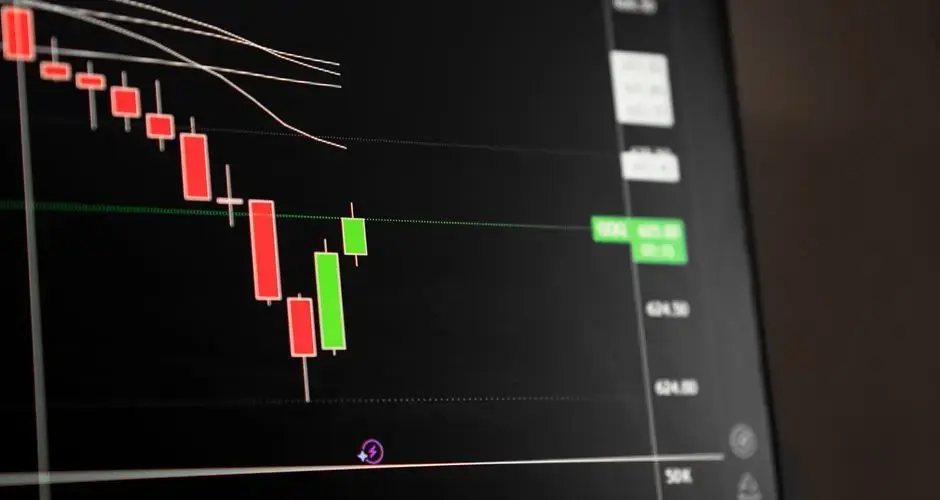
Three Black Crows is a three-bar bearish pattern that appears after an uptrend. It consists of three consecutive long bearish (red) candles, each one opening within or near the prior candle's real body and closing at or near its own low, with minimal wicks on any of the three bars.
Key Takeaways
- Three Black Crows is a three-bar bearish reversal pattern appearing after an uptrend, the mirror image of Three White Soldiers.
- It's made of three consecutive long bearish (red) candles, each opening within or near the prior candle's real body and closing at or near its own low, with minimal wicks.
- The steady sequence of lower closes over three sessions shows sustained selling pressure rather than a single sharp drop.
- It's read as more reliable when each bar's range is roughly similar in size, steady selling, rather than accelerating.
- Three long red candles with long lower wicks and accelerating declines is often a look-alike sign of panic or capitulation exhaustion, not the controlled Three Black Crows pattern.
Three Black Crows Candlestick Pattern: Formation, Meaning, and Signals
Three Black Crows is a bearish reversal pattern made of three consecutive long red candles, each opening within the prior candle's body and closing near its own low. It appears after an uptrend and signals sustained, steady selling pressure, the mirror image of Three White Soldiers.
What Is a Three Black Crows Pattern?
Three Black Crows is a three-bar bearish pattern that appears after an uptrend. It consists of three consecutive long bearish (red) candles, each one opening within or near the prior candle's real body and closing at or near its own low, with minimal wicks on any of the three bars.
Because each bar closes lower than the last in a steady, controlled sequence, the pattern is read as evidence of sustained selling pressure across three sessions rather than a single sharp drop. That distinguishes it from a one-bar shock, the pattern's significance comes from the consistency across all three candles, not from any single bar in isolation.
How a Three Black Crows Forms
Each of the three candles opens within, or near, the real body of the candle before it, and closes at or near its own low, with minimal upper or lower wicks. That opening-within-the-prior-body detail matters: it's what separates a controlled, textbook Three Black Crows from three red candles that simply happened to close lower on three different days.
When the open of each bar lands especially close to the prior bar's close, so the three candles form a near-continuous staircase down with little to no gap between them, the pattern is sometimes called an Identical Three Crows. It shares the same core structure as Three Black Crows, just with tighter spacing between the bars.
Three Black Crows Example
The chart below shows a deterministic, illustrative example: an uptrend leading in, three Black Crows candles forming, then two possible continuations, a confirmation (selling pressure continues) and a failure/look-alike (price stabilizes instead). Toggle between them to see why the three bars alone don't decide the outcome.
How to Trade a Three Black Crows
Check for steady, similar-sized bars
The pattern is read as more reliable when each of the three bars' ranges is roughly similar in size, steady selling, rather than accelerating from one bar to the next. A sequence that grows sharply larger bar to bar is a different situation than one that stays consistent.

Watch wick length across all three bars
A sequence of three long red candles with long lower wicks and accelerating declines is often a look-alike sign of panic or capitulation exhaustion rather than the controlled Three Black Crows pattern. The two can precede very different outcomes, so checking wick length across all three bars, not just the shape of one, is a key part of reading the setup correctly.
Confirm the prior uptrend
Because the pattern is defined as a reversal signal, it needs an uptrend beforehand to qualify. The same three-candle shape appearing mid-downtrend or inside a sideways range isn't a Three Black Crows reversal in the same sense, it's just three down days.
Common Three Black Crows Mistakes
- Labeling any three consecutive down days as Three Black Crows, without checking that each bar actually opens within the prior bar's body, three red candles in a row aren't automatically this pattern.
- Missing the difference between steady selling and capitulation, the textbook pattern shows controlled, similar-sized declines; an accelerating, long-wicked decline often marks capitulation and a near-term bounce instead.
- Ignoring the need for a prior uptrend, the pattern only qualifies as a reversal signal when it appears after an uptrend, not in the middle of an existing downtrend.
- Treating the pattern as a standalone entry signal, like other multi-bar candlestick patterns, it's a description of recent selling behavior, not a complete trading plan on its own.
Three Black Crows vs. Similar Patterns
| Pattern | Bar count | Key difference from Three Black Crows |
|---|---|---|
| Three Black Crows | 3 | Baseline, three long bearish bodies, each opening within the prior body, minimal wicks, steady declines |
| Three White Soldiers | 3 | The bullish mirror image, three long bullish bodies with rising closes after a downtrend |
| Bearish Engulfing | 2 | Only two bars; the second candle's body fully engulfs the first, instead of three sequential closes lower |
| Evening Star | 3 | Three bars, but the middle bar is a small-bodied "star," not a full-sized bearish body like all three Three Black Crows bars |
Limitations of the Three Black Crows Pattern
Three Black Crows describes three bars' worth of open-close-wick relationships, not a forecast. It doesn't tell you the reason behind the selling, how much further a decline might run, or whether the next session will continue the trend or reverse it. It also doesn't distinguish, by shape alone, between orderly institutional distribution and a crowd rushing for the exits, that distinction depends on checking wick length and bar-to-bar range consistency, not just counting three red candles. Like other multi-bar patterns, it works best combined with trend context and a defined plan, not used in isolation.
By the Third Crow, the Move Has Happened
The pattern requires three consecutive long red candles, each closing at or near its low. By definition, that is three full sessions of decline before the signal exists, which means anyone acting on the completed pattern is entering after a substantial part of the move. That is not an argument against it. It is an argument for being honest that this is a confirmation of a shift already underway rather than an early warning of one.
The wick requirement is what makes the sequence meaningful rather than merely red. Closes at or near the lows say sellers held control right into each close; three red bodies with long lower shadows describe a market being bought at lower prices each session, which is a different picture entirely.
Each candle opening within or near the prior body keeps it a steady progression. Large gaps between them describe something more abrupt than the orderly distribution the pattern is meant to capture.
Its mirror is three white soldiers, and the same look-alike caution applies in reverse: bodies that shrink across the sequence describe a decline losing force rather than one gathering it.
Three Black Crows FAQs
Does Three Black Crows always mean a trend reversal?
It only qualifies as a reversal signal when it appears after an uptrend. Three consecutive long red candles in the middle of a downtrend or a sideways range are just continuation or noise, not a Three Black Crows reversal setup.
What's the difference between Three Black Crows and a panic sell-off?
Three Black Crows shows steady, controlled selling with roughly similar-sized bars and minimal wicks. A panic sell-off often shows three long red candles with long lower wicks and accelerating declines, that look-alike pattern points to capitulation exhaustion, not the same setup.
Is Three Black Crows the opposite of Three White Soldiers?
Yes. Three White Soldiers is the bullish mirror image, made of three consecutive long bullish candles with rising closes, appearing after a downtrend instead of an uptrend.
What confirms each bar of a Three Black Crows pattern?
Each of the three candles should open within or near the prior candle's real body and close at or near its own low, with minimal wicks. A bar that gaps far below the prior body or leaves a long wick doesn't fit the textbook definition.
What is an Identical Three Crows pattern?
Identical Three Crows is a name sometimes used for a Three Black Crows pattern where the open of each bar lands especially close to the prior bar's close, making the sequence look like a near-continuous staircase down.
Must each candle open within the previous candle body?
The classical requirement is that each opens inside the previous body and closes below its low, which describes a steady, orderly decline rather than a gapping collapse. Many implementations drop the opening condition and require only three consecutive lower closes. The relaxed version admits gap-driven sequences that the original definition was written to exclude.
What does a long lower shadow on one of the crows imply?
That buyers appeared within that session and recovered part of it, which weakens the reading of relentless selling the pattern rests on. The strict variant known as identical three crows requires minimal shadows for exactly this reason. A sequence of three down closes where each session bounced off its low is a different picture from three sessions closing at their lows.
How does three black crows relate to a downside momentum move?
They describe overlapping behaviour in different vocabularies. A momentum move is defined by expanding ranges in one direction over several bars; three black crows is defined by three consecutive substantial down closes with specific opening conditions. Most three black crows sequences would be identified as momentum moves, and the candlestick version adds bar-level conditions the price-action version does not impose.
Does the pattern require a preceding advance?
For the reversal reading, yes. Three long down candles in the middle of an existing decline are continuation rather than reversal, and the shape is identical. The pattern is frequently reported without the trend condition checked, which is how a sequence deep inside a downtrend gets described as a reversal signal.
References
- CMT Association: Technical Analysis Body of Knowledge and Research
- CFA Institute Research and Policy Center: Investment Research
- Steve Nison, Japanese Candlestick Charting Techniques (1991), the book credited with popularizing Japanese candlestick analysis in Western markets.
- SEC Investor.gov: Introduction to Investing