
Direct Answer
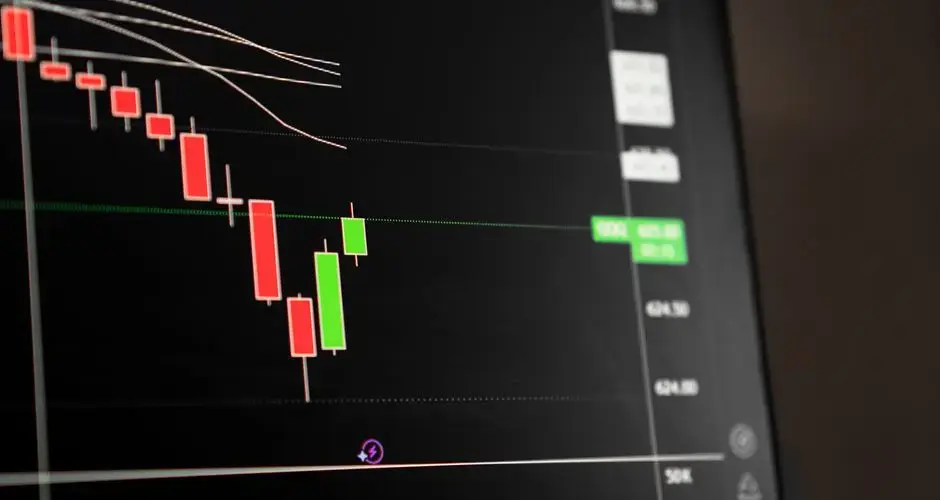
Every candlestick plots four prices for a period: open, high, low, and close. A Short Bearish Candle forms when the close lands below the open, producing a red (bearish) real body, but the size of that body stays small relative to a strongly trending bar.
Key Takeaways
- A Short Bearish Candle is a single bar with a small red (bearish) real body, showing modest selling pressure over the session.
- On its own it is a weak momentum signal rather than a named reversal pattern, its implication depends heavily on where it appears and what surrounds it.
- Appearing after a sharp decline, it can tentatively suggest selling pressure is fading; appearing mid-trend, it usually just reflects a quiet, lower-conviction session.
- It carries much less weight on its own than a Long Bearish Candle, whose long body reflects stronger, higher-conviction selling.
- It's easily confused with a Spinning Top, which shares a small body but adds wicks on both sides, signaling two-sided indecision rather than one-sided (if modest) selling.
Short Bearish Candle Candlestick Pattern: Formation, Meaning, and Signals
A Short Bearish Candle is a single-bar candlestick with a small red real body, reflecting modest selling pressure over the session. On its own it's a weak momentum signal rather than a named reversal pattern, its meaning depends heavily on where it appears and what surrounds it.
What Is a Short Bearish Candle?
Every candlestick plots four prices for a period: open, high, low, and close. A Short Bearish Candle forms when the close lands below the open, producing a red (bearish) real body, but the size of that body stays small relative to a strongly trending bar. The result is a candle that leans bearish without showing the forceful, one-directional pressure of a longer-bodied candle.
Because the body is small, a Short Bearish Candle is read as modest, lower-conviction selling, sellers had the edge over the session, but not by much. That's a description of the bar itself, not a forecast: a Short Bearish Candle says little about what happens next until it's read against the trend and context surrounding it.
How a Short Bearish Candle Forms
A Short Bearish Candle forms whenever the close is below the open (a red, bearish bar) and the real body is small, modest, not extreme, compared to the bar's overall range. Unlike patterns defined by wick placement, a Short Bearish Candle's defining feature is simply a compact bearish body; wicks above and below can vary without changing the classification.
On its own, a single Short Bearish Candle is not a named reversal pattern the way a hammer or engulfing bar is. It's better thought of as a description of one session's modest selling pressure, a weak momentum signal whose significance is set almost entirely by the trend, level, and volume it appears alongside, not by its shape alone.
Short Bearish Candle Example
The chart below shows a deterministic, illustrative example: a decline leading in, a Short Bearish Candle forming, then two possible continuations, a confirmation (selling pressure continues) and a failure/look-alike (price reverses higher instead). Toggle between them to see why the candle alone doesn't decide the outcome.
How to Trade a Short Bearish Candle
Context first
A Short Bearish Candle appearing after a sharp decline can signal that selling pressure is fading, a tentative bullish sign, since sellers weren't able to press the advantage as hard as they had on prior bars. The same shape appearing in the middle of an established trend usually just reflects a quiet, lower-conviction session rather than anything actionable.

Weigh it against a Long Bearish Candle
Because its body is small, a Short Bearish Candle carries much less weight on its own than a Long Bearish Candle. Traders generally treat it as supporting context, one data point among several, rather than a standalone signal worth acting on by itself.
Watch trend and volume together
The surrounding trend and volume context do most of the interpretive work. A Short Bearish Candle on light volume in a quiet range means something very different from the same shape on elevated volume near a key support or resistance level.
Common Mistakes
- Reading a small red candle as meaningfully bearish on its own, small bodies generally carry less signal weight, not more.
- Ignoring the surrounding trend, the same small body means very different things after a sharp decline versus in the middle of a quiet range.
- Ignoring volume context, a Short Bearish Candle on light volume carries far less significance than one on elevated volume near a key level.
- Confusing it with a Long Bearish Candle, treating a modest, small-bodied bar as if it carried the same momentum weight as a long-bodied one.
Short Bearish Candle vs. Similar Patterns
| Pattern | Body size | Key difference from a Short Bearish Candle |
|---|---|---|
| Short Bearish Candle | Small | Baseline, small red body, weak/low-conviction signal |
| Long Bearish Candle | Long | Long red body reflecting strong, high-conviction selling momentum |
| Spinning Top | Small | Small body with wicks on both sides, two-sided indecision, not one-sided (if modest) selling |
Limitations of the Short Bearish Candle
A Short Bearish Candle is a description of one bar's modest selling pressure, not a forecast. It carries no information about volume, order flow, or the reasons behind the session's mild decline on its own, a small red candle caused by a quiet, low-liquidity session behaves differently from one that formed on heavy volume at a key level. It also says nothing about magnitude: it can precede a larger move or none at all. Like any single-bar pattern, it works best combined with trend context and volume, not used alone.
Short Compared to the Bars Around It
There is no absolute size that makes a body short. The judgment is relative to the recent bars on the same chart, which means the same candle can be short on a volatile chart and unremarkable on a calm one, and the classification shifts with the comparison window. Whenever the label is used, an implicit benchmark is being applied, and it is worth knowing what it is.
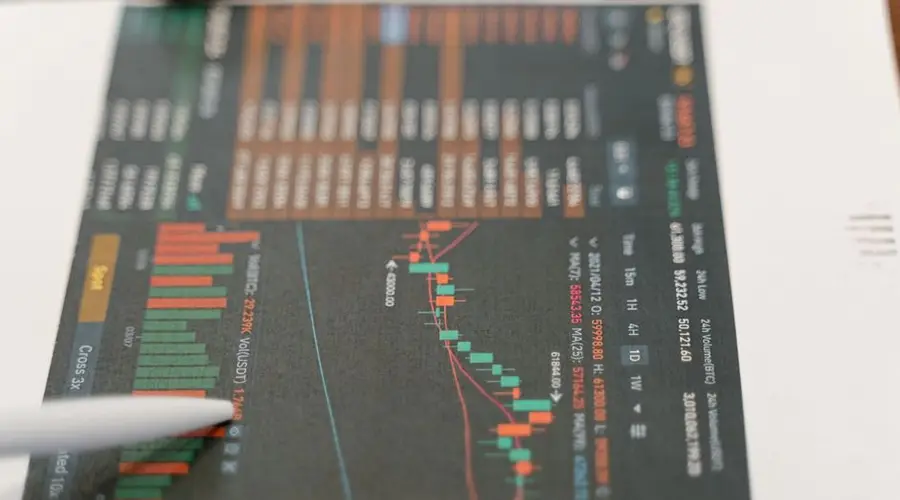
What the bar reports is modest selling pressure over the session. That is a description of pace rather than a signal, and its interest comes almost entirely from what it follows: a short red candle after a sequence of long ones is a deceleration, and the same bar inside a quiet range is nothing in particular.
The wicks change the reading substantially. A small body with long shadows on both sides describes a contested session that ended close to flat, which is a different event from a small body with almost no range at all.
On its own it is not a named reversal pattern and does not carry one implication. What it means depends on the trend it sits in and on the bars immediately around it, which is where any usable reading has to come from.
Short Bearish Candle FAQs
Is a Short Bearish Candle a reversal signal?
Not on its own. A Short Bearish Candle is a weak momentum signal, not a named reversal pattern. It shows modest selling pressure over one session, whether that hints at a reversal depends heavily on where it appears and what surrounds it.
What's the difference between a Short Bearish Candle and a Long Bearish Candle?
Both have a red (bearish) real body, but a Short Bearish Candle's body is small, reflecting modest, lower-conviction selling. A Long Bearish Candle's body is long, reflecting strong, high-conviction selling momentum over the session.
What's the difference between a Short Bearish Candle and a Spinning Top?
A Short Bearish Candle has a small red body with one-sided (if modest) selling pressure. A Spinning Top has a small body with wicks on both sides, reflecting two-sided indecision rather than a mild lean in either direction.
When does a Short Bearish Candle matter most?
It carries more weight after a sharp decline, where it can tentatively suggest selling pressure is fading. Appearing in the middle of an established trend, it usually just reflects a quiet, lower-conviction session rather than anything actionable.
Should a Short Bearish Candle be traded on its own?
No. Its small body carries less signal weight than a longer-bodied candle, and its meaning depends on the surrounding trend and volume context. Most approaches treat it as supporting context rather than a standalone entry signal.
What makes a candle short rather than merely ordinary?
A comparison against a baseline, usually the average body size or average true range over a recent window. Without one, short is undefined, and using an absolute currency amount makes the classification depend on the price level rather than on the instrument behaviour. The threshold chosen determines what share of bars are labelled short, which is a design decision rather than an observation.
When do short bearish candles cluster?
In quiet periods generally: holiday-thinned sessions, the middle of summer in many markets, and stretches where participation is low for structural reasons. That gives a mechanical explanation for a run of small bodies which has nothing to do with indecision between buyers and sellers. Checking the calendar is faster than interpreting the sequence.
Does a short bearish candle mean anything in an illiquid instrument?
Very little on its own. Where few trades occur, small bodies are the default rather than a signal, and a short candle simply records that nothing much happened. The interpretive content of the shape comes from it being unusual for that instrument, so a chart where most bars are short leaves the pattern with nothing to distinguish.
Is a short bearish candle the same as an inside bar?
No, and the two are independent. Short refers to body size relative to a baseline; inside refers to the full range being contained within the previous bar range. A short candle can extend well beyond the previous bar with its shadows, and an inside bar can have a substantial body if the previous bar was very large.
References
- CMT Association: Technical Analysis Body of Knowledge and Research
- CFA Institute Research and Policy Center: Investment Research
- Steve Nison, Japanese Candlestick Charting Techniques (1991), the book credited with popularizing Japanese candlestick analysis in Western markets.
- SEC Investor.gov: Introduction to Investing