
Direct Answer
The concealing baby swallow is a four-bar candlestick pattern that shows up in an established downtrend. It combines a stretch of unambiguous selling with a brief, failed rally attempt that ends up reinforcing the downtrend rather than breaking it, which is what separates it from a straightforward reversal or continuation pattern built from a single bar shape.
Key Takeaways
- A concealing baby swallow is a rare four-bar bearish continuation pattern that appears within an existing downtrend.
- The first two bars are long bearish marubozu-style candles, no wicks, just a solid decline in each direction.
- The third bar gaps up and forms a long upper wick that reaches back into the second candle's body, but it closes back down near its own low instead of holding the gain.
- The fourth bar fully engulfs the third candle and closes at a new low, which is what confirms the downtrend is continuing rather than reversing.
- It is considered one of the rarer and more obscure candlestick patterns because all four bars have to appear in this specific sequence.
Concealing Baby Swallow Candlestick Pattern: Formation, Meaning, and Signals
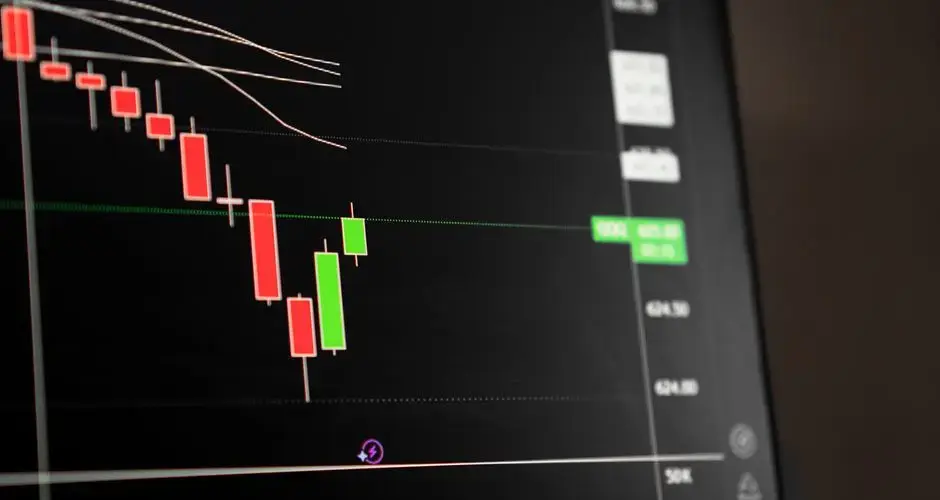
A concealing baby swallow is a rare, four-bar bearish continuation pattern that forms during a downtrend. Two long bearish marubozu candles are followed by a third bar that fails a brief upward rally attempt, then a fourth bar that engulfs it and closes at a new low.
What Is a Concealing Baby Swallow?
The concealing baby swallow is a four-bar candlestick pattern that shows up in an established downtrend. It combines a stretch of unambiguous selling with a brief, failed rally attempt that ends up reinforcing the downtrend rather than breaking it, which is what separates it from a straightforward reversal or continuation pattern built from a single bar shape.
Because the pattern depends on a precise sequence across four bars, two marubozu candles, a specific upper-wick failure, and an engulfing new-low close, it doesn't appear often. It's grouped with the rarer, more obscure entries in the candlestick pattern library rather than the everyday shapes traders scan for first.
How a Concealing Baby Swallow Forms
The first two bars are long bearish candles with no wicks, marubozu-style, meaning the open sits at (or effectively at) the high and the close sits at (or effectively at) the low, with each bar simply extending the decline.
The third bar breaks that pattern: it gaps up at the open and builds a long upper wick that reaches back into the second candle's body, hinting at a possible rally. But the bar doesn't hold that ground, it closes back down near its own low, meaning the rally attempt failed within the same bar.
The fourth bar completes the pattern by fully engulfing the third candle's range and closing at a new low. That close is what confirms the sequence as bearish continuation: the brief upward wick on bar three gets erased, and the trend resumes with strength.
Concealing Baby Swallow Example
The chart below shows a deterministic, illustrative example: a downtrend leading in, the four-bar concealing baby swallow sequence forming, then two possible continuations, a confirmation (the downtrend resumes as the pattern implies) and a failure/look-alike (price instead breaks back above the pattern's range). Toggle between them to see why the third bar's wick alone doesn't decide the outcome.
How to Trade a Concealing Baby Swallow
Don't stop reading at the third bar
The third bar's long upper wick can look, in isolation, like the start of a bullish reversal, a rally pushing back into the prior candle's body. Taken alone it's an ambiguous signal. The concealing baby swallow only becomes identifiable once the fourth bar engulfs that third candle and closes at a new low, which is what turns the brief upward wick into a failed attempt rather than a genuine turn.

Read the whole four-bar sequence as one signal
Despite the brief upward wick on the third bar suggesting a possible pause, the pattern as a whole signals the downtrend is continuing with strength. The two marubozu bars establish clear seller control, the failed rally on bar three shows buyers couldn't sustain any push back, and the engulfing new low on bar four confirms sellers regained control decisively.
Weigh its rarity
Because the concealing baby swallow is considered one of the rarer and more obscure candlestick patterns, it won't appear often on any given chart. That rarity is worth keeping in mind, a trader who sees something that resembles it should confirm every bar in the sequence matches before treating it as this specific pattern rather than a more common continuation shape.
Common Mistakes
- Reading the third bar's upper wick alone as bullish, a long upper wick reaching into the prior candle's body looks like a reversal attempt on its own, but the concealing baby swallow only forms if that bar closes back down near its low and gets engulfed by the fourth bar.
- Calling any two-bar marubozu sequence the start of the pattern, two long bearish marubozu candles in a downtrend are common; without the specific third-bar upper-wick failure and fourth-bar engulfing new low that follow, it isn't a concealing baby swallow.
- Acting before the fourth bar closes, the pattern isn't confirmed until the engulfing bar closes at a new low, since the third bar's wick alone is ambiguous.
- Overweighting a rare pattern's significance, its rarity makes it notable when it does appear, but it doesn't override the broader trend and context a trader should already be reading.
Concealing Baby Swallow vs. Similar Patterns
| Pattern | Bar structure | Key difference from a concealing baby swallow |
|---|---|---|
| Concealing Baby Swallow | 4 bars | Baseline, two marubozu bars, then an upper-wick bar that fails, then an engulfing new-low bar |
| Three Black Crows | 3 bars | Three steady declining bodies, with no marubozu or upper-wick failure requirement |
| Falling Three Methods | 5 bars | A pause of small bullish candles rather than a single failed rally attempt |
Limitations of the Concealing Baby Swallow Pattern
The concealing baby swallow describes a specific four-bar price sequence, not a forecast of how far or how fast the downtrend continues. It carries no information about volume, order flow, or why the third bar's rally attempt failed, a gap-up wick driven by a scheduled news release behaves differently from one that formed in ordinary trading, even though the candle shapes look identical. Because the pattern is rare, there are also fewer historical occurrences to draw on than with more common continuation shapes, which makes it harder to generalize about how reliably it plays out. Like any candlestick pattern, it works best combined with the broader trend and other context, not used alone.
Requirements Strict Enough That Near-Matches Dominate
Two consecutive marubozu-style decline candles with effectively no wicks, then a third that gaps up and reaches back into the second body with a long upper shadow while still closing lower, then a fourth that engulfs the third. Each condition is uncommon; together they are rare enough that most claimed sightings are approximations. The realistic use of this pattern is knowing what it is when someone names it, not scanning for it.

The no-wick requirement on the first two bars is the one most often relaxed, and relaxing it changes the sequence from an unbroken decline into an ordinary pair of down sessions. That distinction is the foundation the rest of the pattern sits on.
It is also a continuation pattern despite containing a bar that reaches upward, which is the part that reads oddly at first. The third bar attempt higher failing to hold is the point, not an inconsistency.
With so few genuine instances, nobody can say much about what typically follows one. That is a reason to weight it as an observation rather than as evidence, however striking the shape.
Concealing Baby Swallow FAQs
What makes the concealing baby swallow pattern bearish despite its upward wick?
The third bar's long upper wick shows a brief rally attempt, but that bar closes back down near its own low instead of holding the gain. The fourth bar then fully engulfs the third candle and closes at a new low, confirming the downtrend is continuing with strength rather than reversing.
How many bars does a concealing baby swallow pattern require?
Four bars in a downtrend: two long bearish marubozu-style candles with no wicks, a third bar that gaps up with a long upper wick but closes near its low, and a fourth bar that fully engulfs the third and closes at a new low.
What's the difference between a concealing baby swallow and three black crows?
Three black crows is three steadily declining candle bodies with no marubozu or upper-wick failure requirement. A concealing baby swallow specifically requires two marubozu bars followed by a failed upper-wick rally attempt and an engulfing new-low bar.
Is the concealing baby swallow a common pattern?
No. It is considered one of the rarer and more obscure candlestick patterns because it requires a specific four-bar sequence, two marubozu candles, a failed upper-wick rally, and an engulfing bar, to all appear in order.
Does the third bar's upper wick cancel the bearish signal?
No. The upper wick on the third bar can look like a pause or a possible bullish attempt, but because that bar closes back down near its low and the fourth bar engulfs it with a new-low close, the overall pattern still reads as bearish continuation.
What happens if only three of the four bars are present?
It is not the pattern. The definition requires a specific four-bar sequence, and each bar has its own condition: two marubozu-style down candles, a third that gaps down and trades up into the previous body, and a fourth that engulfs the third entirely. Removing any one leaves a sequence with no name and considerably less distinctiveness.
Why is this pattern so rarely reported?
Because it stacks four separate conditions including a gap and a full engulfing, and the probability of all of them occurring in sequence is low. That rarity is a direct consequence of the specification length rather than a property of markets. It also means any claim about how the pattern performs rests on a very small sample.
How would this pattern be written as a scanner condition?
It needs roughly six tests: body direction on each of four bars, shadow conditions on the first two, a gap condition on the third, and a full engulfing condition on the fourth. Each carries its own tolerance. Specifications of that length are extremely sensitive to the thresholds chosen, and two implementations rarely find the same instances.
Is there a Western chart-pattern equivalent?
Nothing corresponds directly. The pattern describes a decline that gaps lower, recovers within the bar, and is then fully overwhelmed, which in price-action terms is closest to a failed recovery inside a downtrend. Western pattern vocabulary works at a larger scale and has no name for a specific four-bar sequence, which is a general difference between the two traditions.
References
- CMT Association: Technical Analysis Body of Knowledge and Research
- CFA Institute Research and Policy Center: Investment Research
- Steve Nison, Japanese Candlestick Charting Techniques (1991), the book credited with popularizing Japanese candlestick analysis in Western markets.
- SEC Investor.gov: Introduction to Investing