
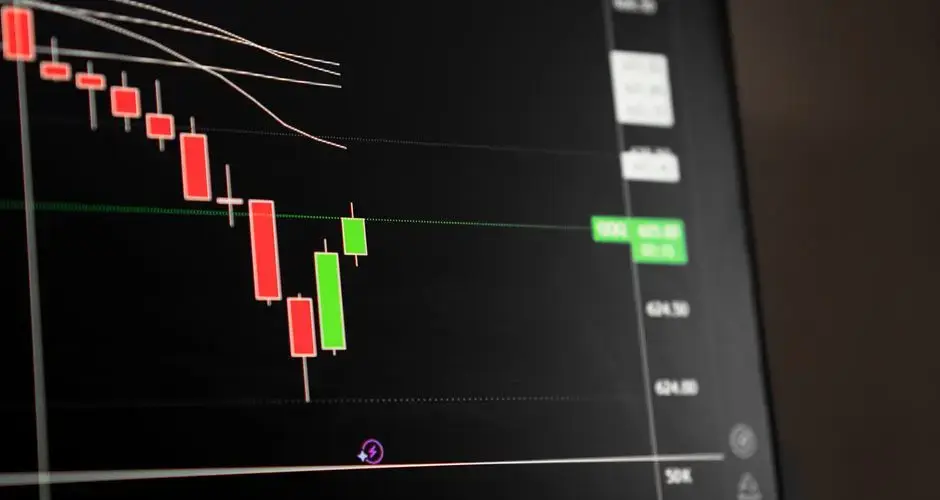
Direct Answer
Trend confirmation is the practice of verifying a suspected price trend with a second, independent signal, such as a moving average crossover, expanding volume, or an agreeing momentum reading, before treating the trend as reliable enough to act on. A single price move alone is treated as a candidate signal, not proof; confirmation is what upgrades it. The tradeoff is timing: waiting for agreement across signals typically means entering later than a trader who acts on price alone.
Key Takeaways
- Trend confirmation means requiring an independent signal to agree with price before treating a trend as reliable.
- Common confirming tools: moving average crossovers, volume, momentum oscillators (RSI, MACD), and ADX for trend strength.
- The goal is filtering out false starts and noise, not predicting the future.
- Confirmation is a tradeoff, it reduces false signals but delays entry versus acting on price alone.
- No single confirming indicator is definitive; most traders combine price structure with one or two independent tools.
- Stacking too many correlated indicators (e.g., several momentum oscillators) adds lag without adding much new information.
- Confirmed trends can still stall, reverse, or produce losing trades, confirmation improves odds, it doesn't guarantee outcomes.
- Confirmation criteria should be defined and applied consistently, not chosen after the fact to fit a desired outcome.
What Is Trend Confirmation?
A trend is a directional tendency in price over time, but any single price move, a breakout above resistance, a bounce off a moving average, a gap higher, can be noise rather than the start of a genuine trend. Trend confirmation is the discipline of requiring a second, independent piece of evidence to agree with that price move before treating it as a trend worth acting on.
"Independent" is the key word. A confirming signal should be derived from different underlying data than the price move itself is intended to verify, volume, momentum, or a separate moving-average relationship, rather than another view of the same price series that will tend to move in lockstep with it.
Common Confirmation Methods
- Moving average crossovers. A shorter-period moving average crossing above (or below) a longer-period moving average is often used to confirm that a shift in trend direction has actual follow-through, rather than relying on a single day's close.
- Volume. A price breakout accompanied by volume meaningfully above its recent average is generally treated as more credible than the same breakout on light volume, since participation is viewed as a proxy for conviction behind the move.
- Momentum oscillators. Indicators like RSI or MACD moving in the same direction as price (rather than diverging from it) are commonly used as a momentum-based confirmation check.
- Trend-strength indicators. The Average Directional Index (ADX) is sometimes used to confirm that a market is trending with enough strength (commonly cited threshold: ADX above 25) to justify trend-following tactics, as opposed to a range-bound market where those tactics tend to underperform.
Consider a hypothetical illustration: a stock trades in a range between $48 and $52 for several weeks, then closes at $53 on a single day, a breakout above the $52 resistance level. On its own, that breakout could easily fail and revert back into the range. If, on that same day, volume comes in at roughly twice the stock's 20-day average volume and RSI rises from 55 to 68 (climbing, not diverging), those two independent signals, volume and momentum, both agree with the price breakout. That combination is what confirmation looks like: the price signal plus supporting, unrelated evidence pointing the same direction.
Why Trend Confirmation Matters
Markets produce a constant stream of price movements, and only some of them represent the start of a durable trend rather than short-lived noise. Traders who act on the first sign of a potential trend, a single close above a resistance level, for instance, accept more false signals in exchange for earlier entries. Traders who wait for confirmation accept later, sometimes worse, entry prices in exchange for filtering out some (not all) of those false starts.
Confirmation is also a way of imposing discipline on a trading process. Defining in advance what will count as confirmation, a specific moving average relationship, a volume threshold, an indicator reading, gives a trader a consistent rule to apply, rather than deciding after the fact, with the benefit of hindsight, whether a given move "felt" real.
Limitations and Common Mistakes
- Treating confirmation as a guarantee. A confirmed trend can still stall, reverse, or produce a losing trade, confirmation improves signal quality, it does not predict outcomes.
- Stacking correlated indicators. Using several momentum oscillators together (e.g., RSI and stochastic) often just repeats the same underlying information with added lag, rather than providing genuinely independent confirmation.
- Waiting for too much confirmation. Requiring an excessive number of agreeing signals can delay entries so long that most of a move is already over by the time every condition is met.
- Cherry-picking confirmation criteria after the fact. Deciding what "counts" as confirmation only after seeing how a trade would have worked out introduces hindsight bias and undermines the discipline confirmation is meant to provide.
- Ignoring timeframe mismatch. A confirming signal on a much shorter or longer timeframe than the trend being evaluated can produce misleading agreement or disagreement.
The Point Where More Confirmation Costs More Than It Saves
Confirmation is a purchase, and the currency is entry price. Each additional agreeing signal filters out some false starts and pushes the entry later into the move, and there is a point past which the delay costs more than the filtered signals were costing you. Requiring price structure, a moving-average cross, expanding volume, a momentum reading and a trend-strength threshold before acting means most of the move has happened by the time the last condition arrives.
Where that point sits depends on how long you hold and how much of a move you need, which is why there is no correct number of confirmations. What can be said generally is that the added signals have to be independent to be worth their delay. Two momentum oscillators agreeing is one observation with extra lag attached, and it moves the entry later without improving the evidence.
The discipline that makes confirmation worth anything is defining what counts before the trade. Deciding after the fact that volume did not really need to confirm, because the trade would have worked, is the failure mode this practice exists to prevent, and it leaves no trace unless the criteria were written down first.
Confirmation also has to be applied on one timeframe at a time. A moving-average cross on the daily chart and a momentum reading from the hourly are not confirming each other; they are describing different horizons, and combining them produces agreement that does not mean what it appears to.
Frequently Asked Questions
What is trend confirmation?
Trend confirmation is the practice of verifying a suspected price trend using a second, independent signal, such as a moving average crossover, volume, momentum reading, or another indicator, before treating the trend as reliable enough to act on. A single signal alone is treated as a candidate, not confirmation.
What indicators are commonly used to confirm a trend?
Commonly cited confirmation tools include moving average crossovers (e.g., a shorter average crossing above a longer one), trading volume expanding in the direction of the move, momentum oscillators like RSI or MACD moving in agreement with price, and the ADX line to gauge trend strength.
Why do traders wait for confirmation instead of acting on price alone?
Price alone can produce false starts, a brief breakout or pullback that reverses shortly after. Requiring an independent signal to agree with price reduces (but does not eliminate) the odds of acting on noise, at the cost of entering later than traders who act on price alone.
Does trend confirmation guarantee a trade will work?
No. Confirmation lowers the odds of reacting to noise, but confirmed trends can still stall, reverse, or produce losing trades. It is a filter that improves signal quality, not a predictive guarantee.
How many confirming signals should a trader require?
There is no universal rule. Many traders use one to two independent confirming signals in addition to price, since stacking too many correlated indicators (for example, several momentum oscillators that tend to move together) adds lag without adding much genuinely new information.
Does confirmation from a related instrument count?
It is a different kind of evidence from a second indicator, and usually a stronger one. A sector index or a related market moving consistently with the security is a separate data series rather than another transformation of the same prices. The caveat is that securities within a sector are correlated by construction, so agreement is expected and its absence is more informative than its presence.
What is the difference between confirming a trend and confirming an entry?
Different scopes and different evidence. Confirming a trend asks whether the directional structure is established, which is a question about many bars. Confirming an entry asks whether this specific bar is an acceptable place to act, which is a question about one. Evidence that settles the first says little about the second, and conflating them is how a confirmed trend becomes a justification for entering at any price.
Can confirmation be defined so that it is testable?
Only if it is mechanical. A rule stating that the next bar must close above a specific price can be evaluated on historical data and either held or did not. A description such as price acting well or the chart looking constructive cannot, because two people applying it to the same chart will disagree. Whether a confirmation requirement is worth its cost is answerable only for the mechanical version.
How many trends does a confirmation requirement cause you to miss?
Some, necessarily, and the number rises with the strictness of the requirement. Every condition that must be satisfied before acting excludes the cases that moved without satisfying it, including the fastest ones. That is the trade being made, and it should be assessed by comparing what the rule caught against what it excluded, rather than by counting only the false signals it avoided.
References
Disclaimer
This page is for educational purposes only and does not constitute investment, financial, or trading advice. Trend confirmation techniques reflect historical price behavior and do not guarantee future results. Any prices or figures shown in examples on this page are hypothetical and illustrative only, not live or historical market data. Swoopr Investment is not a licensed investment advisor; consult a qualified professional before making investment decisions.