
Direct Answer
Volume confirmation is the idea that a price move, a breakout, a trend continuation, or a reversal, is more credible when it's accompanied by above-average trading volume than when the identical move happens on below-average volume. Many technical analysts use volume as a secondary check on price: strong participation suggests broader agreement with the move, while light volume suggests fewer traders are behind it. It's a supporting signal, not a standalone trading rule.
Key Takeaways
- Volume confirmation compares current trading volume to a security's typical, or average, volume, not to an absolute number.
- A breakout above resistance on heavy volume is generally viewed as more likely to hold than the same breakout on thin volume.
- Low volume during a price move can signal that few participants are driving it, which raises the chance of a quick reversal.
- Volume confirmation is typically used alongside price patterns and other indicators, not as a signal by itself.
- Traders often reference a moving average of volume, such as a 20-day average, as the "typical" baseline for comparison.
- Volume can be distorted by news, earnings, index rebalancing, or options expiration, so context matters.
- The absence of volume confirmation doesn't necessarily mean a move will fail, it simply removes one piece of supporting evidence.
What Is Volume Confirmation?
Price tells traders what happened; volume tells them how much conviction was behind it. Volume confirmation is the practice of checking whether a notable price move, say, a stock breaking above a resistance level or reversing off a recent low, happened while trading volume was above its recent average. The reasoning is straightforward: a large number of shares or contracts changing hands implies that many market participants took action at that price, which is a different signal than a handful of trades quietly nudging price in one direction.
Consider two identical breakouts above a resistance level. In one case, volume on the breakout day is well above the stock's recent average; in the other, volume is below average. Analysts who rely on volume confirmation would generally view the first breakout as more likely to reflect genuine, broad-based buying interest, and the second as more susceptible to fading once the initial move runs out of participants.
Why Volume Confirmation Matters
Price alone can be misleading in the short term. A stock can drift higher or lower on relatively few trades, especially in less liquid names, without reflecting a meaningful shift in overall supply and demand. Volume acts as a rough proxy for participation: when volume expands alongside a price move, it suggests more buyers or sellers are actively engaged at that level, which many analysts read as a stronger foundation for the move to continue.

This logic applies across move types. A trend continuation, price pushing further in its existing direction, accompanied by rising volume is often read as the trend gaining, rather than losing, strength. A reversal off a low or high accompanied by a volume surge is often read as a potential shift in who's in control, buyers versus sellers. In each case, volume is used to add or subtract confidence in what the price chart is already suggesting, rather than to generate an independent signal on its own.
How Traders Read Volume Relative to Average
"Above average" and "below average" are relative terms, and traders typically define them by comparing a given session's volume to a trailing average, commonly a 20-day or 50-day moving average of volume, for that same security. A security with normally light trading might see a move on volume that would be unremarkable for a heavily traded stock but is still meaningfully above that security's own baseline. Because of this, volume confirmation is almost always evaluated relative to a security's own history rather than against a universal threshold.
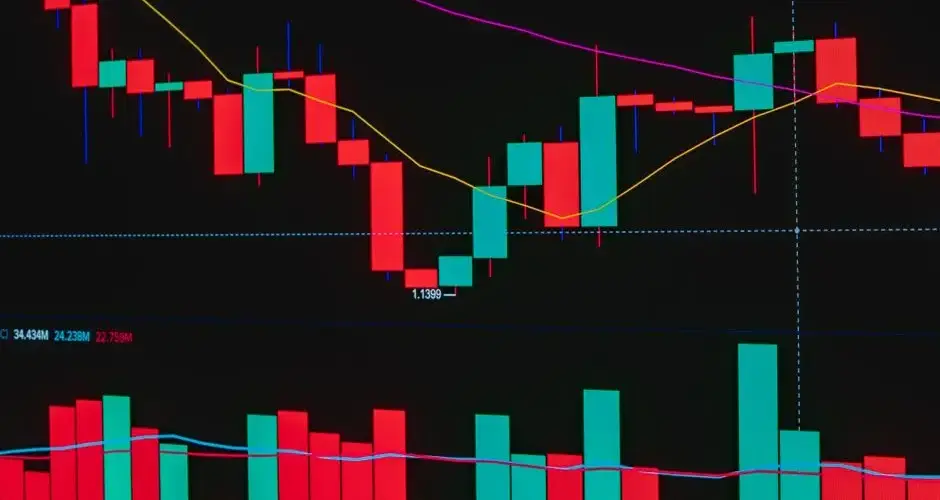
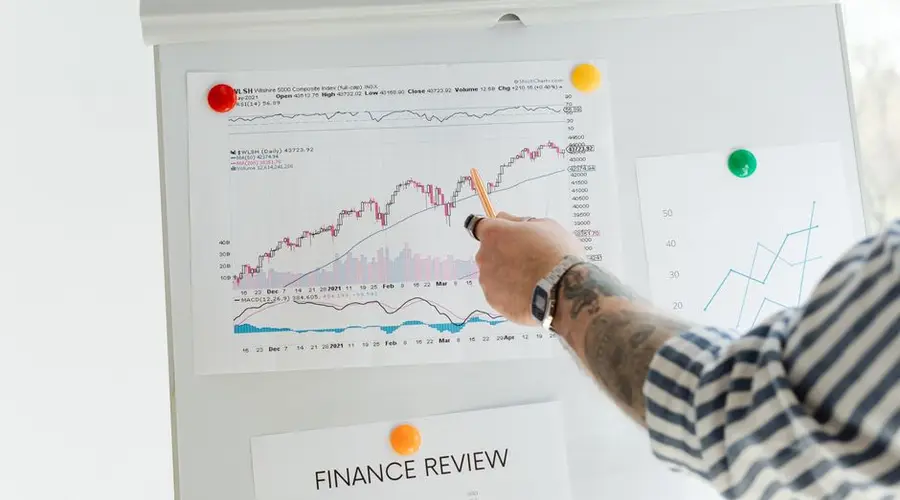
Many charting platforms plot volume as a bar chart beneath the price chart, sometimes with a moving-average line overlaid, making it easier to spot sessions where volume clearly departs from the recent norm. Traders watching for confirmation are typically looking for volume bars that stand out visually against that baseline on the days that matter, breakouts, breakdowns, and reversal candles, rather than tracking volume day to day in isolation.
Limitations and Common Mistakes
- Treating it as a guarantee. Volume confirmation raises or lowers confidence in a move; it does not predict outcomes with certainty. Well-confirmed breakouts can still fail.
- Ignoring distortions. Earnings releases, index additions or removals, options expiration, and broad market-wide volatility can all spike volume for reasons unrelated to the specific price move being evaluated.
- Using an inappropriate baseline. Comparing a thinly traded stock's volume to a broad market average, rather than to its own trailing average, produces misleading conclusions.
- Overweighting a single session. One high-volume day can be noise; analysts typically look for volume that stays elevated across the move rather than a single spike.
- Skipping price context. Volume confirms a price move, it isn't useful in isolation without a defined pattern, level, or trend to confirm.
Confirmation Adjusts Confidence, Not Outcomes
Volume confirmation moves a probability estimate. It does not decide anything. A breakout on heavy volume and the same breakout on thin volume are the same price event with different amounts of evidence behind them, and the heavy-volume version still fails often enough that treating confirmation as a green light is a misuse of the idea.
The place this most often goes wrong is the baseline. Above average only means something relative to the security own trailing average, and comparing a lightly traded name against market-wide activity produces conclusions that are about liquidity rather than conviction. Fix the comparison to a trailing average of that instrument, commonly 20 or 50 sessions, and read the ratio rather than the raw number.
The second correction is duration. One heavy session is a data point and can be produced by an entirely unrelated event: an earnings release, an index rebalance, an options expiry, a broad-market shock. Volume that stays elevated across the move is much harder to explain away, and it is the pattern most analysts are actually looking for when they say a move was confirmed.
Note also the asymmetry. A lack of volume confirmation is weak evidence rather than a veto, and moves do extend on unremarkable participation. Volume answers a question about the price move; it cannot supply the price move itself, and a confirmed pattern you would not have traded on price alone is still a pattern you should not trade.
Frequently Asked Questions
What does volume confirmation mean in trading?
Volume confirmation means a price move, a breakout, trend continuation, or reversal, happens alongside above-average trading volume. Many technical analysts treat this as evidence that more participants agree with the move, making it more credible than the same price change on light volume.
Why does low volume make a price move less reliable?
A price move on low volume can result from a small number of trades pushing price with little broad participation. Because fewer traders are involved, the move may not reflect a genuine shift in supply and demand and can reverse quickly once more participants weigh in.
How do traders measure average volume for confirmation?
Traders commonly compare a session's volume against a trailing moving average of volume, such as a 20-day or 50-day average, to judge whether current volume is above or below what is typical for that security.
Does volume confirmation guarantee a breakout will hold?
No. Volume confirmation is a supporting signal, not a guarantee. Strong volume can still accompany a move that later reverses, and volume readings can be distorted by news events, index rebalancing, options expiration, or thin overall liquidity.
Does confirmation apply to the breakout bar or to the bars that follow?
Both conventions are used and they answer different questions. Requiring heavy volume on the bar itself asks whether the move happened with participation. Requiring it on the following sessions asks whether interest persisted, which is a stronger condition and arrives later. A rule that does not specify which it means will be applied inconsistently, usually in whichever way fits the chart being examined.
Can a move on light volume still hold?
Yes, and the frequency with which it happens is a reason volume is treated as corroborating evidence rather than as a requirement. Light-volume advances are common during quiet periods and in instruments where most activity happens elsewhere. Treating low volume as invalidating an otherwise intact structure asserts a rule that the price record does not consistently support.
Does volume confirmation work the same way for a breakdown?
There is a documented asymmetry worth knowing. Advances are often described as needing volume to sustain them, while declines can continue on falling volume because an absence of buyers is enough. Whether that distinction holds generally is contested, and it means a symmetric volume rule applied to both directions is imposing a condition that the traditional reasoning itself does not.
Should volume be compared against the same weekday?
It can help, since volume shows recurring weekly patterns in many markets, with the days around a weekend often lighter. A baseline that averages all sessions therefore flags routine weekday variation as unusual. Building a day-of-week baseline is a straightforward refinement and it requires more history, since each weekday gets only a fifth of the observations.
What does volume confirmation mean where no volume is reported?
In spot foreign exchange there is no central exchange and therefore no consolidated volume figure at all. Charts typically substitute tick volume, which counts the number of price updates rather than the quantity traded. It correlates with activity and it is not volume, so any threshold or comparison carried over from an exchange-traded instrument is being applied to a different quantity.
References
Disclaimer
This content is for educational purposes only and does not constitute investment, financial, or trading advice. Volume confirmation is one input among many that technical analysts consider, and no indicator or pattern guarantees future price behavior. Trading involves risk, including the potential loss of principal. Consult a licensed financial professional before making investment decisions.