

Direct Answer
Trading range doesn't stay constant, it cycles between periods of compression, where bar-to-bar range shrinks as buyers and sellers reach a temporary balance, and periods of expansion, where that balance breaks and range widens sharply. Volatility expansion is the name for the second half of that cycle: the moment a tight, quiet range gives way to one or more bars with a visibly larger high-to-low range than what came before.
Key Takeaways
- Volatility expansion is a sharp increase in bar-to-bar trading range following a period of compression, and it often marks the start of a new directional move.
- The compression phase that precedes it, sometimes called a squeeze, reflects a temporary balance between buyers and sellers and a narrowing of the trading range.
- What defines the expansion is contrast: one or more bars with a range clearly wider than the tight bars that immediately preceded them, not the absolute size of any single bar.
- Volatility expansion confirms that a range has broken and participation has increased, it does not by itself guarantee the breakout direction will hold.
- The prior compression range's boundaries are the natural reference points for confirmation and invalidation once expansion begins.
Volatility Expansion
Volatility expansion is a sharp increase in bar-to-bar trading range following a period of compression. A market that has been trading in a narrow, tight range for a stretch of bars suddenly produces one or more bars with a much wider high-to-low range, often the first visible sign that a new directional move is underway.
What Is Volatility Expansion?
Trading range doesn't stay constant, it cycles between periods of compression, where bar-to-bar range shrinks as buyers and sellers reach a temporary balance, and periods of expansion, where that balance breaks and range widens sharply. Volatility expansion is the name for the second half of that cycle: the moment a tight, quiet range gives way to one or more bars with a visibly larger high-to-low range than what came before.
The concept is comparative, not absolute. A bar with a two-point range means little on its own; the same bar following a run of quarter-point bars is a meaningful expansion, because the contrast against the immediately preceding compression is what makes it significant.
How Volatility Expansion Forms
Expansion is typically preceded by a visible compression phase: a run of small-range bars trading inside a narrow band, often with overlapping highs and lows, as participants wait for a catalyst before committing. Fewer traders are willing to push price decisively in either direction while the range stays this tight, which is exactly what keeps the range tight.
Expansion begins when that balance breaks. New information, a large order flowing through the market, or simply enough participants stepping in on one side at once can push price out of the narrow band. The resulting bar (or short sequence of bars) has a range clearly larger than the compression phase, the wider range is direct evidence that the earlier balance no longer holds.
Volatility Expansion Example
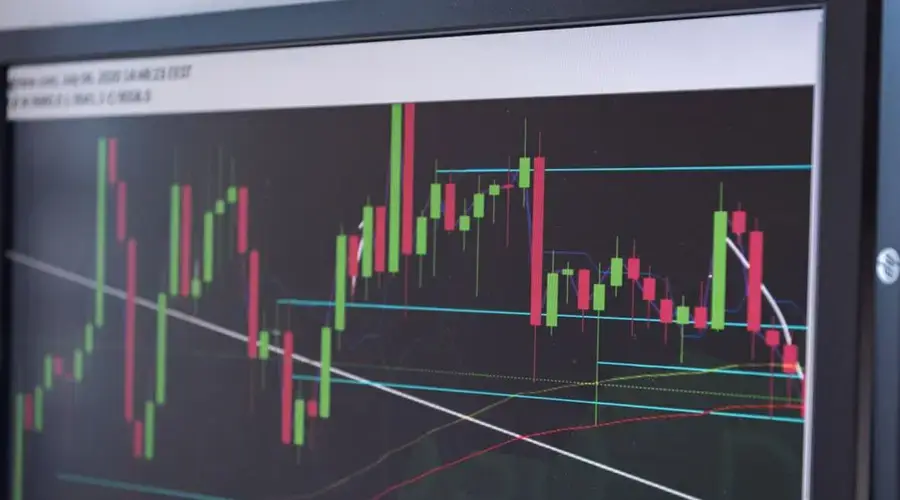
The chart below shows a deterministic, illustrative example: a run of small-range bars compresses into a tight band, then a sudden wide-range bar breaks out of that range. Toggle between two possible continuations: a confirmation (subsequent bars hold the wider range and extend in the breakout direction) and a failure/look-alike (price snaps back into the prior compression range instead of continuing).
How to Trade Volatility Expansion
Confirm the compression first
Volatility expansion is only meaningful relative to what preceded it. Before treating a wide-range bar as significant, check that it was actually preceded by a genuine compression phase, a run of visibly narrow, overlapping bars, rather than an isolated quiet bar in an otherwise normal range.
Let the expansion bar close
A wide range mid-bar can still retrace before the close. Most approaches wait for the expansion bar (or the confirming bar that follows it) to close before treating the range shift as real, since an intrabar spike that fully reverses by the close is a very different signal than a bar that closes near its extreme.
Use the compression range as a reference
The high and low of the compression phase that preceded the expansion give a natural reference for confirmation and invalidation: a sustained move that holds beyond the compression range supports the new-move reading, while a close back inside the old range undercuts it.
Common Volatility Expansion Mistakes
- Reading a single wide bar in isolation, without a genuine compression phase before it, a wide-range bar is just a wide-range bar, not an expansion signal.
- Chasing the expansion bar mid-range, entering before the bar closes risks acting on a spike that partially or fully retraces by the close.
- Assuming expansion confirms direction permanently, expansion confirms that range has widened and participation has increased, not that the breakout direction will hold going forward.
- Ignoring where the compression sat relative to the broader trend, the same expansion pattern reads differently depending on whether it breaks with or against the prevailing trend.
Volatility Expansion vs. Related Concepts
| Term | What it emphasizes | Key difference from volatility expansion |
|---|---|---|
| Volatility expansion | Sudden widening of bar-to-bar range after compression | Baseline, the resolution phase of the compression/expansion cycle |
| Volatility contraction (squeeze) | Narrowing of bar-to-bar range as a market compresses | The opposite phase of the same cycle, the setup that precedes an expansion, not the expansion itself |
| Liquidity sweep | Resting orders (stops/entries) clustered beyond a level | A specific level-triggering move, not a general statement about bar-to-bar range across the whole market |
| Breakout | Price clearing a defined support/resistance level | Describes a level being cleared; volatility expansion describes the range of the bars doing the clearing, which a breakout may or may not have |
Limitations of Volatility Expansion Analysis
Volatility expansion is a description of range behavior, not a directional prediction, a market can expand sharply and reverse just as sharply on the next bar. It also depends on the lookback used to judge "compression," which is a matter of the trader's own definition rather than a fixed rule, so two traders can disagree about whether a given prior range counts as a genuine squeeze. Like any single pattern. It is best combined with trend context and a defined invalidation level rather than traded in isolation.
Expanding Both Ways Is Still Expansion
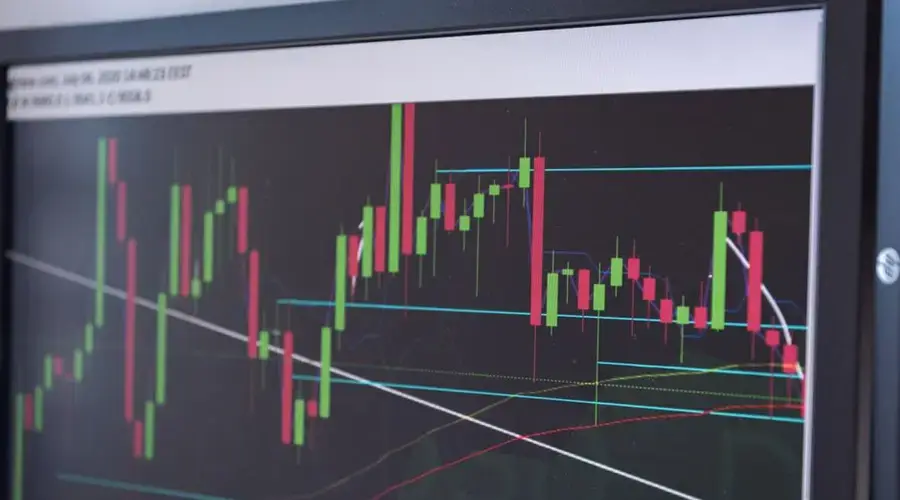
A sharp increase in range is often read as the start of a directional move, and expansion is equally consistent with a market that has become violently two-sided. Bars can get much larger while price ends up where it began, with each session covering ground in both directions. That is a real and common outcome, and it looks identical to the start of a trend for the first bar or two.
The consequence is that expansion changes how you size before it changes what you think. Wider ranges mean stops need more room and positions need to be smaller for the same risk, and that adjustment applies whether or not the direction ever resolves.
The identification also depends on the compression you are comparing against, and that comparison is a matter of your own definition rather than a fixed rule. Two traders can disagree about whether a given stretch counted as a squeeze and therefore about whether what followed was an expansion at all.
And a market can expand sharply and reverse just as sharply on the following bar. The expansion describes activity that has occurred; whether it continues is a separate question the range does not answer.
Volatility Expansion FAQs
What is volatility expansion?
Volatility expansion is a sharp increase in bar-to-bar trading range following a period of compression. A market that has been trading in a narrow, tight range suddenly produces one or more bars with a much wider high-to-low range, often marking the start of a new directional move.
What causes volatility expansion after a period of compression?
A tight, compressed range typically reflects a temporary balance between buyers and sellers, with fewer participants willing to commit until a catalyst arrives. Volatility expansion happens when that balance breaks, new information, a large order, or a shift in participation pushes price decisively out of the narrow range, and the resulting imbalance shows up as a much wider bar.
How do traders identify volatility expansion on a chart?
Traders look for a visibly tight cluster of small-range bars, a compression phase, followed by one or more bars whose high-to-low range is clearly larger than the bars that came before it. The contrast between the prior narrow range and the new wide range is what defines the expansion, not the size of any single bar in isolation.
Does volatility expansion guarantee the new move continues in that direction?
No. Volatility expansion confirms that a compressed range has broken and that participation has increased, but it does not guarantee the breakout direction holds. Price can expand sharply in one direction and still reverse back into or through the prior compression range, which is why traders typically wait for the expansion bar to close and use the compression range's boundaries as a reference for invalidation.
How is volatility expansion different from a volatility contraction squeeze?
Volatility contraction, sometimes called a squeeze, describes the narrowing phase itself, bar-to-bar range shrinking as a market compresses. Volatility expansion is the resolution of that squeeze: the sharp widening of range that follows once the compression breaks. The two terms describe the same market cycle from opposite ends.
Does expansion require a directional move?
No. A session that swung violently in both directions and closed near its open expands every range-based volatility measure while producing no net movement. That case is easy to overlook because the price chart shows little progress. It matters for anything scaled to volatility, since stops and position sizes widen and shrink respectively on a day that went nowhere.
How does a measured expansion decay?
Not smoothly. The wide bars sit inside the lookback window of any average, so the measure stays elevated until they roll out, at which point it steps down abruptly regardless of what current bars are doing. A volatility reading falling sharply on a quiet day is usually this effect rather than anything happening now, and it is a routine source of confusion.
Do levels drawn during a compression survive an expansion?
They were formed under conditions the market has left. The boundaries of a tight range describe where a quiet market found balance, and once ranges expand price passes through them on ordinary movement. That does not make them worthless as references, and it does mean the tolerance around them has to widen with the new conditions or they will report constant breaks.
What happens to a position sized during the compression?
It was sized against a smaller stop distance, so the same number of units now sits against a market moving further per bar. The risk taken is larger than the framework intended, and it changed without any decision being made. Frameworks that recompute size only at entry carry this exposure by construction, which is one argument for a periodic review of open positions against current volatility.