

Direct Answer
The regular U.S. equity session's first minutes carry a disproportionate share of the day's order flow, as overnight orders, gap-driven positioning, and early news reactions all clear at once. The opening range captures the boundary that flow settles into: the highest and lowest prices traded during a chosen window, 5, 15, and 30 minutes are the most common choices, measured from the 9:30am open.
Key Takeaways
- The opening range is the high/low a security trades between during a defined window right after the open, commonly the first 5, 15, or 30 minutes.
- Once that window closes, the range's high and low become widely watched intraday breakout reference levels for the rest of the session.
- A shorter window produces a tighter, more sensitive range; a longer window produces a wider, steadier range with fewer but arguably more significant breaks.
- An opening range breakout is defined by a close beyond the range's high or low after the window has closed, not just an intraday touch.
- Breakouts unsupported by continued volume commonly reverse back inside the range instead of holding, the same false-breakout risk any support/resistance breakout carries.
Opening Range
The opening range is the high and low price a security trades between during a defined window right after the 9:30am ET open, commonly the first 5, 15, or 30 minutes. Once that window closes, the range's high and low are widely watched as intraday breakout reference levels for the rest of the trading day.
What Is the Opening Range?
The regular U.S. equity session's first minutes carry a disproportionate share of the day's order flow, as overnight orders, gap-driven positioning, and early news reactions all clear at once. The opening range captures the boundary that flow settles into: the highest and lowest prices traded during a chosen window, 5, 15, and 30 minutes are the most common choices, measured from the 9:30am open.
Once that window ends, the opening range functions like any other horizontal support/resistance pair: its high acts as a resistance reference, its low acts as a support reference, and a close beyond either side is read as a potential breakout for the remainder of the session.
How the Opening Range Forms
A tight opening range typically reflects a two-sided, balanced first few minutes, buyers and sellers roughly agreeing on price without a decisive push in either direction. A wide opening range, by contrast, often reflects an opening drive or a strong pre-market catalyst pushing price firmly in one direction before the window closes.

The choice of window length changes what the range represents: a 5-minute range is highly sensitive to the very first prints and produces more (and noisier) breakout signals, while a 30-minute range smooths over early volatility and produces fewer, generally more significant breaks.
Opening Range Example
The chart below shows a deterministic, illustrative example: three tight-range bars in the first 15 minutes after the open establish the opening range, then a breakout bar closes clearly above the range high. Toggle between two possible continuations: a confirmation (the breakout holds and extends higher) and a failure/look-alike (price falls back inside the opening range instead).
How to Trade the Opening Range
Pick a window length deliberately
A 5-minute range reacts fastest but generates more false signals; a 30-minute range is steadier but reacts later. Matching the window to the security's typical volatility and the trader's own timeframe is more useful than defaulting to one fixed choice.
Require a close, not just a touch
The same close-based discipline used for any breakout applies here, an intraday wick beyond the opening range high or low that closes back inside the range has not broken out, it has simply tested the boundary.
Look for volume expansion on the break
A break of the opening range on volume clearly above the range-formation bars is read as stronger evidence of a genuine breakout than a break on unremarkable volume, which is more prone to failing.
Common Opening Range Mistakes
- Reacting to an intraday touch before the window closes, the opening range isn't fully formed until the chosen window (5, 15, or 30 minutes) has actually elapsed.
- Treating every breakout as guaranteed continuation, an opening range breakout unsupported by volume is prone to reversing back inside the range.
- Switching window lengths mid-session, comparing a 5-minute range one day to a 30-minute range the next makes results inconsistent and hard to evaluate.
- Ignoring the broader pre-market and prior-day context, an opening range formed near a major prior level behaves differently than one formed in open space.
Opening Range vs. Related Levels
| Term | What it emphasizes | Key difference from the opening range |
|---|---|---|
| Opening range | The high/low traded during a defined window (e.g. 15 minutes) after the open | Baseline, a level formed entirely from regular-session trading after the 9:30am bell |
| Opening drive | A strong, sustained directional push right after the open | A directional pattern, not a level, an opening drive often produces a wide opening range as a byproduct |
| Premarket high and low | The range traded before the 9:30am open | Formed entirely before the bell, on lower premarket volume, rather than in the regular session |
| Breakout | A close above an established resistance level | A general concept the opening range breakout is a specific, session-timed application of |
Limitations of Opening Range Analysis
The opening range is read from a short, often volatile stretch of trading, it defines a boundary, not a guarantee that the boundary is meaningful for the rest of the session. A narrow window can produce an arbitrary-looking range on a quiet morning, while a wide window can smooth over a genuinely important early move. Like any single price-action level, the opening range works best combined with volume context, the broader session backdrop, and a defined confirmation plan, not used in isolation.
You Chose Where That Level Sits
The opening range high and low feel like facts about the market and they are outputs of a window length you selected. A 5-minute range and a 30-minute range on the same morning produce different boundaries, generate different breakouts and can point in different directions. Whichever you use is fine; using whichever produces a break you like is not, and switching between them from day to day makes any record of how the approach performs uninterpretable.
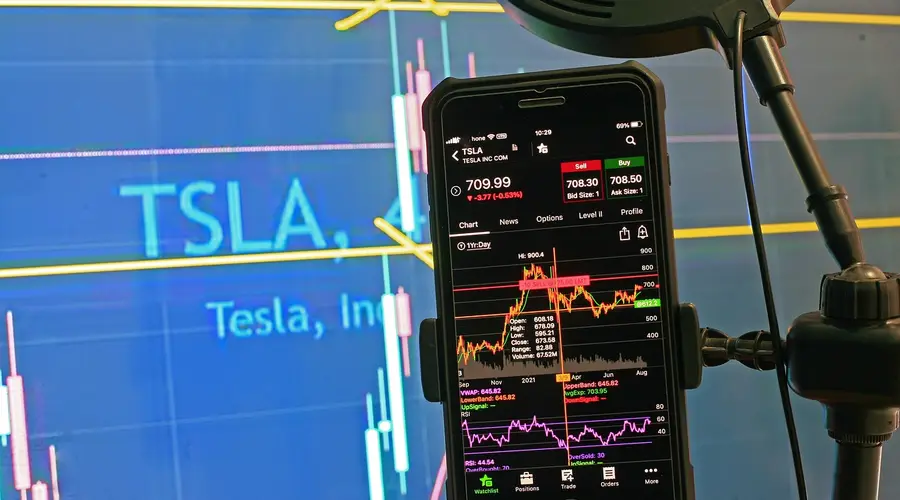
The shorter window is more sensitive and more easily set by a burst of opening noise. The longer one is steadier and can absorb a genuinely important early move into the range instead of marking it. Neither problem disappears, so pick for a stated reason and leave it.
The range also is not formed until the window has elapsed. Reacting to price pushing past a provisional high while the window is still running is trading a level that has not been set yet.
Once it exists, treat a break as a break rather than a conclusion. An opening-range breakout on unremarkable volume reverses back inside frequently, and the range boundary is a reference point the rest of the session may or may not respect.
Opening Range FAQs
What is the opening range in trading?
The opening range is the high and low price a security trades between during a defined window right after the 9:30am ET open, commonly the first 5, 15, or 30 minutes of the session. Once that window closes, traders widely watch the range's high and low as intraday breakout reference levels for the rest of the day.
What time window is used to define the opening range?
There is no single fixed window, 5-minute, 15-minute, and 30-minute opening ranges are all commonly used, and the choice affects how tight or wide the resulting range is. A shorter window produces a tighter, more sensitive range with more breakout signals; a longer window produces a wider, steadier range with fewer but arguably more significant breaks.
What is an opening range breakout?
An opening range breakout occurs when price closes outside the high or low established during the opening range window, after that window has closed. A breakout above the opening range high is read as a bullish signal; a breakout below the opening range low is read as a bearish signal, the same close-based logic used for other support/resistance breakouts.
Why do some opening range breakouts fail?
The opening range often forms during the session's most volatile, highest-volume minutes, so the range itself can be somewhat arbitrary rather than a deeply tested level. A breakout that isn't backed by continued volume and follow-through commonly reverses back inside the range instead of holding, the same false-breakout risk that applies to any support/resistance breakout.
Is the opening range the same as the opening drive?
No. The opening range is the high/low boundary formed during the first several minutes after the open; the opening drive is a directional pattern describing a strong, sustained push during that same window. An opening drive commonly produces a wide opening range, but the two terms describe different things, one a level, the other a pattern.
Should the opening range include the opening auction print?
It changes the range, sometimes substantially. The auction price can sit outside where continuous trading immediately settles, so including it widens the range and moves at least one boundary. Excluding it means the range describes continuous trading only. Neither is standard, and a rule using opening-range boundaries is underspecified until it says which.
What happens to the opening range on a chart that includes pre-market?
The concept is defined against the regular session, so a chart showing pre-market bars will place the first bars of the day well before the open. Any rule identifying the range by bar position rather than by clock time will then measure a pre-market window instead. This is a common implementation error and it is invisible unless the boundaries are checked against the session times.
Can the opening range be used for the stop rather than the entry?
It is a common arrangement: the break of one boundary supplies the trigger and the opposite boundary supplies the invalidation. That makes the risk per unit equal to the range width, which means a wide opening range mechanically produces a smaller position. Some frameworks cap the range width for that reason, treating an unusually wide opening range as a reason to stand aside.
Does opening-range width say anything about the rest of the day?
Some frameworks scale their expectations for the session to the opening range, projecting targets as multiples of its width. That is a modelling assumption rather than a measured constant, and the relationship between early and full-session range varies by instrument and by period. Using it means adopting an assumption that should be checked on the instrument in question rather than inherited.