
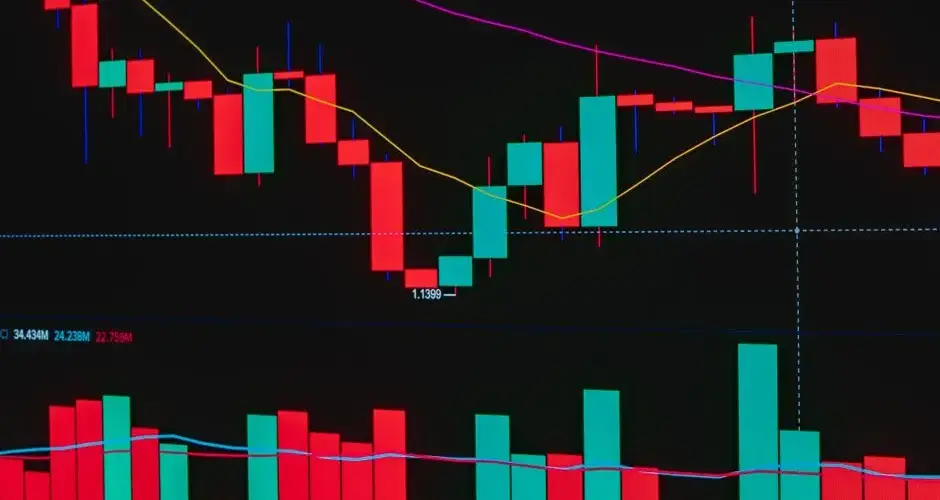
Direct Answer
Signal stacking is the practice of requiring two or more independent technical indicators or conditions, typically drawn from different categories such as trend, momentum, and volume, to all agree before a setup is treated as a valid trade signal. The goal is to filter out weaker, single-indicator false positives, though the tradeoff is fewer overall signals since every layer must confirm.
Key Takeaways
- Signal stacking combines multiple indicators into one composite condition rather than trading off a single indicator.
- Indicators are usually chosen from different categories (trend, momentum, volatility, volume) to avoid redundant confirmation.
- The intent is to reduce false positives generated by any single indicator reacting in isolation.
- More required confirmations generally means fewer total signals, which can mean missed opportunities.
- Stacking does not eliminate losing trades, it changes the frequency and character of signals, not their certainty.
- Overlapping, mathematically similar indicators (e.g., several moving-average-based tools) add little independent confirmation.
- Traders commonly backtest a stacked rule set to check whether the added filters actually improve results versus a single indicator.
- The term is closely related to "indicator confluence," which describes signals converging at the same price level or time.
What Is Signal Stacking?
Any single technical indicator measures one dimension of price behavior. A moving average reflects trend direction; an oscillator like RSI reflects momentum; a volume indicator reflects participation. Used alone, each can generate signals that don't hold up, a moving-average crossover in a choppy, directionless market, for instance, can whipsaw repeatedly.
Signal stacking addresses this by defining a trade signal as the simultaneous agreement of multiple, independently derived conditions rather than the output of one indicator. A stacked rule might require, for example, that price be above a longer-term moving average (trend condition), that a momentum oscillator be rising from oversold territory (momentum condition), and that volume be above its recent average on the triggering bar (participation condition). Only when all layers align does the setup qualify as a signal.
How a Stacked Signal Is Built
There is no single formula for signal stacking. It is a rule-construction approach, not a calculated indicator. A stacked signal is typically expressed as a logical AND across conditions:
Signal = Condition 1 AND Condition 2 AND Condition 3 ... AND Condition n
Each condition is itself a binary true/false test derived from an underlying indicator (e.g., "50-day moving average is rising," "RSI(14) crosses above 30," "volume is above its 20-day average"). The signal only fires when every condition in the stack evaluates to true at the same time. Traders choose the number of layers and which categories to draw them from; adding more layers tends to increase selectivity but reduce trade frequency.
Consider a hypothetical illustration. Suppose a trader defines a long-entry stack with three layers: (1) price above its 50-day moving average, (2) RSI(14) above 50, and (3) volume at least 1.2 times its 20-day average. On a hypothetical trading day, a stock is trading at $42.10 with its 50-day moving average at $40.75 (condition 1 true), RSI(14) reading 58 (condition 2 true), and volume running at 1.4 times its 20-day average (condition 3 true). All three layers align, so the stacked rule generates a signal. On a different hypothetical day, the same stock trades above its moving average and shows RSI at 55, but volume is only 0.8 times its 20-day average, condition 3 fails, so no signal fires even though two of the three layers agree.
Why Signal Stacking Matters
Markets generate a large volume of single-indicator signals, and many of them do not lead to a favorable outcome. Traders who rely on one indicator alone often find that its signals work well in some market regimes and poorly in others, a trend-following crossover, for example, tends to perform differently in a trending market than in a range-bound one. Stacking is one attempt to compensate for that regime-dependence by requiring corroborating evidence from a different type of measurement before acting.
The practical effect is a tradeoff between signal quality and signal quantity. A tightly stacked rule set may produce a smaller number of setups that traders consider higher-conviction, at the cost of missing some moves where only one or two of the required conditions were present. How many layers to require, and which categories to draw them from, is a design choice traders typically test against historical data rather than assume in advance.
Limitations and Common Mistakes
- Stacking redundant indicators. Combining several indicators that are mathematically similar (e.g., multiple moving-average variants) can create an illusion of confirmation without adding real independent information.
- Over-filtering. Requiring too many simultaneous conditions can shrink the signal set so much that too few trades occur to meaningfully evaluate or profit from the approach.
- Curve-fitting the stack to historical data. Selecting indicator thresholds specifically because they performed well on a particular historical sample risks a rule set that does not generalize to future conditions.
- Ignoring regime dependence. A stacked rule tuned for trending conditions may perform poorly in range-bound markets, and vice versa, stacking does not remove the need to consider market context.
- Treating agreement as certainty. Multiple indicators aligning still describes historical and current price behavior, not a guaranteed future outcome.
- Skipping validation. Assuming a stacked rule set improves on a single indicator without backtesting the combination can leave a flawed assumption unchallenged.
Every Layer You Add Is Another Parameter
Each condition added to a stack brings its own settings: a lookback, a threshold, a definition of what counts as agreement. Those are parameters, and every parameter is somewhere the rule set can be fitted to the sample it was designed on. A three-layer stack is not three times as robust as one indicator; it has three times as many places to accidentally encode the history you tested against.
The other cost is measurable and easy to overlook. More required confirmations means fewer signals, and past a certain point the strategy generates too few trades to evaluate. A rule set producing four signals a year cannot be distinguished from luck within any reasonable review period, which means over-filtering does not just cost opportunities, it costs your ability to know whether the thing works.
Before adding a layer, apply the redundancy test. A stack of several moving-average variants requires more agreement while asking the same question repeatedly, so the filter tightens without the evidence broadening. The layers worth adding are the ones consuming data the existing layers cannot see.
Finally, keep the claim modest. Stacking changes how often signals fire and what kind of setups survive the filter. It does not remove losing trades, and a stack that eliminated every historical loss is a description of the fitting process rather than of the market.
Frequently Asked Questions
What is signal stacking?
Signal stacking is a trading approach where a trader requires two or more independent technical indicators or conditions to agree before treating a setup as a valid signal, rather than acting on any single indicator alone.
Why do traders stack multiple signals instead of using one indicator?
A single indicator can produce frequent false positives because it reacts to only one dimension of price behavior, such as momentum or volatility. Requiring agreement across indicators measuring different dimensions is intended to filter out some of those false signals, though it also reduces the total number of trade opportunities.
What makes indicators good candidates to stack together?
Traders generally look for indicators that are not redundant with each other, for example, pairing a trend indicator with a momentum oscillator and a volume measure, rather than combining several indicators that are mathematically similar and tend to move together.
Does signal stacking guarantee better trading results?
No. Stacking signals can reduce certain false positives but does not eliminate losing trades, and requiring more conditions to align typically means fewer signals overall, which can mean missing valid moves while waiting for full confirmation.
What is the difference between signal stacking and indicator confluence?
The terms are closely related and often used interchangeably. Confluence generally describes multiple signals converging around the same price level or time, while signal stacking more specifically refers to requiring multiple conditions to be true simultaneously before a trade is considered.
How much does stacking reduce the number of qualifying setups?
More than most people expect, and the reduction depends on how related the conditions are. If three conditions were statistically independent, the joint condition would occur roughly as often as the product of the three individual frequencies, which is a small fraction. Correlated conditions reduce it less, because they tend to be satisfied together. Either way the sample available to evaluate the stacked rule shrinks sharply.
What is the difference between a conjunction stack and a scoring model?
A conjunction requires every condition to be satisfied, so one failing condition blocks the signal regardless of how strong the others are. A scoring model assigns weights and fires when the total clears a threshold, so strong readings can compensate for weak ones. The first is brittle and easy to audit; the second is more forgiving and introduces weights, which are additional parameters with no obvious source.
Does the order in which stacked conditions are evaluated matter?
For a pure conjunction evaluated on the same bar, no: the result is the same regardless of order. It matters as soon as the conditions are sequenced in time, for example requiring a trend filter to have been satisfied before a trigger fires within a set number of bars. That is a different rule from checking all conditions simultaneously, and the two produce different signals on the same data.
How should a stacked rule be tested?
As a single object, on the complete stack, rather than by validating each condition separately and combining the results. Conditions interact: a filter can remove precisely the subset where another condition carried its performance. Component-level testing also multiplies the number of specifications examined, which makes the multiple-testing problem worse while appearing to be more rigorous.
References
Disclaimer
This page is for educational purposes only and does not constitute investment, financial, or trading advice. Combining multiple technical indicators reflects historical price behavior and does not guarantee future results. Any prices, indicator readings, or examples on this page are hypothetical and illustrative, not live or historical market data. Swoopr Investment is not a licensed investment advisor; consult a qualified professional before making investment decisions.