
Direct Answer
Look-ahead bias is an error in backtesting or historical analysis that occurs when information not actually available at the time is used to make a simulated decision. A common example is using a stock's full-day closing price to simulate a trade decision that was supposed to have been made earlier that same day, when only the price up to that point in the day was actually known. Another example is using restated or corrected financial data that was not available in its final form until after the analysis date being simulated.
Because a real trader can only act on information available at the moment a decision is actually made, a backtest that lets the strategy "see" future prices or later-corrected data will generally produce results that look better than what could have been achieved in real time. Recognizing and eliminating look-ahead bias is a core part of building a backtest that reflects what a trader could genuinely have done.
Key Takeaways
- Look-ahead bias means the backtest used information from the future. The simulated decision at a given point in time relies on data that did not actually exist yet at that point.
- Same-bar closing prices are a classic source. Using a full trading day's closing price to trigger or evaluate a decision that the backtest treats as happening earlier that same day is a commonly cited example.
- Restated data is another common source. Financial and economic figures are often revised after their initial release; using the final, corrected version in a backtest dated before that correction existed introduces the same error.
- The bias inflates backtested performance. Results generally look better than what a trader could have actually achieved in real time, since real decisions are constrained to information available in the moment.
- It is distinct from, but often confused with, survivorship bias. Look-ahead bias is about the timing of information; survivorship bias is about which assets are included in the test sample.
- There is no single universally correct fix. Guarding against look-ahead bias generally comes down to carefully checking exactly when each data point used in a backtest was actually available.
What Is Look-Ahead Bias?
Look-ahead bias is an error in backtesting or historical analysis that occurs when information not actually available at the time is used to make a simulated decision. Backtesting works by replaying a strategy's rules against historical data as if the strategy were being traded in real time, bar by bar or day by day. For that replay to be meaningful, the strategy's simulated decisions at each point must be based only on information that would genuinely have existed at that same point in real history.
The problem arises because historical datasets are typically stored and queried as a completed record, every price, every fundamental figure, every economic release is sitting there, fully known, all at once. It is easy, often accidentally, for a backtest to reach slightly ahead of the simulated "current" moment and pull in a data point that had not actually been produced yet. Two examples illustrate the pattern clearly.
The first is using a stock's full-day closing price to simulate a trade decision made earlier that same day. If a backtest is designed to represent a decision made at, say, midday, but the logic references that day's closing price to decide whether to enter the trade. It is using information, the close, that would not exist until the market closed hours later. The second is using restated or corrected financial data that wasn't available in its final form until after the analysis date. Company earnings, GDP figures, and other economic data are frequently revised after their initial release; a backtest that uses the revised, final numbers as of a date before the revision was published is testing against a version of history that never actually existed for a trader on that date.
In both cases, the underlying issue is the same: the simulated decision is informed by data from later in time than the decision is supposed to represent. Look-ahead bias makes backtested results look better than what a trader could have actually achieved in real time, since real decisions can only use information available at the moment the decision is made.
Hypothetical Example, For Education Only
Suppose a trader is backtesting a rule that says: "If a stock's price increases more than a set threshold between the market open and midday, enter a long position at the midday price." A backtest built correctly would evaluate that rule using only the price data available up through midday on each simulated day, the open, and the running price path up to that point.
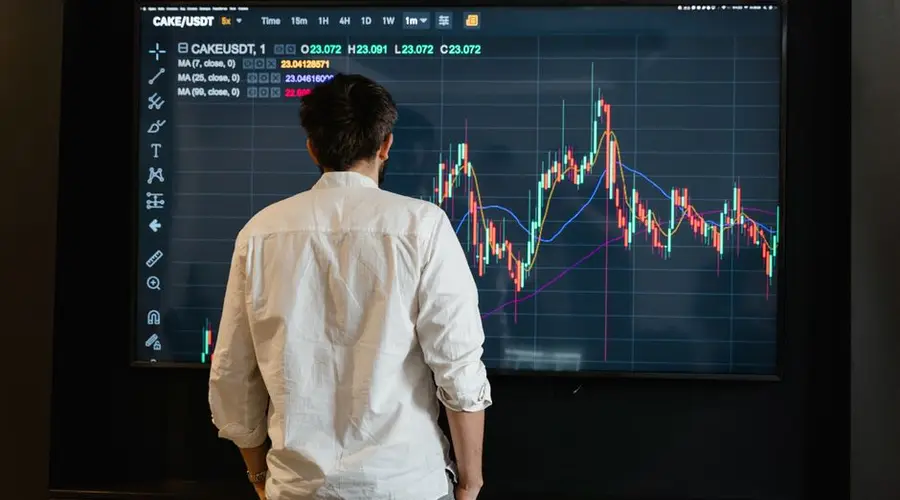
Now suppose the backtest is coded so that, instead of checking the price path up to midday, it checks whether the stock's price at the end of the day was higher than a threshold compared to the open, and if so, records a simulated entry at the midday price. On the surface, the trade still appears to enter "at midday." But the decision of whether to enter that trade was actually made using the day's closing price, information that would not exist until hours after the simulated entry point. Every trade the backtest "takes" is effectively cherry-picked using knowledge of how that trading day turned out.
Because the backtest is systematically selecting entries only on days that end up moving favorably by the close, its reported win rate and average return will tend to look stronger than a trader relying only on midday information could have actually produced in real time. The backtest is not wrong about what happened in the historical data. It is wrong about when that information was actually knowable, which is exactly the distortion look-ahead bias introduces.
Common Mistakes and How to Apply This
Referencing the current bar's close inside same-bar logic
A frequent source of look-ahead bias is a backtest that evaluates a signal using the closing price of the same bar (day, hour, or other interval) on which the trade is supposed to be entered. If the strategy is meant to represent a decision made during that bar, not after it, the close of that bar was not yet available at decision time. Referencing the prior, already-completed bar's data for signal generation is a more faithful representation of what a trader would have actually known.
Using restated or finalized data without a publication timestamp
Financial statements, macroeconomic releases, and other fundamental data are commonly revised after their initial publication. A backtest that pulls the final, restated figure and applies it as of the original (earlier) report date is testing against a version of the data that did not exist at that earlier date. Point-in-time datasets, which preserve what was actually known and published as of each date, are generally the more accurate input for this kind of analysis.
Assuming instant availability of any data source
Beyond price and fundamental data, look-ahead bias can creep in through any data source that has a real-world publication lag, index reconstitution announcements, analyst rating changes, or news events. If a backtest treats such information as available at the moment the underlying event occurred, rather than the moment it was actually published or disseminated. It is again using information ahead of when it was genuinely available.
How to apply this when reviewing a backtest
There is no single universally correct fix for every backtesting setup, since data sources, timeframes, and strategy logic vary widely. What generally helps is deliberately tracing, for each rule in the strategy, exactly which data point triggers the decision and exactly when that data point would have actually become available in real time. If any piece of logic depends on information from later than the simulated decision moment, that logic is a candidate source of look-ahead bias and should be revised to use only data that existed at or before that moment.
Use the Bar That Has Already Closed
The single most common source of this bias has a simple fix. If a signal is evaluated using the closing price of the bar on which the trade is entered, the backtest used a number that did not exist at the moment it claims the decision was made. Generating signals from the previous, fully completed bar removes that entire class of error, at the cost of entering one bar later, which is what a real process would have had to do anyway.
Restated data is the second common route in and it is harder to see. Economic figures and company financials are revised after their first release, so a backtest using final corrected values is making decisions with numbers that arrived months afterwards. The as-reported version is the one that was actually available, and data sources differ in whether they give it to you.
The reason this bias is so persistent is that it always flatters the result. Nothing breaks, no error appears, the equity curve simply improves, so there is no natural moment where the problem announces itself. Suspicion has to come from the reviewer rather than from the output.
A useful audit is to take each input and state when it became knowable. Anything that cannot be given a specific timestamp earlier than the decision it feeds is a candidate, including normalisation constants and thresholds computed across the whole sample.
FAQ
What is look-ahead bias in backtesting?
Look-ahead bias is an error in backtesting or historical analysis that occurs when information not actually available at the time is used to make a simulated decision. A common example is using a stock's full-day closing price to simulate a trade decision that, in the simulation, is supposed to have been made earlier that same day, the closing price simply did not exist yet at that earlier moment. Because the backtest is quietly using future information, it makes the strategy look better than what a trader could have actually achieved in real time.
How does look-ahead bias make backtest results misleading?
Real trading decisions can only use information available at the exact moment the decision is made. A backtest affected by look-ahead bias effectively lets the strategy peek at data from later in time, a later price, a revised fundamental figure, or a corrected data point, before that information actually existed. The result is a simulated performance record that looks better than what a trader executing the same rules in real time could have actually achieved, because no real decision-maker had access to that future information.
What is a common example of look-ahead bias?
One commonly cited example is using a stock's full-day closing price to simulate a trade decision that was supposed to happen earlier that same day, when only the price up to that point in the day was actually knowable. Another is using restated or corrected financial data, for instance, revised earnings or economic figures, that was not available in its final, corrected form until after the analysis date being simulated. Both cases substitute information from the future for information that was actually available at decision time.
Is look-ahead bias the same as survivorship bias?
No. Look-ahead bias and survivorship bias are related but distinct backtesting errors. Look-ahead bias involves using information that was not actually available at the simulated decision point in time, such as a later closing price or a restated financial figure. Survivorship bias involves testing a strategy only on assets that still exist today, leaving out companies or funds that failed or were delisted along the way. A backtest can suffer from either error independently, or both at once.
How can traders reduce look-ahead bias in a backtest?
Traders generally try to reduce look-ahead bias by using point-in-time data that reflects only what was actually knowable as of each simulated decision date, rather than data that has since been revised or finalized. Backtest logic should generally reference only prices and data points that existed at or before the simulated decision moment, for example, using the prior bar's close rather than the current bar's close to trigger a same-bar decision. There is no universally correct fix for every backtesting setup, and careful review of exactly when each data point became available is generally the most reliable check.
Why does look-ahead bias matter for technical analysis strategies?
Technical analysis strategies are commonly tested and refined through backtesting before being used with real capital, so a backtest distorted by look-ahead bias can lead a trader to believe a strategy performs better than it actually would in live trading. Since the bias makes backtested results look better than what could have been achieved in real time, a strategy that appears profitable in a flawed backtest may perform noticeably worse, or lose money, once it is traded with only the information that is genuinely available at each decision point.
Is filling at the closing price of the signal bar look-ahead bias?
It depends on whether that fill was obtainable. If the signal only requires information available before the close, a market-on-close order can realistically achieve something near it. If the signal itself is computed from the close, then knowing it and trading at it are simultaneous, which is not possible. The same fill convention is therefore defensible in one design and not in the other.
How do time zones create look-ahead bias?
By making one series appear to precede another when it did not. Joining a market that closes in Asia to one that opens in Europe requires both timestamps in a common zone, and a naive join on calendar date can align a close that happened later with an open that happened earlier. The resulting dataset lets a rule use information from the future without any obvious error in the code.
Can look-ahead bias occur in a live system?
Yes, whenever the system reads a field that is later revised or backfilled. A value that appears in the database at a given timestamp is not necessarily the value that was there at the time, if the vendor writes corrections in place. A live system reading such a field behaves correctly today and cannot be reproduced tomorrow, which makes the problem harder to detect than it is in a backtest.
References
Disclaimer
This article is for educational and informational purposes only and does not constitute personalized investment, financial, or legal advice. Backtested results, even when free of look-ahead bias, are not a guarantee of future performance. Trading involves risk, including the possible loss of principal.