
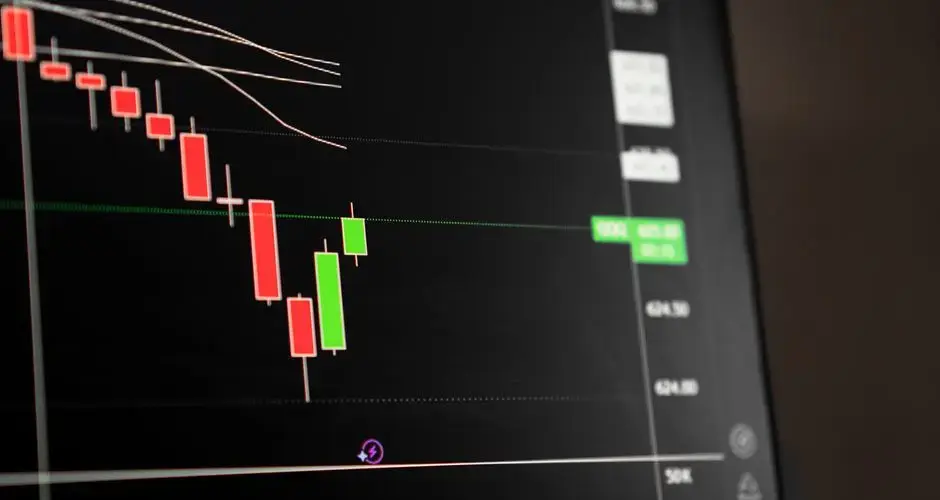
Direct Answer
An invalidation level is the price point at which the technical reasoning behind a trade is proven wrong, usually the point just beyond the support, resistance, trendline, or pattern boundary the trade depends on holding. It is defined before entry so a trader knows, in advance, exactly what price action would mean the setup has failed. Many traders place a stop-loss at or just beyond this level so the exit is automatic rather than a judgment call made under pressure.
Key Takeaways
- An invalidation level is the price where a trade's technical thesis is proven false, not just the price where a trader decides to give up.
- It is set before entering a trade, anchored to real chart structure, a swing high/low, trendline, moving average, or pattern boundary.
- Invalidation is a concept; a stop-loss order is the mechanism often used to act on it.
- The distance between entry price and invalidation level defines risk per share, which feeds directly into position sizing.
- Invalidation levels differ by setup type, a breakout, a pullback, and a range trade each invalidate on different structure.
- Hitting an invalidation level does not predict what price does next; it only means the original reason for the trade is gone.
- A tighter invalidation level allows a larger position size for the same dollar risk; a wider one requires a smaller position size.
- Moving an invalidation level further away after entry, to avoid a stop-out, undermines the risk control it was meant to provide.
What Is an Invalidation Level?
Every technical trade setup rests on an assumption about how price should behave if the thesis is correct, a breakout should hold above resistance, a support bounce should hold above the prior low, a trend pullback should hold above a rising trendline. An invalidation level identifies the specific price at which that assumption breaks down. It is not an arbitrary distance from entry; it is tied to the actual chart structure the trade is betting on.
Because it's defined by structure rather than by feel, an invalidation level gives a trader an objective answer to "what would prove me wrong?" before any money is at risk. That answer typically comes from identifying the nearest meaningful support, resistance, or trend line that, if breached, would mean the pattern or level the trade relied on no longer applies.
How Invalidation Levels Are Set
There is no single formula for an invalidation level; it is derived from the specific setup, not calculated from a fixed percentage. Common anchors traders use include:
- Swing high/low: the most recent significant peak or trough that defines the current structure.
- Trendline: the line connecting a series of higher lows (uptrend) or lower highs (downtrend); a decisive close through it invalidates the trend read.
- Support/resistance level: a horizontal price zone where price has previously reversed multiple times.
- Pattern boundary: the edge of a chart pattern such as a range, triangle, or channel, a breakout trade is invalidated if price falls back inside the pattern.
- Moving average: a key moving average some traders use as dynamic support/resistance for trend-following setups.
Traders sometimes place the actual stop-loss order slightly beyond the invalidation level itself, rather than exactly on it, to allow for normal intraday noise and avoid being stopped out by a brief wick through the level that doesn't represent a real close beyond it.
Worked Example (Hypothetical)
Consider a hypothetical scenario: a trader is watching a stock that has built support around $48 over several weeks, with price currently at $50. The trader's thesis is that $48 support holds and price moves higher. The invalidation level for this trade is a decisive close below $48, if that happens, the support the thesis depends on has failed, regardless of what price does afterward.
The trader enters at $50 and places a stop-loss at $47.50, just under the $48 structure, defining $2.50 of risk per share. If the trader is willing to risk a hypothetical $250 total on the position, that maps to a position size of 100 shares ($250 ÷ $2.50 = 100 shares), a calculation only possible because the invalidation level, and therefore the risk per share, was defined before entry. All figures in this example are illustrative only and are not a recommendation for any real security.
Why Invalidation Levels Matter
Invalidation levels connect a trader's chart analysis directly to risk management. Without one, "risk per trade" is guesswork, a trader might exit early out of fear or hold too long out of hope, and position sizing has no objective basis. With an invalidation level defined in advance, the distance between entry and invalidation becomes a fixed, known quantity that feeds directly into how many shares or contracts to trade for a given dollar risk.
Invalidation levels also help separate a losing trade from a losing thesis. A trade can lose money on a stop-out that is just normal volatility around a level that never actually broke. That is a losing trade, not necessarily a wrong thesis. A trade where the invalidation level is decisively breached is different: the reasoning that justified the position is no longer supported by the chart, independent of the dollar outcome. Traders who track this distinction can evaluate whether their setups are working without confusing normal variance with a broken process.
Limitations and Common Mistakes
- Setting invalidation from an arbitrary dollar or percentage amount. A level not tied to real chart structure isn't a true invalidation level, it's just a stop distance, and it can trigger on noise unrelated to the thesis.
- Moving the level after entry. Widening an invalidation level to avoid being stopped out defeats its purpose and turns a defined-risk trade into an undefined one.
- Setting it too tight. A level placed with no room for normal price fluctuation can get triggered by noise even when the broader thesis is still intact.
- Ignoring intraday wicks vs. closes. Some traders require a closing price beyond the level, not just an intraday touch, before treating the setup as invalidated, mixing the two inconsistently produces unreliable signals.
- Assuming invalidation predicts direction. A breached invalidation level means the specific thesis failed; it does not tell a trader what price will do next.
- Skipping the step entirely. Entering a trade without a defined invalidation level removes the basis for position sizing and makes exits reactive rather than planned.
The Level Is a Thesis, the Stop Is Plumbing
The distinction this page turns on is worth keeping sharp. An invalidation level is a statement about your reasoning: here is the price at which the thing I believed about this chart is no longer true. A stop-loss order is the mechanism that acts on that statement without requiring you to be watching. Confusing the two produces stops set at round dollar amounts, which measure your discomfort rather than the chart.
Because the level comes from structure, its distance from entry is an output, not a choice. That distance is risk per share, and position size falls out of it. Choosing the size first and then finding a stop that fits inverts the whole logic and usually ends with a level placed somewhere the thesis was still intact.
Decide the wick question in advance too. Some setups are invalidated by any trade beyond the level, others only by a close beyond it, and those two rules produce genuinely different trades from the same chart. Settling it before entry prevents the version of this decision made while watching a candle form.
The rule that protects everything else is not moving the level once the trade is on. Widening it because the setup still looks valid is the moment defined risk becomes undefined risk, and it happens with the most reasonable-sounding justification available. If new information genuinely changes the thesis, that is a reason to close the trade and reassess, not to move the line.
Frequently Asked Questions
What is an invalidation level?
An invalidation level is the specific price at which the technical reasoning behind a trade is proven wrong. It is typically set just beyond the chart structure, a support level, resistance level, trendline, or pattern boundary, that the trade's thesis depends on holding.
How is an invalidation level different from a stop-loss?
An invalidation level is a conceptual price where the trade idea is no longer valid; a stop-loss is the actual order placed to exit the position. Traders often set a stop-loss at or near the invalidation level, but the two are not always identical, some traders place the stop slightly beyond the invalidation level to allow for normal price noise.
How do you choose where to set an invalidation level?
Traders typically anchor an invalidation level to a concrete piece of chart structure that would need to break for the setup to fail, such as a recent swing low or high, a trendline, a moving average, or the boundary of a chart pattern, rather than an arbitrary percentage or dollar amount.
Why set an invalidation level before entering a trade?
Defining invalidation before entry forces a trader to identify what would prove the thesis wrong ahead of time, which supports objective position sizing and risk-per-trade calculations and helps avoid emotional decision-making once a position is already open and moving against them.
Does an invalidation level guarantee the trade will fail if it's hit?
No. Price touching or closing beyond an invalidation level means the original technical setup no longer holds as planned, but it does not predict what price does afterward. It signals that the reason for being in the trade is gone, which is why many traders treat it as an exit trigger regardless of what happens next.
Can an invalidation be based on time rather than price?
Yes, and it covers a case a price level cannot. If a thesis expects a move within a defined window and the window passes with price roughly unchanged, the thesis has failed without any level being reached. A time-based invalidation makes that explicit. Without one, a position that simply goes nowhere has no defined ending, which is how a short-term idea becomes a long-term holding by default.
Can an invalidation level sit on a different instrument?
It can, when the thesis depends on something outside the security itself. A view that rests on a sector holding up can be invalidated by the sector index breaking down even if the individual name has not. Defining it that way is legitimate and it needs stating clearly, because a stop on one instrument and an invalidation on another are two separate mechanisms that can fire at different times.
What if the invalidation level is reached in a thin or illiquid session?
A single print in an extended-hours session or on very low volume is weak evidence about where the market actually is, so a plan should say in advance whether such prints count. Deciding at the time invites the convenient answer. Some frameworks require the level to be reached during regular hours, others require a close beyond it; either is defensible and leaving it undefined is not.
Is it ever legitimate to move an invalidation level?
Moving it further away after entry is the failure mode: it converts a defined risk into an open-ended one at the moment the thesis is under pressure. Moving it closer as the structure develops, for instance to a newly formed higher low in a trend, is a different action that reduces risk and is consistent with the original reasoning. The direction of the change is what distinguishes them.
References
Disclaimer
This page is for educational purposes only and does not constitute investment, financial, or trading advice. Invalidation levels and other technical risk-management concepts reflect historical price behavior and do not guarantee future results. Any prices or figures shown in examples on this page are illustrative and hypothetical, not live or historical market data. Swoopr Investment is not a licensed investment advisor; consult a qualified professional before making investment decisions.