
Direct Answer
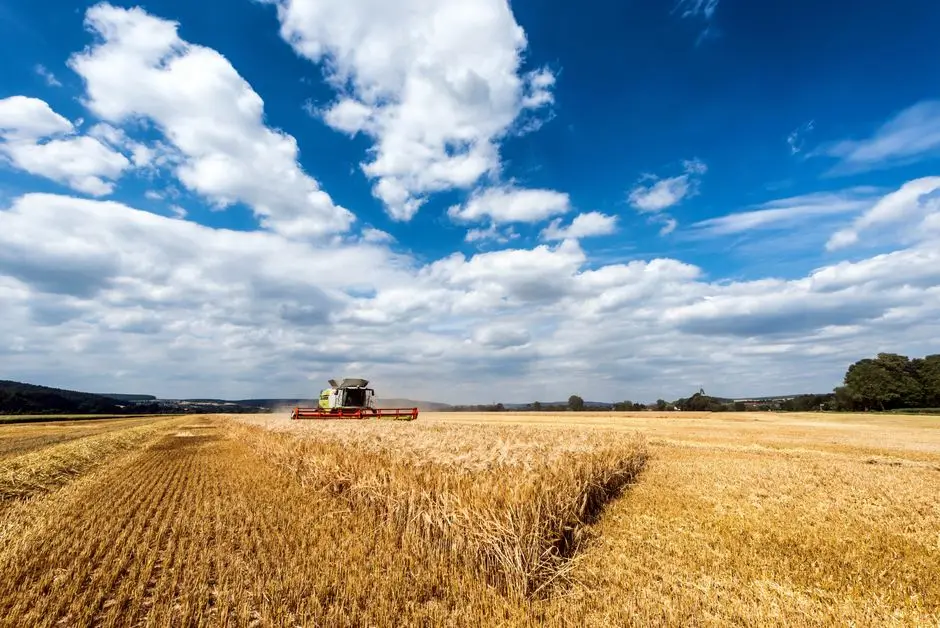
Raw land and farmland are both real-estate investment categories, but they work differently. Raw land is undeveloped property held mainly for appreciation and future development or entitlement value; it produces no income, so property tax and other carrying costs run unopposed by any rent. Farmland is agricultural land that can generate recurring income through a cash-rent or crop-share lease to a farmer, in addition to any long-term change in land value.
Both sit outside the direct-property, public-REIT, and fund framework Swoopr's Real Estate & REIT Investing hub covers in general, and both carry illiquidity and valuation risks that are more acute than for a house or a publicly traded REIT share.
Key Takeaways
- Raw land produces no income; it's a pure appreciation-and-carrying-cost play driven heavily by zoning and entitlement outcomes.
- Farmland can produce recurring income through a cash-rent or crop-share lease to a tenant farmer, distinguishing it from raw land.
- Farmland is sometimes cited in institutional real-asset research as having historically shown low correlation with public equities, though that pattern is not guaranteed to hold and shouldn't be treated as a precise, quotable figure.
- Investors can access farmland directly, through farmland-focused REITs or private funds, or through crowdfunding platforms; raw land is typically bought directly.
- Both asset classes are usually far less liquid than a house or a REIT share, and both are hard to value precisely because comparable sales are thin.
- Raw land carries entitlement and zoning risk; farmland carries commodity-price and weather risk. Neither risk applies equally to the other.
What Is Raw Land Investing?
Raw land investing means buying undeveloped property, land with no buildings, utilities, or approved development plan, and holding it for a future sale rather than for any current income. Because there's no tenant and nothing to rent out, raw land generates no cash flow while it's held. The investor's carrying costs (chiefly property tax, and sometimes association or maintenance fees) run continuously, with no rental income to offset them.
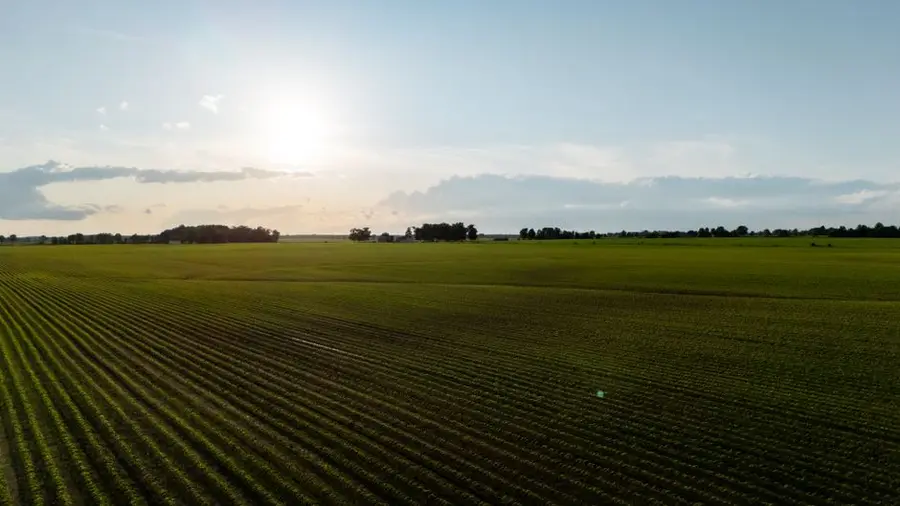
Raw land's return case is built almost entirely on appreciation: the hope that the land becomes more valuable over the holding period because of population growth, infrastructure investment, or a change in what the land is legally permitted to be used for. That last factor, zoning and entitlement, is often the single biggest driver of value. A parcel zoned for agricultural use only is generally worth far less than the same acreage rezoned for residential or commercial development, because entitlement (subdivision approval, utility access, environmental permits, and the rezoning itself) unlocks the higher-value use. Investors who buy raw land specifically to pursue entitlement are taking on the risk that a local government delays, restricts, or denies the approvals the land needs to reach that higher-value use, on top of ordinary market risk.
Because raw land produces no income to analyze, conventional real-estate metrics like cap rate or NOI, covered in Swoopr's Real Estate & REIT Investing hub, don't apply. Underwriting a raw land purchase instead centers on comparable land sales, the realistic timeline and cost of any entitlement process, and how long the investor can carry the parcel without selling.
What Is Farmland Investing?
Farmland investing means owning agricultural land used to grow crops or raise livestock. Unlike raw land, productive farmland is typically leased to a farmer who works it, which means farmland can generate recurring income on top of any long-term change in land value. The U.S. Department of Agriculture tracks farm real estate values and land-use data as part of its regular agricultural economic reporting, reflecting how established a role farmland already plays as both a productive asset and a store of value.
Farmland income generally comes from one of two lease structures:
- Cash-rent lease: the tenant farmer pays the landowner a fixed rent for the growing season or year, regardless of that year's crop yield or the price the crop ultimately sells for. This gives the landowner predictable income and shifts production and price risk onto the farmer.
- Crop-share lease: the landowner receives an agreed percentage of the crop, or the revenue from selling it, instead of a fixed payment. This ties the landowner's income directly to the farm's output and to crop prices, and typically means the landowner shares some of the farming costs and risk alongside the tenant.
Farmland is also sometimes cited in institutional real-asset research as having historically shown relatively low correlation with public stock and bond markets, one reason some investors consider it for portfolio diversification. That historical pattern is not a guarantee of future behavior, and it doesn't offset the asset-specific risks farmland carries on its own.
Timberland: The Third Category of Land Investment
Raw land and farmland are the two categories most often discussed together, but timberland is a distinct third, and it behaves differently enough from both that treating it as a variant of either is misleading.
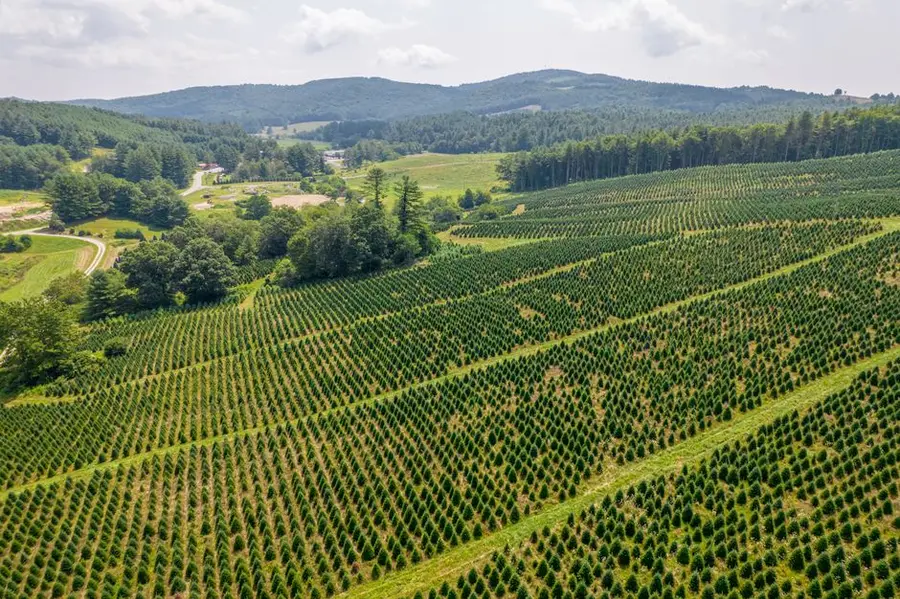
Timberland is land held to grow and harvest trees. Unlike raw land it is productive, and unlike farmland its product is not harvested annually. A stand of trees is closer to an inventory that grows on its own than to a crop that must be planted, tended and sold each season.
Returns to timberland come from three sources that operate independently of one another:
- Biological growth. Trees add volume every year without any input from the owner. This component is not correlated with financial markets in any direct way, because it is a physical process.
- Product class migration, usually called ingrowth. As a tree grows larger it moves into a higher-value product category, and the price per unit of wood steps up rather than rising smoothly. A stand can gain value faster than its volume grows for this reason alone.
- Price and land value. The market price of timber at harvest, and the value of the underlying land, both change over the holding period.
The first two components are what distinguish timberland from other land investments. A parcel of raw land does nothing while it is held. A timber stand physically increases in quantity and, separately, in quality.
The harvest decision is an option, not a schedule
The single most distinctive feature of timberland is that the owner chooses when to harvest, within wide limits, and standing timber does not spoil.
A farmer facing a bad price year still has to bring the crop in; the alternative is losing it. A timberland owner facing a bad price year can simply not cut, and the trees keep growing. That deferral is often described as storing value on the stump, and it converts a price problem into a timing decision.
The practical consequences are worth being precise about:
- Income is lumpy and discretionary rather than recurring. There is no annual lease payment analogous to farmland cash rent. Cash arrives when a harvest happens.
- The deferral option is not free. Property taxes, management costs and insurance continue during a deferral, and capital is tied up for longer.
- Biological limits apply. Growth rates decline as a stand matures, and stands eventually become more vulnerable to disease, wind and mortality. Deferral is a wide window, not an unlimited one.
- Rotations are measured in decades. The interval between planting and final harvest varies substantially by species, region, site quality and management regime, which is why timberland is a long-horizon commitment rather than a medium-term one.
Some owners generate interim income from sources unrelated to the trees themselves, including hunting and recreational leases, easements for utility or pipeline corridors, and mineral rights where those are retained. Those revenues are usually modest relative to a harvest, but they can offset carrying costs during a long holding period.
Why location matters more than for other land
Timber is heavy and low in value relative to its weight, which makes transport cost a large share of what a landowner actually receives. The practical effect is that the price a standing tree can realize depends heavily on how far it has to be hauled to a mill.
Two identical stands, one twenty miles from a working sawmill and one a hundred and twenty miles away, will not fetch the same stumpage price, because the buyer pays for the haul. That makes timberland unusually exposed to local industrial conditions: the closure of a single regional mill can materially reduce what nearby stands are worth, independently of national lumber prices, and there is no way for a landowner to relocate the asset in response.
This is a different kind of concentration risk from the ones that affect farmland. Crop prices are set in national and international commodity markets that Swoopr covers in the Commodities and Precious Metals guide. Stumpage prices are effectively local.
How investors access timberland
- Direct ownership. Buying acreage outright, typically with a consulting forester managing the stand, the harvest scheduling and the timber sale. This gives full control of the harvest option and full exposure to the physical risks.
- Timberland REITs. Publicly traded real estate investment trusts that own and manage timberland. They offer exchange liquidity and no minimum acreage, and they trade as equities, which means their share prices move with the stock market in a way the underlying land does not. Swoopr's Real Estate & REIT Investing hub covers the REIT structure in general.
- Private timberland funds. Pooled vehicles, historically the route institutions have used, with multi-year lockups, capital calls and eligibility restrictions similar to other private funds. Swoopr's Private Equity guide covers those mechanics.
- Forest products companies. Shares in companies that manufacture lumber, pulp and paper. This is exposure to an operating business with mills, labor and manufacturing margins, not to land. The two can move differently, and treating one as a proxy for the other is a common error.
A note on carbon and conservation payments: markets have developed in which landowners are paid to defer or forgo harvest, or to place a permanent conservation easement on the property. These can produce income from land that is not being cut, but they are contractual arrangements with real constraints, frequently including permanent restrictions on future use, and they should be read as legal commitments rather than as a costless supplement.
Tax treatment
Timber has its own body of federal tax rules, and it differs meaningfully from how ordinary rental income or a simple land sale is treated. Specific Internal Revenue Code provisions can allow qualifying timber sales to be treated as capital gain rather than ordinary income, subject to conditions on holding period and the form the sale takes. Owners can also generally recover their investment in standing timber through a depletion deduction as it is cut, and separate rules address the treatment of reforestation costs.
The rules are detailed enough, and turn on enough specifics about how the property is held and how the sale is structured, that they should be confirmed for a particular situation rather than assumed. The IRS's IRS: Publication 544, Sales and Other Dispositions of Assets covers the general framework for gain and loss on property dispositions, and the National Timber Tax Website: Timber Tax Information, a cooperative educational resource, addresses timber-specific provisions in depth.
State-level treatment adds another layer. Many states operate current-use or forest-assessment programs that tax qualifying timberland at a lower rate than its market value would imply, usually in exchange for a commitment to keep the land in forest use and with a penalty for converting it. Because these programs are set state by state, the property tax figure that appears in an underwriting model depends on which program the parcel is enrolled in.
How timberland compares with raw land and farmland
| Dimension | Raw land | Farmland | Timberland |
|---|---|---|---|
| Income while held | None | Recurring lease income, annual | Lumpy and discretionary, at harvest |
| Main return driver | Appreciation, often driven by entitlement | Lease income plus land value | Biological growth, product class migration, timber price and land value |
| Timing flexibility | Sell whenever a buyer appears | Crop must be harvested in season | Harvest can be deferred; trees keep growing |
| Weather exposure | Minimal | Significant and annual | Significant but episodic: fire, wind, insects and disease |
| Carrying cost offset | None | Usually offset by lease income | Partially offset by hunting or recreational leases, if any |
| Geographic sensitivity | Proximity to growth and development | Soil quality, water rights, climate | Hauling distance to a working mill |
| Typical horizon | Indefinite, driven by entitlement timeline | Ongoing, with annual cash flow | Decades, tied to the rotation |
Risks specific to timberland
- Fire. A catastrophic loss that destroys years of accumulated growth in days. Insurance exists but coverage and cost vary considerably by region.
- Insects and disease. Outbreaks can kill standing timber across large areas and can force a salvage harvest at whatever price the market offers.
- Wind and storm damage. A single event can flatten a stand, and downed timber deteriorates, which converts a deferral option into a deadline.
- Mill closure and local demand. Because hauling distance drives realized price, the loss of a regional mill reduces the value of surrounding stands with no offsetting remedy available to the landowner.
- Valuation difficulty. Establishing what a stand is worth requires a timber cruise, a physical inventory of species, volume and product class, performed by a forester. There is no continuous market price and no simple comparable-sales substitute.
- Illiquidity. Selling a timber tract can take months and depends on a thin pool of buyers, though timberland REIT shares trade on an exchange.
- Regulatory and access constraints. Harvest permits, road access, endangered species requirements and water-quality rules can restrict when and how a stand may be cut.
- Management dependence. Direct ownership generally requires a consulting forester, and outcomes depend materially on the quality of stand management, thinning decisions and the timber sale process.
The U.S. Forest Service's Forest Inventory and Analysis program is the federal source for data on the extent, condition and volume of U.S. forest land, and it is the appropriate reference point for anyone trying to understand the resource base rather than a single parcel.
How Investors Access Raw Land and Farmland
Raw land is almost always bought directly: there's no meaningful public-market vehicle built specifically around undeveloped, non-income-producing parcels, so an investor buys, carries, and eventually sells the land themselves (often working with a broker experienced in land transactions and, where relevant, the local entitlement process).
Farmland offers more routes to access, because it's a productive, income-generating asset:
- Direct ownership: buying agricultural acreage outright and either operating it, or, far more commonly for an outside investor, leasing it to a farmer under a cash-rent or crop-share arrangement.
- Farmland-focused REITs and funds: publicly traded REITs and private funds that specialize in owning and leasing agricultural land exist alongside the diversified equity and mortgage REITs Swoopr's Real Estate & REIT Investing hub covers in general. A publicly traded farmland REIT offers exchange liquidity that direct ownership doesn't.
- Farmland crowdfunding platforms: platforms that pool capital from multiple investors to buy specific farmland parcels, typically offering lower minimum investment amounts than buying acreage directly, but usually with far less liquidity than a publicly traded REIT share and their own platform-specific risks.
Whichever route an investor uses, the underlying return still depends on the same two things: what the lease (cash-rent or crop-share) actually pays, and how the land's value changes over the holding period.
Shared and Distinct Risks
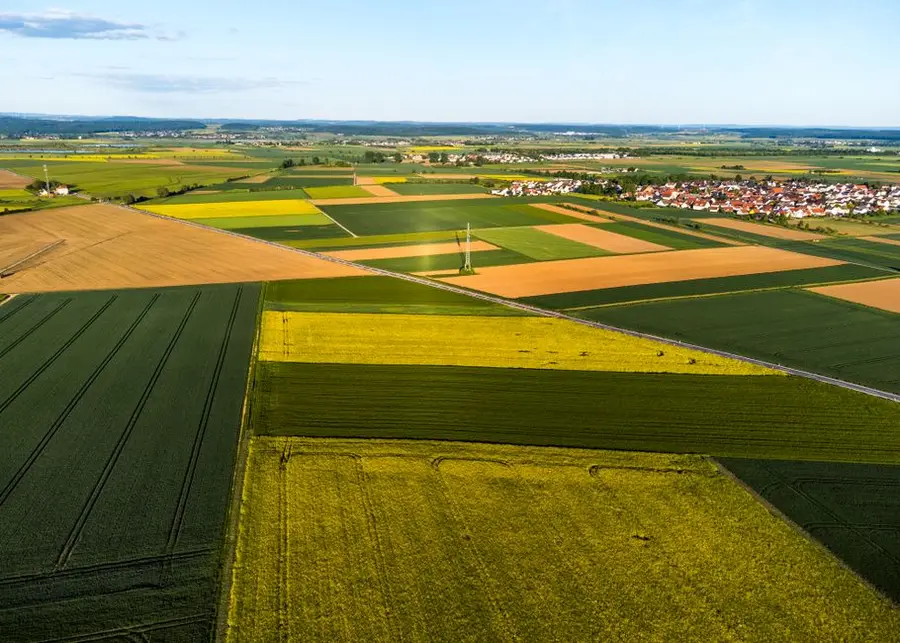
Raw land and farmland share some risks simply because both are physical land, and diverge sharply on others because one produces income and the other doesn't.
| Risk | Raw land | Farmland |
|---|---|---|
| Illiquidity | Typically much harder to sell quickly than a house or a REIT share; buyer pools for undeveloped parcels can be thin | Also typically far less liquid than a house or REIT share, though farmland REIT shares (where available) trade like other public securities |
| Valuation difficulty | Thin comparable-sales markets make appraising an undeveloped parcel harder than pricing a liquid security | Also relies on comparable land sales, complicated further by soil quality, water rights, and lease terms that vary parcel to parcel |
| Income risk | Not applicable; raw land produces no income to be at risk, but also nothing to offset carrying costs | Cash-rent income depends on the tenant's ability to pay; crop-share income depends directly on crop yields and prices |
| Entitlement / zoning risk | Major, often the single biggest driver of value; rezoning, permitting, and approvals can be delayed, restricted, or denied | Present but usually secondary; a shift in permitted use (for example, toward development) can also affect farmland value |
| Weather / commodity risk | Minimal direct exposure, since nothing is being grown | Significant; crop yields depend on weather, and crop-share income depends on commodity prices |
| Carrying cost | Property tax accrues with no offsetting rental income | Property tax and any operating costs are typically offset, partly or fully, by lease income |
The Securities and Exchange Commission's investor education materials note more broadly that real-estate investments, including illiquid and non-traded structures, can be difficult to value and to exit on short notice, a caution that applies with particular force to individual raw land parcels and direct farmland holdings, which trade far less often than listed securities.
Farmland as an Asset Class vs. Diversified REIT Exposure
The access section above treats a farmland REIT as one route among several for reaching farmland. There's a related but separate question worth asking at the portfolio level, rather than the access-mechanism level: is an investor looking for farmland's own risk-and-return profile, or would a diversified REIT allocation, spread across apartments, warehouses, offices, data centers, and the other property types Swoopr's Real Estate & REIT Investing hub covers, serve the same purpose in a portfolio? Farmland is a specific, physically defined asset class with its own return drivers. A diversified REIT allocation is a basket of operating real-estate businesses that happen to trade as public securities. The two aren't substitutes for each other, and the differences show up most clearly across five dimensions.
| Dimension | Farmland as an asset class | Diversified/general REIT exposure |
|---|---|---|
| Correlation to public equities | Sometimes cited in institutional real-asset research, including work built around the NCREIF: Farmland Property Index, as having historically shown low correlation with public stock markets. That pattern isn't guaranteed to hold and shouldn't be treated as a precise, quotable figure. | Publicly traded REITs are exchange-listed equities. Their share prices generally move with broader stock-market sentiment in a way farmland's appraisal-based valuations typically don't, even when the underlying properties behave differently than the broader market. |
| Liquidity | Even through a fund or crowdfunding structure, farmland is generally far less liquid than an exchange-traded security; exiting usually depends on finding a buyer for the parcel or on a fund's own redemption terms and timeline. | Shares of an exchange-traded REIT can typically be bought or sold on any trading day at a quoted market price. Non-traded REITs, covered in Swoopr's Non-Traded REITs (Private REITs) Explained guide, sit in between: publicly registered but not exchange-listed, with redemption programs that can be limited or suspended. |
| Minimum investment | Buying farmland directly means buying a whole parcel, a large and lumpy commitment. Many private farmland funds also carry high minimums tied to accredited-investor eligibility, though some crowdfunding platforms lower the entry point considerably. | A single share of a publicly traded REIT costs whatever that day's market price is, which is typically far smaller than a farmland parcel or a private fund's minimum. |
| Inflation-hedge mechanism | Farmland's return case leans on trends in land values and, to a varying degree, agricultural commodity and food prices, a different transmission mechanism than a REIT's. | REIT returns are driven by rental income and capitalization rates. Leases can reprice with inflation over time, but the mechanism runs through tenant contracts and cap-rate movements rather than through commodity or land-value trends. |
| Volatility | Farmland is typically valued through periodic appraisals rather than continuous trading, which tends to produce a smoother-looking return series than a continuously priced security, independent of how volatile the underlying asset actually is. | As exchange-traded securities, publicly traded REIT shares are priced continuously and can show equity-like volatility, including drawdowns tied to broader market selloffs that have little to do with the fundamentals of the buildings they own. |
None of this makes one category strictly better than the other; they answer different portfolio questions. An investor targeting diversification away from public-market swings, and willing to accept illiquidity and a high minimum in exchange, is looking for something closer to farmland's profile. An investor who wants real-estate-adjacent exposure but needs the ability to trade in and out on short notice is looking for something closer to a diversified REIT allocation, even though both are commonly filed under "real estate" in a broad asset-allocation framework.
Frequently Asked Questions
What is raw land investing?
Raw land investing means buying undeveloped land with no structures, utilities, or approved development plan in place, then holding it for future appreciation or resale rather than for any current income. Because raw land generates no rent, an investor's ongoing cost is largely property tax and any carrying costs, offset by nothing until the land is sold or developed.
What is farmland investing?
Farmland investing means owning agricultural land, either directly or through a fund, REIT, or crowdfunding platform, and earning income from a farmer who leases and works the land. Unlike raw land, productive farmland can generate recurring income through a cash-rent or crop-share lease, in addition to any long-term change in land value.
How do investors earn income from farmland?
Farmland investors typically earn income one of two ways: a cash-rent lease, where the tenant farmer pays a fixed rent regardless of that year's crop yield or price, or a crop-share lease, where the landowner receives a percentage of the crop or crop revenue instead of a fixed payment. Cash rent is more predictable for the landowner; crop share ties income more directly to farming outcomes and shares more of the production risk.
What are the biggest risks of raw land investing?
Raw land's biggest risks are entitlement and zoning risk (a local government can deny, delay, or restrict the rezoning, permits, or approvals a parcel needs to become more valuable), carrying-cost risk (property tax accrues with no rental income to offset it), illiquidity, and valuation difficulty from thin comparable-sales markets for undeveloped parcels.
Is farmland correlated with the stock market?
Farmland is often cited in institutional real-asset research as having historically shown low correlation with public stock and bond returns, which is one reason some investors consider it for diversification. That pattern is not guaranteed to continue, and farmland carries its own weather, commodity-price, and illiquidity risks that public securities generally do not.
How can investors access farmland without buying a farm directly?
Investors who don't want to buy and manage acreage directly can gain farmland exposure through publicly traded REITs that specialize in farmland, private farmland-focused funds, or farmland crowdfunding platforms that pool investor capital to buy and lease out agricultural land. Each route trades some combination of liquidity, minimum investment size, and management responsibility differently than direct ownership.
What is timberland investing?
Timberland investing means owning land held to grow and harvest trees. It is a third category alongside raw land and farmland, and it behaves differently from both. Returns come from three independent sources: biological growth, since trees add volume every year without any input from the owner; product class migration, in which a tree moving into a larger size category commands a higher price per unit of wood; and changes in timber prices and in the underlying land value. Unlike raw land it is productive, and unlike farmland its product is not harvested on an annual cycle.
How is timberland different from farmland?
The central difference is the harvest decision. A farmer facing a bad price year still has to bring the crop in or lose it, so farmland income arrives annually and is exposed to that year's prices. A timberland owner facing a bad price year can simply not cut, and the trees keep growing, which is often described as storing value on the stump. That converts a price problem into a timing decision. The trade-off is that timberland income is lumpy and discretionary rather than a recurring lease payment, while carrying costs continue throughout any deferral.
Why does distance to a sawmill affect timberland value?
Timber is heavy and low in value relative to its weight, so transport cost is a large share of what a landowner actually receives. The buyer pays for the haul, which means two otherwise identical stands at different distances from a working mill will not fetch the same stumpage price. The practical consequence is that timberland is unusually exposed to local industrial conditions: the closure of a single regional mill can materially reduce what nearby stands are worth regardless of national lumber prices, and a landowner cannot relocate the asset in response.
How can investors own timberland without buying a forest?
Four routes exist, each with different characteristics. Publicly traded timberland REITs own and manage forest land, offer exchange liquidity and no minimum acreage, and trade as equities, meaning their share prices move with the stock market in ways the underlying land does not. Private timberland funds are the route institutions have historically used, with multi-year lockups, capital calls and eligibility restrictions. Shares in forest products companies give exposure to an operating business with mills and manufacturing margins rather than to land. Direct ownership gives full control of the harvest option and full exposure to the physical risks.
What are the main risks of owning timberland?
Fire is the catastrophic case, destroying years of accumulated growth in days. Insect and disease outbreaks can kill standing timber across large areas and force a salvage harvest at whatever price is available. Wind and storms can flatten a stand, and downed timber deteriorates, which turns a deferral option into a deadline. Beyond the physical risks, valuation requires a timber cruise performed by a forester rather than a comparable-sales estimate, selling a tract can take months against a thin buyer pool, harvest permits and environmental rules can restrict when a stand may be cut, and outcomes depend materially on management quality.
How is timber income taxed?
Timber has its own body of federal tax rules that differ from how ordinary rental income or a simple land sale is treated. Specific Internal Revenue Code provisions can allow qualifying timber sales to be treated as capital gain rather than ordinary income, subject to conditions on holding period and the form the sale takes, and owners can generally recover their investment in standing timber through a depletion deduction as it is cut. Separate rules address reforestation costs. Many states also operate current-use forest assessment programs that tax qualifying timberland below market value in exchange for keeping it in forest use.
References
- USDA Economic Research Service: Land Use, Land Value and Tenure: federal agricultural-economics research covering farmland values, ownership, and land use.
- USDA National Agricultural Statistics Service: Quick Stats: the federal statistical database covering U.S. farm real estate and cropland values.
- Investor.gov: Real Estate Investment Trusts (REITs): background on REIT structures, including specialized REITs such as farmland and timberland REITs.
- Investor.gov: Investor Bulletin, Non-traded REITs: the SEC glossary entry on the liquidity and valuation characteristics of non-traded real-estate structures.
- USDA Forest Service: Forest Inventory and Analysis Program: the federal source for data on the extent, condition and volume of U.S. forest land, referenced in the timberland section.
- IRS: Publication 544, Sales and Other Dispositions of Assets: the general federal framework for gain and loss on property dispositions, including land and timber.
- National Timber Tax Website: Timber Tax Information: a cooperative educational resource covering the timber-specific federal tax provisions summarized above, including capital gain treatment, depletion and reforestation costs.
- NCREIF: Farmland Property Index: the institutional index of U.S. farmland investment performance referenced in the farmland-versus-REIT portfolio comparison above.