
Direct Answer
A support-to-resistance flip, sometimes called a polarity flip or role reversal, describes a level changing function after it breaks. While price holds above a support level, that level is a floor: buyers repeatedly step in there, and the level absorbs selling pressure.
Key Takeaways
- Once price breaks below a support level, that level often becomes resistance on subsequent bounces, the level's role reverses.
- The flip is driven by trapped buyers looking to exit near breakeven, plus new sellers using the retest as an entry point.
- Confirmation requires three steps in order: a clean break and close below the level, a bounce back up into it, and a rejection that holds on a closing basis.
- A close back above the former support level, rather than a stall at it, invalidates the flip reading.
- The mirror pattern, a broken resistance level becoming support, works the same way in reverse.
Support-to-Resistance Flip
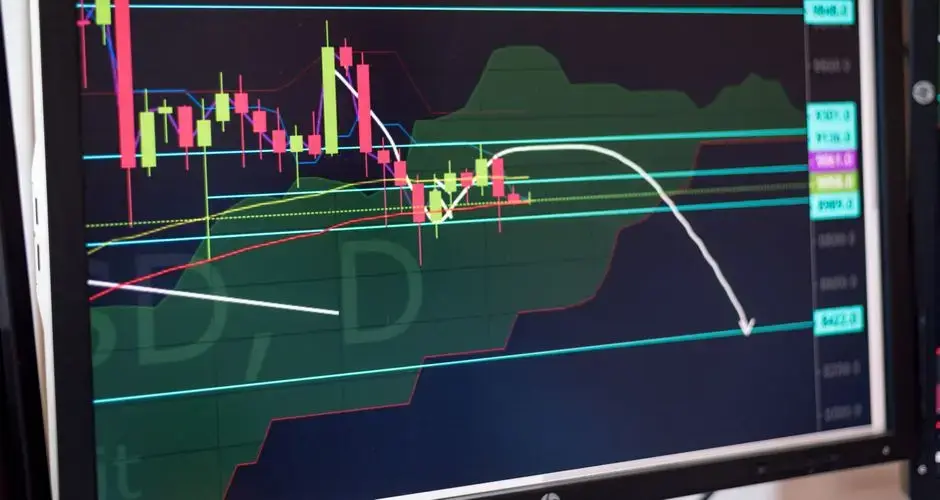
Once price breaks below a support level, that level often becomes resistance on subsequent bounces, the level's role reverses. A price zone that once absorbed selling and held the market up now tends to absorb buying and cap the market's next rally, because the traders positioned around it have changed sides.
What Is a Support-to-Resistance Flip?
A support-to-resistance flip, sometimes called a polarity flip or role reversal, describes a level changing function after it breaks. While price holds above a support level, that level is a floor: buyers repeatedly step in there, and the level absorbs selling pressure. Once price closes below it decisively, the same price area frequently becomes a ceiling on the next attempt to rally back into it.
This isn't a separate indicator or a new type of level, it's the same horizontal price zone, observed doing a different job before and after the break. The flip is a description of behavior at a level, and like any price-action read, it needs confirmation rather than being assumed automatically the moment a level breaks.
How a Support-to-Resistance Flip Forms
Two groups of traders tend to concentrate their orders right at a former support level once it breaks. First, traders who bought near that level while it was holding are now sitting on a loss; many look to exit near breakeven the next time price rallies back to where they bought, which puts sell orders right at the old support. Second, traders who missed the initial breakdown, or who want to add to a short position, often use a retest of the broken level as a lower-risk entry to sell, since a failed retest gives them a tight, well-defined stop just above the level.
Both groups add selling pressure at the same price area, which is why the old floor tends to behave as a new ceiling. The strength of the flip generally scales with how significant the original support level was, a level tested and defended multiple times, or one that marks a major prior low, tends to produce a more reliable flip than a level that only formed briefly.
Support-to-Resistance Flip Example
The chart below shows a deterministic, illustrative example: price holds above a support level, breaks below it, then bounces back up to retest the same level from underneath. Toggle between two possible outcomes: a confirmation (the retest is rejected and price turns back down, completing the flip) and a failure/look-alike (price closes back above the level and continues higher, invalidating the flip reading).
How to Trade a Support-to-Resistance Flip
Wait for the break, not just a wick
A single wick that dips below a support level and closes back above it hasn't broken anything, it's still support until price closes below on a meaningful basis. Trading the flip before that close is confirmed risks reacting to a level that's still holding.

Let the retest come to you
Rather than chasing the initial breakdown, many traders wait for price to bounce back up and retest the former support from below. That retest offers a defined entry area, selling into the level, with a clear invalidation point just above it, rather than chasing the move lower with no nearby reference for a stop.
Require a rejection, not just a touch
Price merely touching the old level on the way back up isn't confirmation of the flip; the level needs to actually cap the advance, a stall, a reversal candle, or a close back below it, before the resistance read is treated as validated.
Common Support-to-Resistance Flip Mistakes
- Assuming every broken level flips, many broken support levels get retested and simply give way again without ever acting as meaningful resistance; the flip is a tendency, not a rule.
- Treating a wick as a break, a level isn't broken until price closes below it convincingly; wicks alone don't confirm the flip has started.
- Entering on the retest without waiting for rejection, selling the instant price touches the old level, before any sign it's actually holding as resistance, risks getting run over if the level gives way.
- Ignoring the level's original significance, a flip at a minor, briefly-formed support level carries far less weight than one at a widely watched, repeatedly tested level.
Support-to-Resistance Flip vs. Similar Concepts
| Concept | What it emphasizes | Key difference from a support-to-resistance flip |
|---|---|---|
| Support-to-resistance flip | A broken support level capping price on the next bounce | Baseline, role reversal specifically after a support break |
| Resistance-to-support flip | A broken resistance level holding price up on the next pullback | The mirror image, applied to a broken resistance level instead of support |
| Liquidity sweep / swing failure pattern | Resting orders clustered beyond a level, triggered and reversed | The level does not actually break and hold on the far side, it's swept, then price returns to the original side, rather than flipping roles |
| Retest of a breakout level | Price returning to confirm a level after breaking it | Broader term for the return move itself; the flip specifically concerns whether the level's role changed once retested |
Limitations of Support-to-Resistance Flip Analysis
Not every broken support level goes on to act as resistance, some levels break and simply keep giving way on the retest, continuing lower without ever capping the bounce. The flip is a tendency rooted in trapped-trader and order-flow behavior, not a guarantee, and its reliability depends heavily on how significant the original level was and the broader trend context. As with other price-action reads, it works best combined with trend direction, volume, and a defined invalidation point rather than used as a standalone signal.
Three Steps, in Order, or It Did Not Happen
The flip has a sequence and skipping any part of it produces a different pattern. First a clean break with a close below the level. Then a bounce back up into it. Then a rejection there. All three, in that order. A break followed by continued decline has not flipped anything, and a bounce that carries straight back through the level is a reclaim rather than a rejection.
The most common shortcut is treating a wick below as the break. Until price closes convincingly beneath the level, the first step has not occurred and anything read into a subsequent bounce is being attached to a break that never happened.
The second shortcut is entering on the retest before the rejection appears. Arriving at the level is not the same as being turned away from it, and many broken supports get retested and simply give way again, continuing lower without ever capping the bounce.
How much the flip is worth depends on how significant the original level was. A support defended repeatedly over weeks leaves considerably more trapped exposure behind than one that formed a few sessions ago, and the trapped-buyer explanation behind the pattern is an inference from behaviour rather than something the chart can show.
Support-to-Resistance Flip FAQs
What is a support-to-resistance flip?
A support-to-resistance flip is when a level that previously held price up as support gets broken to the downside, and then acts as resistance on later bounces, the level's role reverses from a floor to a ceiling.
Why does a broken support level become resistance?
Traders who bought near the old support and are now underwater often look to exit near breakeven on the next rally, adding selling pressure right at that price. Traders who missed the initial breakdown may also use a bounce back to the level as a new entry to sell or short, reinforcing the level as a ceiling.
How do traders confirm a support-to-resistance flip?
Most approaches want to see a clean break and close below the former support level first, then a bounce that trades back up into the level, and finally a rejection, a stall or reversal candle, rather than a clean close back above it. A single wick tagging the level isn't enough; the rejection needs to hold on a closing basis.
What invalidates a support-to-resistance flip?
If price closes convincingly back above the former support level instead of stalling at it, the flip reading is invalidated, the breakdown was likely a false move, and the level may simply resume acting as support.
Does the same flip happen with resistance levels?
Yes. The mirror image is a resistance-to-support flip: once price breaks above a resistance level, that level often becomes support on subsequent pullbacks. Both are examples of the same polarity-reversal idea applied to opposite level types.
What happens to the stop orders that triggered on the break?
They are gone, which changes the level character. Before the break, resting stops below support represented latent selling. Once triggered they have executed, so the same level no longer sits above that pool of orders. Any subsequent retest is therefore meeting a different order book from the one that existed before, which is a mechanical reason the level behaves differently afterwards.
Does the flip work on intraday levels?
The same geometry appears at every scale and the evidential weight differs. An intraday level formed over an hour involved a small fraction of the participants and the volume that a level formed over months did. The flip can be observed on both, and treating an intraday flip as carrying the same significance as a weekly one is where the concept gets overextended.
What if price never returns to the level?
The flip is untested, which is a common outcome after a decisive break. The level remains a marked reference for whenever price does return, potentially much later. What it is not is confirmed: the reasoning behind the flip has not been examined by any actual interaction, so it remains an expectation rather than an observation.
How is a flip expressed as a systematic rule?
It requires three specified elements: how the original level is identified, what counts as a break, and what counts as a retest that held. Each needs a tolerance. Writing them down is usually where the concept becomes harder than it appeared, because a rule strict enough to be unambiguous finds far fewer flips than the eye does on a historical chart.