
Direct Answer
Trends need a steady stream of new participants to continue: new buyers stepping in on pullbacks during an uptrend, or new sellers stepping in on bounces during a downtrend. An exhaustion move happens when that stream runs dry all at once, the last hesitant participants pile in near the same time, producing a sharp, high-momentum push in the trend's direction that has no one left behind it to sustain the move.
Key Takeaways
- An exhaustion move is a sharp, high-momentum final push in a trend's direction that signals the trend is running out of participants, often preceding a reversal or sharp pullback.
- It typically forms as an acceleration into several large-range bars in the trend's direction, followed by a sudden stall or sharp reversal bar.
- The push itself isn't the signal, what happens immediately afterward is: a genuine exhaustion move stalls hard because there's no one left to extend it.
- Most approaches wait for confirmation, a close back through a defined level, before treating an exhaustion move as a completed reversal rather than a pause in an ongoing trend.
- A blow-off top is one well-known, extreme example of an upside exhaustion move; the broader term applies to both uptrends and downtrends.
Exhaustion Moves in Price Action
An exhaustion move is a sharp, high-momentum final push in a trend's direction that signals the trend is running out of participants, often preceding a reversal or sharp pullback. It's the price-action signature of a trend spending its last available buyers or sellers in a short, urgent burst, rather than a controlled, sustainable continuation.
What Is an Exhaustion Move?
Trends need a steady stream of new participants to continue: new buyers stepping in on pullbacks during an uptrend, or new sellers stepping in on bounces during a downtrend. An exhaustion move happens when that stream runs dry all at once, the last hesitant participants pile in near the same time, producing a sharp, high-momentum push in the trend's direction that has no one left behind it to sustain the move.
The push itself can look, on the surface, like ordinary trend strength, large-range bars closing near their highs (in an uptrend) with little pullback. What separates an exhaustion move from healthy continuation is what happens immediately after: instead of consolidating and resuming, price stalls abruptly or snaps back the other way, because the participants who would normally extend the move have already acted.
How an Exhaustion Move Forms
An exhaustion move typically forms in two visible stages. First, the trend accelerates, bar ranges widen and bars increasingly close near their extreme in the trend's direction, often with little to no pullback between them, as the pace of buying (or selling) picks up rather than steadies. Second, that acceleration ends abruptly with a stall or sharp reversal bar: a bar that reaches a new extreme intrabar but fails to hold it, closing well off that extreme or even back below where the prior bar closed.
That final stall or reversal bar is the tell. A healthy trend that pauses usually does so gradually, with narrowing ranges and orderly pullbacks. An exhaustion move pauses suddenly, right after its most aggressive bars, because the burst of late participation that produced those bars has nothing left behind it.
Exhaustion Move Example
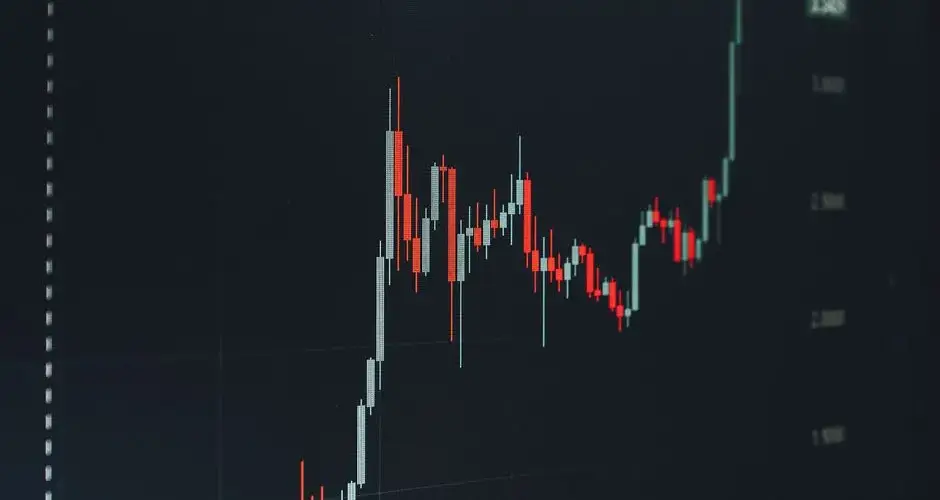
The chart below shows a deterministic, illustrative example: a trend accelerates into three widening, large-range bars in the same direction, then stalls on a sharp reversal bar that reaches a new high intrabar but closes back near the low of the range. Toggle between two possible continuations: a confirmation (price follows through lower, the exhaustion move gives way to a reversal) and a failure/look-alike (price closes back above the exhaustion bar's high and the up-move simply continues).
How to Trade an Exhaustion Move
Watch for the acceleration, not just the trend
A trend that has been grinding higher steadily for a long stretch is not, by itself, exhausted. What matters is a visible change of pace: bar ranges widening and bars closing progressively closer to their extreme, in a shorter span than the trend's typical rhythm. That acceleration is the setup; it isn't a signal on its own.

Wait for the stall or reversal bar
The signal is the bar (or bars) that follow the acceleration: a sharp stall where range contracts abruptly, or a reversal bar that pushes to a new extreme intrabar and then closes back against the trend. Acting on the acceleration bars themselves, before that stall appears, means trading a trend that may simply keep going.
Confirm before treating it as a reversal
Because a stall can also resolve as a pause before continuation, most approaches wait for a confirmed close back through a nearby level, a recent swing low in an uptrend exhaustion, for example, with some volume or momentum evidence, before treating the exhaustion move as a completed reversal rather than a brief hesitation.
Common Exhaustion Move Mistakes
- Fading every big-range bar, a single large bar in a trend is often just strength, not exhaustion; the pattern requires an acceleration followed by a stall, not one aggressive bar in isolation.
- Entering before the stall bar confirms, acting during the acceleration itself risks being run over by the very momentum the pattern depends on for its late-stage burst.
- Ignoring where the move sits in the broader trend, an exhaustion move after a long, extended run carries more weight than one a few bars into a fresh trend.
- Treating exhaustion as a guarantee, a stall can resolve as consolidation and continuation just as easily as a reversal; it shifts the odds, it doesn't fix the outcome.
Exhaustion Move vs. Similar Concepts
| Term | What it emphasizes | Key difference from an exhaustion move |
|---|---|---|
| Exhaustion move | A sharp final push, then a stall, signaling participants are running out | Baseline, defined by the acceleration-then-stall sequence, on either side of a trend |
| Blow-off top | An extreme, often parabolic, upside exhaustion move near a major top | A specific, more dramatic upside case of an exhaustion move, not a distinct mechanism |
| Liquidity sweep | Resting orders (stops/entries) clustered beyond a level | Defined relative to a specific price level and its resting orders, not a trend's pace of participation |
| Trend continuation bar | A large-range bar that confirms, rather than ends, the trend | Extends the move rather than marking its final burst; distinguished by what follows, not the bar's shape alone |
Limitations of Exhaustion Move Analysis
An exhaustion move is read from price and bar structure alone; it cannot show the actual composition of buyers and sellers, so any claim that a specific move "ran out of participants" is an inference drawn from price behavior, not a directly observed fact. It also offers no guarantee: an accelerating, stalling move can resolve as consolidation and continuation rather than reversal. Like other price-action patterns, it works best combined with trend context, level structure, and a defined confirmation and invalidation plan, not used in isolation.
The Push Is Not the Signal
An acceleration into several large-range bars in the trend direction is the part that draws attention, and on its own it is indistinguishable from a trend simply working. What makes it an exhaustion move is the stall or sharp reversal bar that follows, and until that arrives the pattern has not occurred. Reading the push as the signal means selling strength on the theory that strength is a symptom.
Sometimes it is, and the honest statement is that you cannot tell from the push. The same acceleration precedes continuation often enough that treating each one as a top produces a long record of being early into moves that carried on.
The other outcome worth planning for is neither. An accelerating, stalling move can resolve into consolidation and then continuation, which is a third resolution that a two-outcome framing quietly excludes.
The whole read comes from price and bar structure, so any claim that a move ran out of participants is inference. Nobody can see who stopped buying, only that price stopped going up, and those are not the same observation.
Exhaustion Move FAQs
What is an exhaustion move?
An exhaustion move is a sharp, high-momentum final push in a trend's direction that signals the trend is running out of participants, often preceding a reversal or sharp pullback. It typically looks like an acceleration into several large-range bars followed by a sudden stall or sharp reversal bar.
How is an exhaustion move different from a normal trend acceleration?
A normal acceleration continues to make progress with participants stepping in on pullbacks; an exhaustion move burns through the remaining supply of new buyers or sellers in a short burst, then stalls abruptly because there is no one left to extend the move. The distinguishing evidence is what happens immediately after the sharp push, not the push itself.
Does an exhaustion move guarantee a trend reversal?
No. An exhaustion move signals that the trend is more likely to stall or reverse, not that it will. Price can also consolidate sideways before resuming the original trend, so most approaches wait for confirmation, a close back through a defined level, before treating the exhaustion move as a completed reversal.
What invalidates an exhaustion move reading?
If price closes beyond the exhaustion move's own extreme in the direction of the original trend, the reversal reading is invalidated and the sharp push is more likely a genuine continuation than a climax. Defining that invalidation level before the next bar closes keeps the read honest.
Is an exhaustion move the same as a blow-off top?
A blow-off top is one well-known example of an exhaustion move on the upside, usually associated with a parabolic run and a volume spike near the top. Exhaustion move is the broader term and applies to both uptrends and downtrends, whether or not the move is as extreme as a classic blow-off.
What actually separates exhaustion from acceleration?
At the time, very little. Both involve a steepening advance on rising participation, and the difference is entirely in what follows. That is why the honest version of the concept treats exhaustion as a heightened-risk description rather than a signal: it identifies a configuration in which the range of possible outcomes has widened, without identifying which one is occurring.
Can exhaustion be quantified with a rate-of-change measure?
The steepening can be measured, for instance by comparing the slope over recent bars against the slope over the preceding stretch, or by tracking the acceleration in a momentum series. What cannot be derived is the threshold at which the steepening becomes exhaustion. Any number chosen is a convention, and the measure will report the same value in advances that continue and in ones that end.
Does an exhaustion read require volume evidence?
Descriptions divide on this. One school treats a volume surge as necessary, on the reasoning that exhaustion means the last available buyers acting. The other treats price behaviour alone as sufficient, particularly in instruments where volume data is unreliable. The two produce different sets of identified moves, and neither has settled the question, so the requirement should be stated when the term is used.
How does an exhaustion read affect an existing position rather than a new one?
It bears on management rather than entry, and the two are separate decisions. A holder reading exhaustion might tighten an exit, reduce exposure or do nothing, and each of those is compatible with the same reading. Someone with no position reading exhaustion has a much harder problem, since acting on it means positioning against a move that is currently going the other way.